
The four column wrap ideas that deliver the most impact for the least effort are wood cladding, adhesive architectural film, fluted panels, faux stone veneer. Wood and fluted panels suit indoor feature columns, faux stone and PVC handle exterior porch posts, and film wins when you need a fast, low-mess update on a tight curve. Budget from under $100 for paint to several hundred dollars for full stone veneer, and always start with a material sample before you commit.
TL;DR:
- Wood cladding and fluted panels are ideal for indoor columns, with wood costs varying based on the species used; always test samples before installation.
- Adhesive architectural film excels on curved, round columns for quick updates, especially when a low-mess, low-cost solution is needed indoors or on trim.
- Stone veneer provides the most dramatic transformation and is suitable for both indoors and outdoors but requires a higher budget and heavier installation effort.
- Exterior-safe PVC and FRP wraps withstand weather conditions, offering minimal maintenance and durability for porch and outdoor columns.
- Proper surface preparation and matching finish materials to exposure are critical for a professional look and long-lasting results.
Table of Contents
- Column Wrap Ideas That Actually Transform a Space
- Choosing Materials: Indoor Durability vs. Outdoor Survival
- Three Weekend Projects You Can Start Today
- Upkeep and Realistic Budgets by Approach
- Where Bodaq Film Fits Into a Column Project
- Adding Lighting and Decorative Accents to Your Wrap
- What a Column Wrap Actually Needs to Succeed
- Get a Sample Before You Commit to a Column Wrap
- Sources
- FAQ
Column Wrap Ideas That Actually Transform a Space
Not every idea on this list deserves equal attention. Some are weekend projects; others need a contractor. Here’s the priority order, ranked by how often designers actually use them and how much visual change you get per dollar spent.
- Wood cladding (vertical panels or shiplap). Tongue-and-groove boards or thin shiplap strips wrap around a square column in an afternoon and instantly read as “built-in” rather than “added on.” Cost: moderate, depending on wood species.
- Fluted MDF panels. Pre-milled fluted panels give a column that tailored, architectural look, similar to a Georgian-style pilaster, without hand-routing grooves yourself. They come pre-primed and take paint beautifully.
- Adhesive architectural film. Stretchable, self-adhesive film conforms to curved and round columns without seams that rigid panels can’t avoid, and it generates far less demolition dust than tear-out projects. It’s the fastest route to a faux-stone or faux-wood look on a round support post.
- Stone veneer or faux stone panels. Thin-cut natural stone or manufactured stone veneer turns a plain post into a substantial-feeling architectural element, especially on porch entries. Heavier and pricier, but the most dramatic transformation available.
- Faux marble adhesive vinyl. Peel-and-stick marble-look vinyl gives you a showpiece column for a fraction of real marble’s weight and cost, and it’s forgiving for first-time DIYers.
- Mirror panels. Thin mirrored acrylic sheets wrapped around a column bounce light around a room and make a support post disappear visually instead of dominating the space.
- Metal cladding. Brushed aluminum or copper-look sheeting suits industrial or modern lofts, and it resists dents better than most people expect.
- Built-in shelving wraps. Instead of hiding the column, build shelving around it so it becomes a functional display spine, especially useful in open-plan living rooms where a column otherwise reads as dead space.
- Fabric or rope wraps. Draped linen, burlap, or twisted rope give a column a soft, tactile texture for temporary styling or a rustic accent, though they’re not built to last years.
- Greenery or vertical-planter wraps. Faux or trailing live vines around a porch post soften hard architecture and work especially well flanking an entryway.
- Paint and trim. The cheapest fix on this list: a fresh coat plus simple crown or base trim can modernize a boxy column for under $100 in materials.
- Wallpaper wraps. Peel-and-stick wallpaper handles flat-sided columns well and lets you match a bold pattern already used elsewhere in the room.
- Peel-and-stick tile. Small-format adhesive tiles work on square columns in kitchens or bathrooms where moisture resistance matters more than on a living room support post.
- Outdoor-safe PVC and FRP wraps. Weather-rated PVC or fiberglass-reinforced plastic sleeves replace a rotting wood porch post’s look without the upkeep, standing up to rain and sun far better than raw lumber.
Whatever you choose, tie the finish to what’s already in the room. A design authority on column covering makes the same point repeatedly: pick your finish family (wood, stone, or metal) before you pick a specific product, so the column matches your floors and trim instead of fighting them.
Choosing Materials: Indoor Durability vs. Outdoor Survival
The single biggest mistake homeowners make is choosing a finish based on looks alone and ignoring exposure. A material that thrives in a living room can fail within a season on a porch.
- MDF and fluted panels: Great indoors, terrible outdoors. Any moisture swells the fibers and ruins the finish, so keep MDF strictly interior.
- Hardwood cladding: Handsome indoors and workable outdoors if sealed and repainted every couple of years, but it needs real maintenance in wet climates.
- Adhesive film: Indoor use only for most finishes, though it excels on curved surfaces where rigid panels leave visible seams.
- Vinyl and peel-and-stick tile: Indoor applications, moisture-tolerant enough for kitchens and baths, not built for direct weather exposure.
- Stone veneer: Works both indoors and outdoors; manufactured versions resist freeze/thaw cycles better than natural cuts in cold climates.
- PVC and FRP: Purpose-built for exterior porch posts and columns, standing up to rain, sun, and humidity with minimal upkeep, according to porch column wrap comparisons.
- Metal cladding: Suited to both settings but needs a rust-resistant coating outdoors.
For adhesive materials, clean and prime the surface, then use a firm plastic smoother to avoid bubbles. For panels, construction adhesive plus finish nails outperforms adhesive alone on load-bearing installs. Call a contractor if the column is structural, if you’re cutting complex miters around a capital or base molding, or if you suspect rot underneath an old wrap.
Three Weekend Projects You Can Start Today
- Paint and trim refresh. Sand and prime the column, measure for simple crown and base molding, miter the corners at 45 degrees, then caulk every seam before painting.
- Adhesive film wrap. Clean the surface thoroughly, measure the circumference plus two inches of overlap, cut the film, apply from top to bottom while smoothing outward, and trim excess at the seam with a sharp blade.
- Fluted panel install. Measure the column’s circumference, cut panels to fit with a fine-tooth blade, miter any corner returns, then fasten with adhesive and finish nails before filling and painting.
Pro Tip: Dry-fit every panel or film section before committing adhesive. A five-minute test fit catches a miscut edge that would otherwise ruin an entire roll or board.
Never remove structural wrapping or bracing on a load-bearing column without a contractor’s sign-off. What looks decorative might be doing real work holding up your roof.
Upkeep and Realistic Budgets by Approach
Cleaning is simple for most finishes: a damp cloth for film and vinyl, mild soap for painted wood, and a soft brush for stone veneer grout lines. Exterior wraps need a weatherproof sealant reapplied every one to two years, and PVC posts benefit from an annual rinse to prevent mildew buildup.
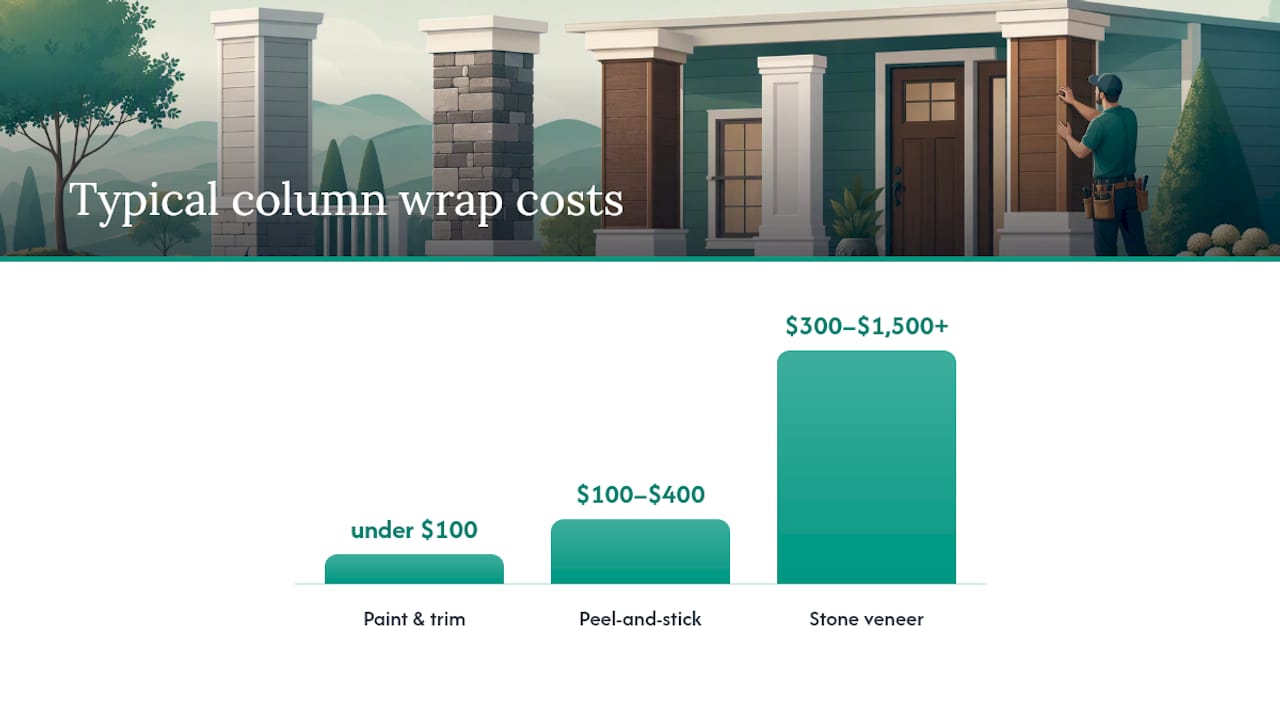
Budget-wise, cost comparisons across column treatments put paint under $100, peel-and-stick and film in a moderate price range, and stone veneer or custom carpentry in a higher price bracket depending on scale.
Quick cost snapshot:
- Paint and trim: under $100
- Peel-and-stick film or vinyl: $100 to $400
- Stone veneer or custom panels: $300 to $1,500+
Hire a pro once the job involves structural bracing, curved stone cutting, or multiple columns that need to match perfectly.
Where Bodaq Film Fits Into a Column Project
A stretchable, self-adhesive film offers a wide range of textures and colors, allowing a single round or fluted column to be transformed to look like faux-marble or faux-stone without any dust or demolition. This type of film works well on tight-radius columns where rigid panels can leave awkward seams, and on indoor feature posts where a quick, low-mess refresh is preferred over a full renovation.
Pro Tip: If your column has any curve at all, request a film sample before ordering panels. Flexible film handles a radius that rigid stone or wood simply can’t, according to Bodaq’s own shelf-wrapping tutorial.
Adding Lighting and Decorative Accents to Your Wrap
A column wrap becomes a design feature, not just a cover-up, once you layer in lighting and accents. Thin LED strip lighting recessed into a fluted panel’s grooves throws dramatic vertical shadows after dark, especially on entryway posts. Wrapping a warm white strip light behind a mirror panel’s edge creates a soft halo effect that makes the column glow rather than just reflect.

For porch posts, a small sconce mounted directly onto a PVC or stone veneer wrap adds function and curb appeal at once. Choose fixtures rated for exterior use and mount them before the final wrap goes on, so wiring stays hidden.
Decorative accents don’t need electricity to make an impact. A wrapped column with a fabric or rope finish can carry a simple wreath hook near the top, letting you swap seasonal decor without damaging the wrap underneath. Greenery wraps pair naturally with small string lights woven through the vines for evening curb appeal. Built-in shelving wraps benefit from puck lights tucked under each shelf edge, turning a structural nuisance into a lit display case.
The common thread: plan lighting and accents at the same time you plan the wrap material, not as an afterthought. Cutting a channel for wiring after a fluted panel is already installed means redoing work you just finished.
What a Column Wrap Actually Needs to Succeed
Most homeowners overspend on material and underspend on prep. Surface prep, not the finish itself, determines whether a wrap looks intentional or slapped on.
If there’s one rule worth repeating: match the material to the column’s exposure and traffic before you fall for a finish. A gorgeous wood cladding sample means nothing on a rain-exposed porch post that will warp within a year.
— Bodaq
Get a Sample Before You Commit to a Column Wrap
Bodaq gives you a lower-waste, lower-mess path to a finished column than tearing out and rebuilding with panels or stone. With over 450 textures available and a stretchable film that wraps tight curves without visible seams, you get the faux-stone, faux-wood, or linen look you’re picturing without a demolition project in your living room.
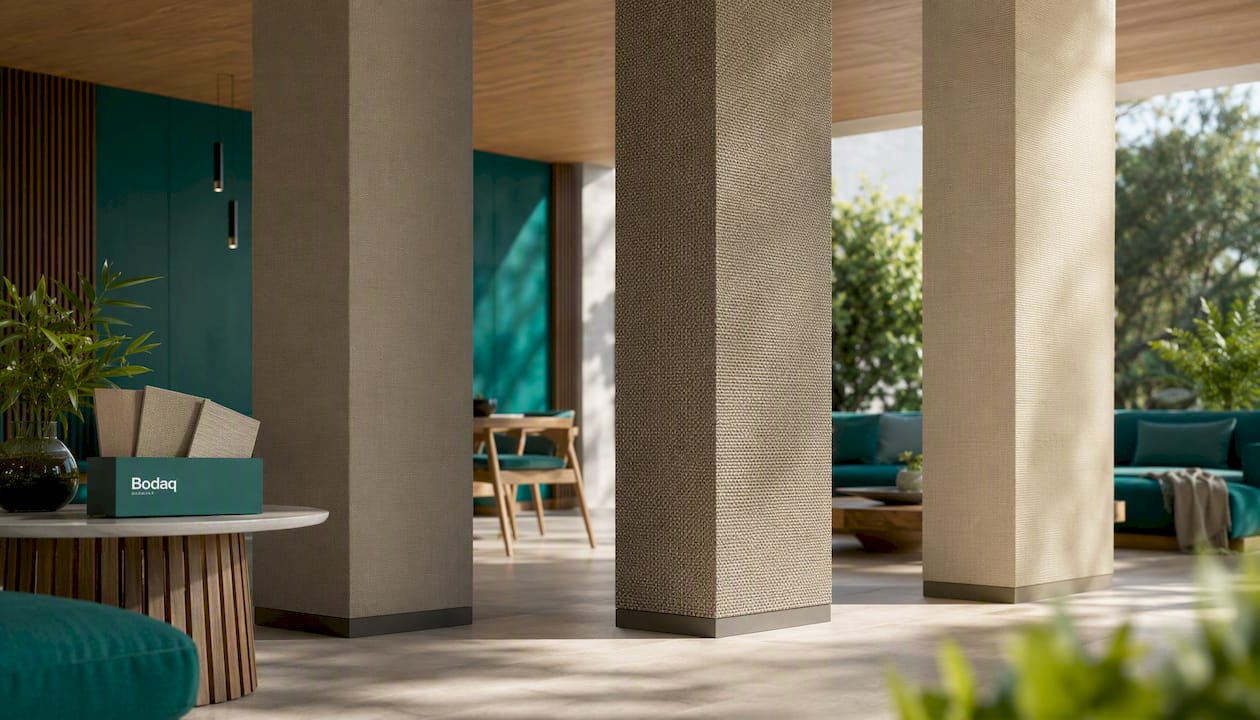
If your column has a tricky radius or you just want a faster weekend result, the Easy Clean film handles high-traffic entryways with minimal upkeep, while the carbon woven texture and woven linen finish bring a tactile, fabric-like look to feature columns without the maintenance real fabric demands. Order a sample of any of these three collections, hold it against your column in natural light, and decide from there. If your project needs a professional touch, ask about certified installer referrals when you request your sample.
Sources
- 19 Column Covering Ideas for Stylish Disguise
- How to decorate around interior columns: strategies for hiding or highlighting
FAQ
What can I wrap my porch columns with?
Weather-rated PVC, FRP, or fiberglass sleeves are the most durable exterior options, while stone veneer and sealed hardwood also work if you’re willing to maintain them.
How do I make a column wrap myself?
Measure the column’s circumference, choose a material suited to its exposure, cut panels or film to size with overlap for seams, then attach with adhesive, fasteners, or a combination depending on the material.
What is the best way to wrap garland around columns?
Use a spiral wrapping pattern secured with floral wire or removable adhesive clips rather than staples, which can gouge the column’s finish.
How do I dress up outdoor columns affordably?
Paint is the cheapest refresh under $100, while peel-and-stick faux stone or adhesive film gets you a bigger visual change for $100 to $400 without a full veneer installation.