Concrete look film is a self-adhesive architectural film printed and embossed to resemble poured concrete, microcement or cast stone. You apply it directly over existing walls, doors, cabinet fronts, columns and other built-in surfaces. You get the quiet, industrial character of concrete without the weight, the curing time, the dust or the cost of a real pour. It is best suited to vertical and built-in surfaces, and it is not a flooring product.
Below, we walk through where the look works, how to pick a tone and texture, how to prepare a surface, and where a film is the wrong tool.
TL;DR
- Concrete look film wraps walls, millwork, doors, columns and furniture in a convincing concrete finish, with no demolition, no curing and far less mess than a real concrete or plaster finish.
- Choose by tone (pale ash, mid grey, charcoal), by surface (smooth microcement or visibly pitted) and by traffic level. Request samples and view them in the room’s actual light.
- Surface preparation decides the result: the substrate must be clean, dry, sound and smooth enough for the film to bond.
- For floors, use a product made and rated for floors. Concrete look architectural film is meant for walls and built-ins.
- Bodaq offers concrete-look films in its Stone & Marble catalog, including Wild Concrete EXF53 and Deep Wild Concrete EXF54.
Table of Contents
- Why designers keep reaching for concrete
- Concrete film applications that work best
- How to choose the right concrete look
- Preparing the surface
- Film versus other ways to get a concrete look
- What about floors?
- Our perspective: concrete is a mood, not a material
- Bring the look home with Bodaq
- Who benefits most
- Common mistakes to avoid
- FAQ
- Sources
Why designers keep reaching for concrete
Concrete reads as honest. It is matte, a little imperfect and endlessly calm, which is why it works in loft apartments, restaurants, boutiques, clinics and offices that want a grounded backdrop. Think of it as the design equivalent of a well-cut grey suit: it goes with almost everything, and it makes the materials around it look better. Warm oak looks richer next to it. Brass looks sharper. Plants look greener.
The trouble is that real concrete walls and cast surfaces are heavy, slow and unforgiving. Poured or troweled finishes need skilled trades, curing time and sealing. Cracks happen. Retrofitting an existing building often is not practical, since the structure may not carry the extra load, and a tenant may not be allowed to do the work at all.
A film changes the equation. You keep the existing substrate and change only its surface. If you want to see how that logic plays out across other materials, our guide to interior wall finishing materials compares the main options. For concrete specifically, our piece on concrete wall interior design shows the finishes in context.
Concrete film applications that work best
The search for concrete film applications usually comes down to one question: what can I actually cover? In practice, these are the surfaces where a concrete look pays off.
Feature walls and accent planes
A single concrete-look wall behind a reception desk, a bed, a sofa or a bar counter gives a room an anchor. Because film is thin and consistent, you avoid the visible panel joints and uneven troweling that can show up in a hand-applied finish. Plan seams so that they land at natural breaks, such as corners or door frames.
Cabinets, millwork and built-ins
Kitchen islands, vanity fronts, shelving units and reception counters take concrete film well. The pairing of a cool grey front with a warm wood top is a reliable combination. Edges and returns matter here, so allow extra material for wrapping around, and use a heat source gently where the film needs to stretch around curves.
Doors, frames and columns
A structural column wrapped in concrete look film suddenly looks like it was always part of the building. Doors and frames in a slightly darker tone can make a corridor feel deliberate and gallery-like.
Elevators, lobbies and corridors
In commercial buildings, the appeal is speed. Common areas can be refreshed in stages with less disruption than a conventional wet trade finish. Our article on renovating offices with film in hours, not weeks covers how specifiers phase this kind of work, and the hospitality and commercial statement patterns guide shows how bold surfaces can be added without closing a space for long.
Furniture and fixtures
Table bases, credenzas, display plinths and retail fixtures are good candidates. You can unify mismatched pieces under one finish, which is a quiet way to get a brand-consistent look across a floor plan.
How to choose the right concrete look
Not all concrete looks the same. A good selection starts with three decisions.
1. Tone
| Tone | Mood | Pairs well with |
|---|---|---|
| Pale ash or light grey | Airy, Scandinavian, gallery-like | Light oak, white linen, black metal |
| Mid grey | Neutral, urban, versatile | Walnut, leather, brass |
| Charcoal or deep grey | Dramatic, immersive, moody | Warm lighting, brass, rich textiles |
Dark tones create a cocooning effect in small rooms such as bars, powder rooms and lounges. Light tones keep a large space from feeling heavy.
2. Surface character
Some concrete patterns are smooth and cloudy, like polished microcement. Others are visibly pitted, with air holes, trowel marks and mineral variation, like raw board-formed or cast concrete. The first reads as refined, the second as sculptural and rugged. In a small space, a calm, low-contrast pattern is usually easier to live with. In a large lobby, a bolder, more weathered pattern helps keep a long surface from looking flat.
3. Traffic and use
A wall behind a bed sees little contact. A corridor wall, a restaurant booth or an elevator interior sees luggage, chairs and cleaning carts. For busy spaces, look for a film positioned for high-traffic use. Bodaq’s Wild Concrete High-Performance Collection EXF53 and Deep Wild Concrete EXF54 are both part of our high-performance range, in lighter and deeper tones respectively.
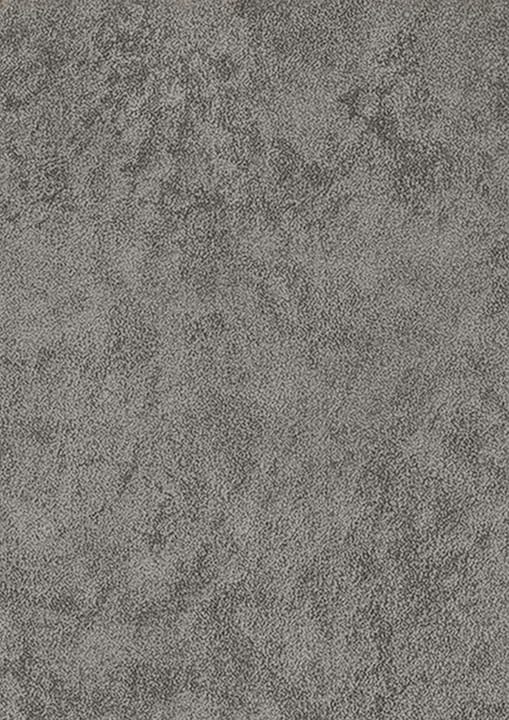
Pro tip: always order samples and look at them on the actual wall, at morning and evening light, with your actual lamps on. Concrete tones shift noticeably between cool daylight and warm bulbs.
Preparing the surface
Film will only look as good as the surface under it. A concrete texture is forgiving of subtle variation, but not of dirt, moisture or loose paint.
- Check that the substrate is sound. Peeling paint, crumbling plaster or flaking wallpaper must be removed or repaired first.
- Clean thoroughly. Remove dust, grease and residue. Kitchen cabinets in particular often carry an invisible film of cooking oil.
- Let it be dry. Damp walls and film do not mix. If a wall has a history of moisture, address the cause first. Our 48-hour adhesion test for moisture-resistant wall finishes explains how specifiers check bond performance before committing to a full job.
- Smooth significant texture. Heavy orange peel or deep gouges can telegraph through the film. Skim or sand as needed.
- Test an inconspicuous area. Apply a small piece and check the bond and the look before wrapping a whole room.
- Work in sections. Peel back part of the liner, position, then smooth from the center outward. Stretchable films with air channels in the adhesive let trapped air escape, which helps avoid bubbles.
For a fuller walkthrough of tools and technique, see what architectural film is and how to use it.
Film versus other ways to get a concrete look
There are four common routes to a concrete look. Each has a place.
| Approach | Strengths | Trade-offs |
|---|---|---|
| Real poured or cast concrete | Authentic, structural | Heavy, slow, costly, hard to change |
| Troweled microcement or plaster | Seamless, handcrafted feel | Skilled trade required, curing time, mess |
| Paint or glaze effects | Low material cost, no texture | Result depends on the painter, hard to repeat exactly |
| Self-adhesive architectural film | Fast, clean, repeatable, removable | Needs a sound substrate, seams must be planned |
Paint and glaze effects can look lovely when a skilled decorative painter does them. But the result varies from wall to wall and artisan to artisan. A film comes off the roll the same every time, which matters when you are matching a finish across multiple rooms, floors or locations. We also lay out the broader case in 10 reasons to choose vinyl film instead of painting.
What about floors?
People searching for concrete looks often ask about the cheapest way to cover a concrete floor. The honest answer is that a floor is a different problem from a wall. Floors take point loads, abrasion, moisture from below and constant cleaning, and they require products rated for that duty.
For budget floor covering, peel-and-stick flooring is the usual route. One US flooring guide puts material costs at $0.50 to $3.00 per square foot, with professional labor adding roughly $1 to $2 per square foot. Those figures vary with subfloor condition, moisture and product grade, and they cover flooring products, not architectural film.
A concrete-look architectural film should not be used on a floor just because the pattern resembles concrete. We design and position Bodaq for walls, doors, furniture and other vertical or built-in surfaces. If you are weighing the two, it helps to understand how floor-covering solutions differ from film made for walls and built-ins, and then choose each product for the job it was made for. A common and effective pairing is a proper floor product below and a concrete-look film on the walls and cabinetry above.
Our perspective: concrete is a mood, not a material
When designers ask us about concrete, they are rarely asking about cement. They are asking for a feeling: calm, solid, a little raw. We think that is exactly why film works so well. If the goal is the look, there is no reason to take on the weight, the schedule risk or the permanence of the real thing.
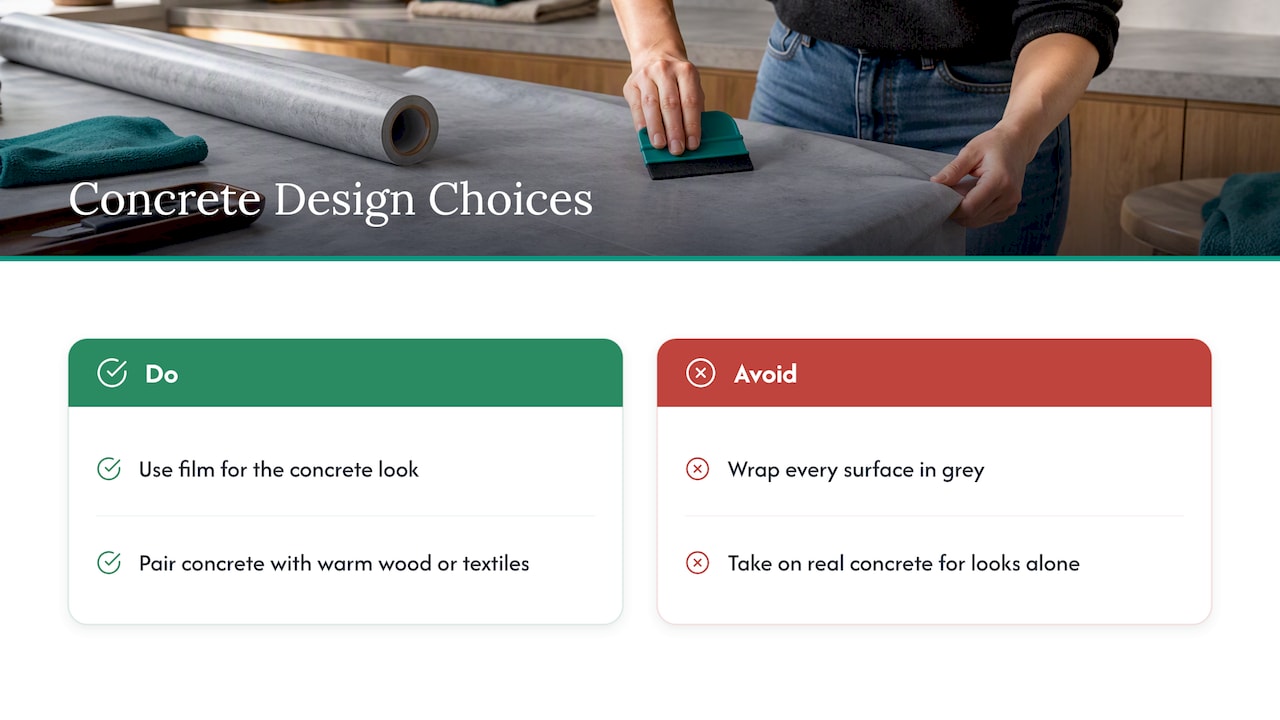
What we see again and again is that the biggest wins come from restraint. One well-chosen concrete plane, set against warm wood or soft textiles, beats a room wrapped in grey from top to bottom. Mix a smooth tone on large walls with a more textured one on a column or a counter front, and the space gains depth without adding clutter.
We built Bodaq around a stretchable, self-adhesive film with air-channeled adhesive, so installation is cleaner and quicker, and offcuts are minimized. Our catalog spans over 450 textures and colors, so a concrete scheme can sit beside wood, metal, fabric and solid color options from the same family. That makes it easier to keep a consistent look across rooms, floors and locations. For installers and dealers, we also offer tools, certification and training, because a good film still deserves a good hand.
— Bodaq
Bring the look home with Bodaq
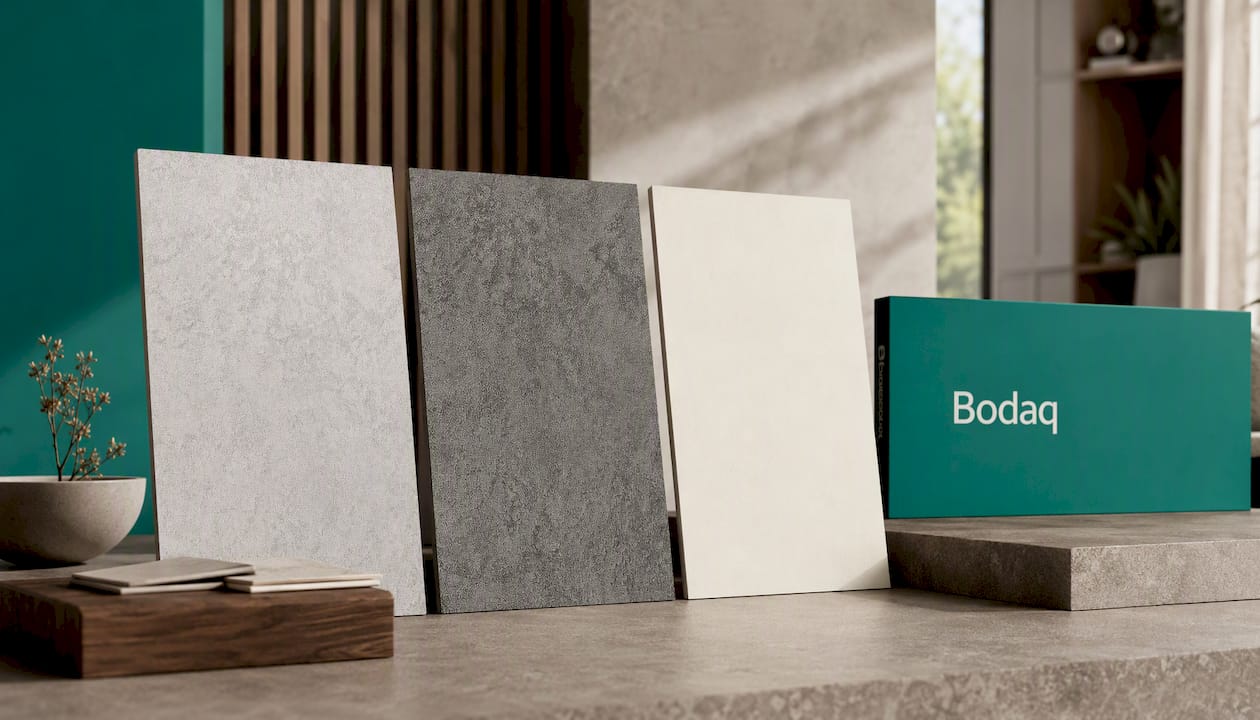
If you are ready to specify or order, start with the two concrete-look films in our Stone & Marble catalog. Wild Concrete EXF53 and Deep Wild Concrete EXF54 give you a lighter and a deeper expression of the look. If a wall needs to stay easy to wipe down, take a look at Easy Clean ECF01 in our solid colors, which pairs well with concrete tones. You can browse everything on the Bodaq Interior Film collections page, and request samples before committing to a full order.
Who benefits most
Interior designers and architects get a repeatable finish that can be specified across several projects. Our benefits for designers page goes into this in detail.
General contractors and construction professionals gain a finish that avoids wet trades and long cure times. See architectural film benefits for general contractors.
Property managers and hospitality teams can refresh lobbies, corridors and guest areas in stages, with less downtime than a conventional renovation.
Homeowners can update a kitchen island, a feature wall or a set of doors affordably, without a full remodel. For ideas, read about how to reinvent your home with architectural film.
Common mistakes to avoid
- Skipping samples. A tone that looks perfect on a screen can turn cold or green under your lighting.
- Going all grey. Concrete needs contrast in warmth and texture to avoid feeling like a bunker.
- Ignoring seams. Plan seam positions before you cut, and keep them at corners or breaks wherever possible.
- Poor prep. Dust, grease and loose paint cause most lifting problems.
- Using wall film on a floor. Choose a product rated for floors instead.
FAQ
How do you make something look like concrete?
The fastest route on an existing surface is a concrete-look architectural film applied over a clean, sound substrate. Other options include troweled microcement, plaster or decorative paint techniques, which need skilled labor and more time. Film is repeatable and does not require demolition.
Is there a vinyl product that looks exactly like concrete?
High-quality films replicate the tone, cloudiness and pitting of real concrete very closely, especially when the embossing matches the printed pattern. Seeing is believing, so request a sample and check it in your own light. Our Wild Concrete and Deep Wild Concrete films are the ones to start with.
What is the cheapest way to cover a concrete floor?
For floors, peel-and-stick flooring is generally the budget route, and one US guide lists material at $0.50 to $3.00 per square foot. Actual costs depend on subfloor repairs, moisture and labor. Architectural film is intended for walls and built-in surfaces, so it is not a floor solution.
Can concrete look film go on cabinets and furniture?
Yes, cabinet fronts, counters, doors and furniture are among the most common applications. Clean the surface well, allow extra material to wrap edges, and apply heat gently around curves. Test a small area first.