For an interior metal door frame, the best wrap is a stretchable, self-adhesive architectural film. It goes over the existing frame in a few hours, with no painting, no sanding dust and no bent metal. Bodaq Interior Film is built for exactly this job. For an exterior frame, “wrap” usually means aluminum capping, which is a weatherproofing job more than a finishing job. Knowing which one you need is the first decision, and the rest of this guide follows from it.
If you are a designer, property manager, contractor or homeowner with tired hollow-metal frames, this page covers what each kind of wrap is, how to prep and apply film step by step, and where installations fail.
TL;DR
- “Metal door frame wrap” means two different things: film that refinishes the surface, or aluminum or steel sheet that caps and protects the frame from weather.
- Inside the building, film changes the look of a steel frame in one visit and can match the door, the paneling or the millwork.
- Prep decides the result: a sound, clean, dry, degreased frame, and a trial dry fit at every corner.
- Stretchable film with air-channeled adhesive, like Bodaq’s, makes corners and long jambs easier to handle and helps reduce trapped bubbles.
- Exterior capping lives or dies on flashing and drainage, so it is not a cosmetic swap.
Table of Contents
- What “wrapping” a metal door frame actually means
- Why film suits interior metal frames
- Check the frame before you order film
- How to apply film to a metal door frame, step by step
- Interior frames and the door leaf: wrap them together
- When the frame is exterior: what capping really does
- What it costs and how to plan a budget
- Our perspective
- Ready to wrap your frames
- FAQ
- Sources
What “wrapping” a metal door frame actually means
Search results for this phrase mix two worlds. One is the weatherproofing trade, where aluminum sheet is bent on site and fastened over exterior door casings and garage door jambs. The other is the interiors world, where a thin, adhesive-backed film is laminated onto the existing surface to change its color and texture.
The two solve different problems:
| Architectural film | Aluminum or sheet-metal capping | |
|---|---|---|
| Main purpose | New look, new texture, surface refresh | Protect and cover exterior trim and casings |
| Typical location | Interior frames, doors, millwork, walls | Exterior door casings, garage door jambs |
| Applied with | Squeegee, heat, knife | Metal brake, nails or fasteners, sealant |
| Skill that matters | Prep and surface handling | Flashing, laps and drainage |
| Look | Wood grain, stone, metal, fabric, solid colors | Smooth metal, usually in a limited color set |
For most people reading this page, the interior case is the one that matters. Steel frames in offices, hotels, apartment corridors, schools and clinics are usually painted from the factory, then chipped, scuffed and repainted for years. Film puts a new finish over that history. A door jamb wrap also lets the frame match the door leaf exactly, which paint rarely does on wood-grain doors.
Why film suits interior metal frames
Three things make film the practical choice indoors.
Speed with little disruption. There is no drying time, no overspray and no strong paint odor. A hotel corridor or a tenant suite can reopen the same day, which matters when downtime costs revenue. Our guide to door wrap installation time for pros covers how crews plan this across many doors.
A bigger design palette. Bodaq offers more than 450 textures and colors across wood, metal, stone and marble, solid colors, and fabric and leather collections. A steel frame can read as warm oak, brushed bronze or a soft linen. For a hospitality project, that means the frame, the door and the wall paneling can all share one finish family, which gives the room a tailored, deliberate feel.
Less waste. Bodaq film is stretchable and self-adhesive, so it conforms to profiles that stiff materials would need cut and pieced. That keeps offcuts small and reduces rework when a frame has a reveal or a bullnose edge.
A few finishes that tend to work well on frames:
- Wood grain for continuity with doors, such as Natural Oak LW108 or Deep Walnut Oak LW109.
- Metal looks for a contemporary edge, such as Bronze RM011 or Brass RM008.
- Quiet solids for a clean, minimal reveal, such as Silver Mist S263.
- A high-performance, easy-clean solid for busy corridors, Easy Clean ECF01.
If you are choosing between looks for several doors at once, the door wrap ideas page shows combinations room by room.
Check the frame before you order film
A wrap is only as good as what is underneath. Run through this before you commit.
- Is the frame sound? Look for rust blooms, bubbling paint, dents and open weld seams. Surface rust must be treated and sealed. A wrap over active corrosion will not stop it, and it can hide it.
- Is it dry? Moisture behind or under a finish is a problem for any wrap. This is why the exterior trades insist on sound, dry substrates: wrapping a damaged surface can conceal moisture damage rather than correct it.
- What is the existing finish? Glossy enamel, textured paint and flaking paint all behave differently. Flaking paint must be removed or the film will lift with it.
- What is the profile? Count the corners, reveals and returns. Each inside corner and each end of a jamb is a place to plan.
- Where does the frame meet the wall? A caulk line, a gap at the drywall return or a wavy edge will show through film. Fix it first.
If your frames are in wet areas, kitchens or healthcare spaces, see Bodaq’s 48-hour adhesion test for moisture-resistant wall finishes for how film performance is evaluated in damp conditions.
How to apply film to a metal door frame, step by step
Here is the routine from bare frame to finished corner, with where each step tends to go wrong and what stretchable film changes.
1. Measure and cut with margin
Measure each face of the frame separately: the stop, the face, the soffit (the inside surface of the opening) and any returns. Cut each piece at least 2 inches longer than the section so you can hold and tension it. Where it goes wrong: cutting to exact size. A piece with no handling margin will creep and wrinkle as you set it.
2. Clean, degrease and key the surface
Wipe the frame with a degreaser or isopropyl alcohol so no fingerprints, cleaner residue or silicone polish remains. Scuff glossy paint lightly, then wipe again. Remove hinges and strike plates if you can, or plan to trim cleanly around them. Where it goes wrong: cleaning with a household product that leaves a waxy film. Adhesive grips the surface, not the wax.
3. Start at a visible, forgiving spot
Begin on the long face, working top to bottom or from the hinge side. Peel back a few inches of liner, align, tack with light pressure and then squeegee outward from the center in overlapping strokes. Bodaq’s air-channeled adhesive is designed so trapped air has a path out, which makes the first pass more forgiving than a flat adhesive layer. Where it goes wrong: pressing hard before the piece is aligned. Tack first, check the line, then commit.
4. Handle inside and outside corners with heat
This is where most wraps succeed or fail. On an outside corner, warm the film gently with a heat gun so it relaxes, then stretch it evenly around the edge without overstretching it. On an inside corner, relieve the film with a gentle, even pull rather than forcing a fold into the crease. Stretchable film is the advantage here: it follows the profile instead of tenting over it. Where it goes wrong: too much heat or stretch, which thins the film and can cause it to retract later.
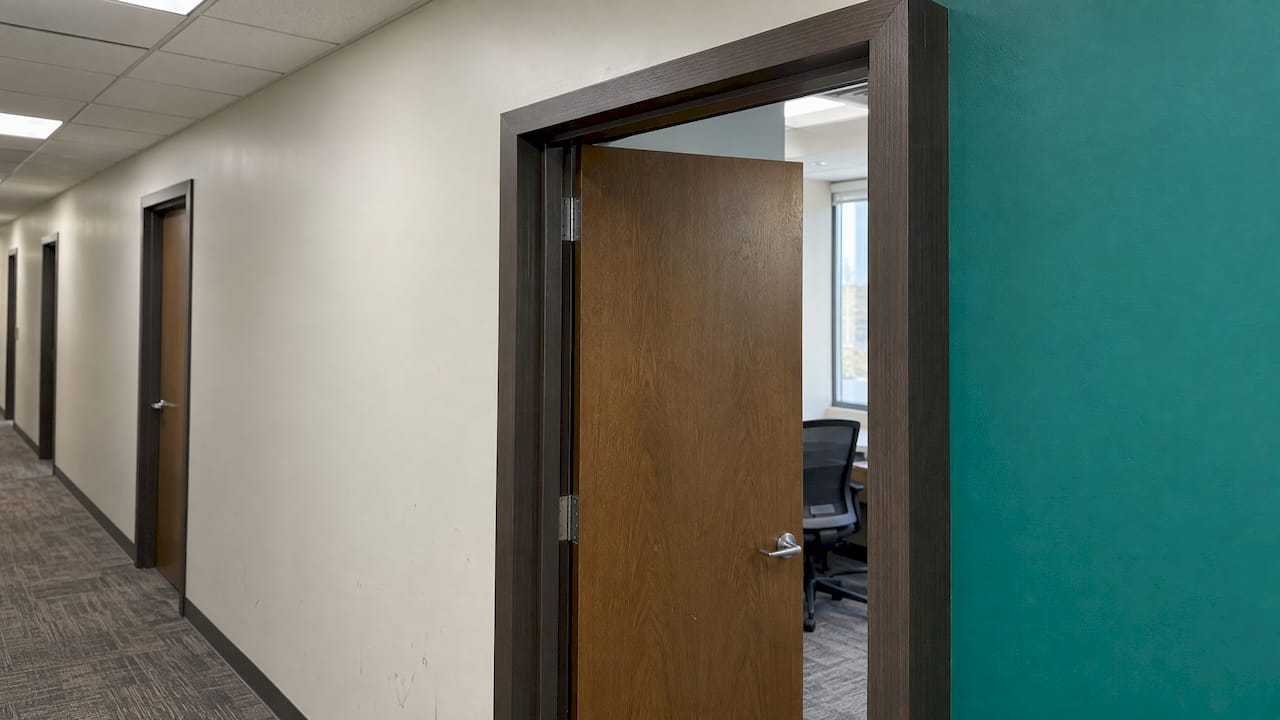
5. Seams: make them where nobody looks
Place joins on the least visible part of the frame, such as the top corner away from the traffic side or a mitred return, and overlap slightly then trim with a sharp blade for a clean line. On a wood-grain pattern, keep the direction of grain running vertically on jambs and horizontally on the head, as a joiner would. Where it goes wrong: placing seams at eye level, or mismatching the grain at a mitre.
6. Wrap into the edges and post-heat
Let the film wrap around the edges onto the back face by a few millimeters wherever possible. Then go back over the edges and corners with gentle heat and firm pressure, which sets the adhesive and helps resist lifting. Where it goes wrong: leaving a raw edge facing the traffic side, where a cart or luggage will catch it.
7. Trim, reinstall hardware and let it settle
Trim around hinges and strikes with a fresh blade, reinstall hardware, and inspect from standing distance in raking light, which exposes bubbles and wrinkles that flat light hides. Small air pockets can often be worked out toward an edge, and lifts at a corner can be re-heated and pressed down. Our door wrap repair guide explains how small lifts are fixed.
For professionals planning crews and tools, the door wrap installation page goes deeper. Bodaq also offers installation tools and certified training for professional installers, which helps when a large project needs consistent technique across crews.
Interior frames and the door leaf: wrap them together
The cleanest results come when the frame and the door are done together, in the same pattern from the same batch. A mismatch between a wrapped door and a painted frame is the most common reason a finished doorway looks “off.” If you also have closets or built-ins nearby, the closet door wrap guide covers materials and prep, and the page on blending access doors into wall paneling shows how to make a frame nearly disappear in a wall.
There is also a durability question in busy buildings. What really makes interior film last explains how surface prep, edge handling and traffic patterns decide the lifespan of a wrap, and our technical bulletins hold product-level guidance.
When the frame is exterior: what capping really does
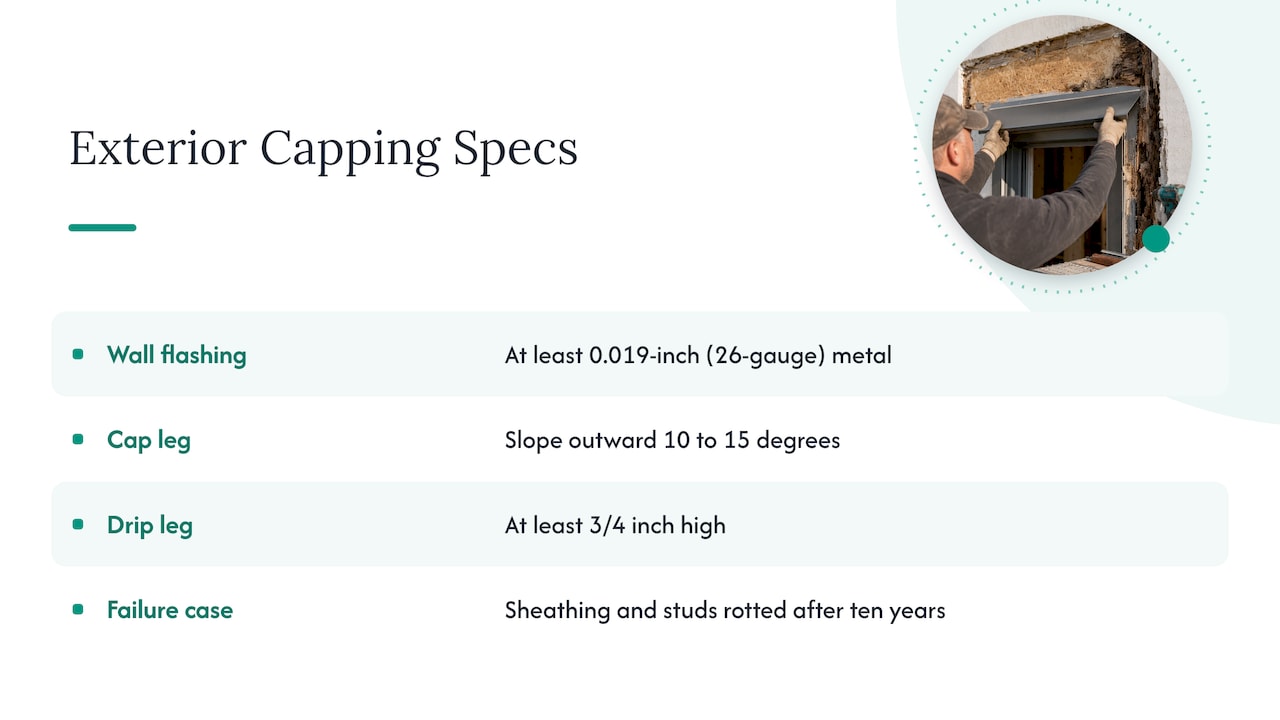
If your frame is outside, such as a storefront door casing or a garage jamb, the conversation changes. Aluminum capping is formed on site and depends on how water is managed. Fine Homebuilding’s flashing guidance recommends at least 0.019-inch (26-gauge) metal for wall flashing, a cap leg sloped outward 10 to 15 degrees, and a drip leg at least 3/4 inch high. It also documents a case where poor cap-flashing geometry and a small housewrap breach led to rotted sheathing and studs after ten years.
The lesson for specifiers is that a metal skin does not replace water management. An inspection guide from InterNACHI notes that aluminum expands and contracts with temperature changes, dents relatively easily and adds no structural strength, and it lists flashing and detailing failures around doors as common causes of water penetration. Capping is also not an air seal: drafts come from the door-to-frame joint, the door bottom or the gap at the rough opening, and those need their own treatment.
So for exterior frames, plan the flashing and drainage first, with a qualified building professional, then think about finish. For the interior side of that same opening, film is the finishing layer. Bodaq also lists an exterior film, Onyx EXF51, in its catalogue for projects that call for it.
What it costs and how to plan a budget
Film cost depends on the pattern, the number of frames, the profile complexity and whether you install yourself or hire a certified installer. Because frames have many small faces, labor tends to matter more than material. Our door wrap cost and buyer’s checklist walks through the line items for U.S. projects. For multi-door jobs, order samples first so you can judge color and texture under your real lighting.
Our perspective
Most of the frames we see discussed are steel frames that have been painted three or four times. Paint on a frame is a maintenance loop: chips, touch-ups, a new coat, repeat. Film breaks the loop, and it turns a utility element into a design element.
We designed Bodaq to be stretchable and self-adhesive so a corner is not the hardest part of the job. Air-channeled adhesive gives trapped air a way out, and over 450 textures and colors mean the frame can follow the story of the room instead of fighting it.
For hospitality and commercial teams, the point is simple: a refinish that does not close a floor for days. For designers, it is a way to carry one material language from door to frame to wall. For homeowners, it is a refresh without a paint crew.
Bodaq
Ready to wrap your frames
Bodaq Interior Film gives you a stretchable, self-adhesive finish in wood, metal, stone and marble, solid color, and fabric and leather collections, plus installation tools, samples and training for installers. Start by requesting samples of two or three finishes and test them against your frame and lighting, then browse the full collection range to build your order.

If you manage a larger property, our dealer program and certified training can help standardize results across sites. Reach out through Bodaq to start a quote.
FAQ
Can you vinyl wrap a metal door frame?
Yes. Interior steel frames take architectural film well when the surface is sound, clean and dry. Degrease the frame, treat any rust, and use a stretchable film so corners and edges conform without tenting. Done carefully, the result is a new finish without repainting.
Is door frame wrap the same as aluminum trim covering?
No. Aluminum capping is bent metal fastened over exterior casings to protect them from weather. Film is a thin adhesive layer that changes the look of a surface, mostly indoors. They answer different needs, so decide by location and goal.
How do I avoid bubbles and lifting on corners?
Clean thoroughly, tack the film before squeegeeing, and work air out from the center to the edges. At corners, warm the film gently and stretch it evenly, then post-heat the edges. Air-channeled adhesive, as in Bodaq film, gives trapped air a path out, and small lifts can be repaired later.
Should I wrap the frame and the door together?
Usually yes. Matching the pattern and batch makes the doorway read as one piece. If the door is staying as is, choose a frame finish that complements it rather than trying to imitate it.
Does a wrap seal drafts around the frame?
No wrap does that alone. Drafts come from the door joint, the door bottom or the gap at the rough opening, and each needs its own seal. Film is for the finish; seal the opening separately.
Sources
- Better Window, Door, and Trim Cap Flashing, Fine Homebuilding
- How to Inspect the Exterior, InterNACHI