Start an architectural film business by selling and installing premium self-adhesive interior films for walls, doors, furniture and commercial fit-outs. Your first move is administrative, not creative: pick a business structure, get an EIN, open a business bank account, and order sample kits plus installer training before you ever quote a project.
TL;DR:
- Register your business and obtain an EIN before ordering samples or opening a bank account to ensure compliance from the start.
- Build supplier relationships early to confirm lead times, minimum order quantities, and stock essential tools that prevent project delays.
- Proper substrate preparation and adhesion testing are critical to prevent bubbling or lifting, with moisture and surface cleanliness being key factors.
- Starting with a core catalog of wood, stone, and solid color films covers the majority of client requests and reduces overstocking risks.
- Certification programs improve installation quality, reduce callbacks, and can help generate leads through trusted installer directories.
Table of Contents
- What an Architectural Film Business Actually Does
- Legal, Registration, Tax and Insurance Checklist to Start
- Operations and Supply Chain: Sourcing Film, Samples and Tools
- Installation Quality: Substrate Prep, Adhesion Testing and Certification
- Pricing, Estimating and Margins for Projects
- Go-to-Market: Selling to Designers, Contractors and Facility Managers
- 90-Day Launch Checklist: Week-by-Week
- Legal Considerations Specific to Film Usage and Intellectual Property
- Staffing and Team Management Considerations for Growth
- Common Challenges and Troubleshooting in Film Application
- Equipment and Technology Needs for Film Installation
- Marketing and Client Acquisition for Film Businesses
- Why Manufacturer-Backed Training Changes the Math
- How Bodaq Helps You Start: Catalog, Samples and Training
- FAQ
- Sources
What an Architectural Film Business Actually Does
An architectural film business supplies and installs self-adhesive decorative films that refinish surfaces instead of replacing them: a dated oak cabinet becomes a matte charcoal finish, a lobby wall becomes travertine-look stone, a conference table gets a wood veneer upgrade overnight. Projects run from single furniture pieces to full hospitality fit-outs.
Your buyers are interior designers specifying finishes for clients, architects solving budget constraints on commercial builds, property managers refreshing units between tenants, and general contractors who need a fast, low-dust alternative to demolition. Each one cares about turnaround time and finish consistency more than the technical details of the film itself.
Product selection matters early. Stretchable films with air-channeled adhesive backing, like Bodaq Interior Film, install faster and with fewer bubbles than rigid wraps, which shortens labor time on every job. A sensible starter catalog leans on wood tones, stone and marble visuals, and a handful of solid colors, since those three families cover the bulk of commercial and residential requests. The Wood Collection, Metal Collection, Stone & Marble Collection and two more give you that range without overstocking.
Legal, Registration, Tax and Insurance Checklist to Start
Before you install anything, register the business. An LLC protects personal assets and suits most solo or small-crew operations, while an S corp can reduce self-employment tax once revenue grows. Either way, you file with your state, get an Employer Identification Number, and open a dedicated business bank account so your bookkeeping stays clean from invoice one.
Licenses and permits vary by activity and location, so check both state and local requirements before taking a deposit. Most installers also fall under general contractor or specialty trade rules depending on the jurisdiction, and the Small Business Administration’s licensing guide is the right starting point for figuring out which apply to you.
- Register your business structure and obtain your EIN before opening a bank account.
- Check state and local licensing rules, since requirements differ by activity and city.
- Carry workers’ compensation if you employ installers, even part-time.
- Add general liability and product liability coverage to protect against installation damage or material defects.
- Consider commercial property coverage once you’re holding inventory and tools.
Operations and Supply Chain: Sourcing Film, Samples and Tools
Getting your supply chain right before your first job keeps you from scrambling mid-project. Set up a dealer or supplier account early so you understand lead times, minimum order quantities and freight costs, since film typically ships by the roll and backorders can stall a job.
- Open a dealer account and confirm standard lead times for your core SKUs.
- Build a samples program: order a working set of swatches covering wood, stone, and solid colors, and decide whether larger loaner panels are free or billed against a future order.
- Stock consumable essentials, including squeegees, heat guns, cutting blades and primer, so a single missing tool never delays an install.
- Set a 90-day procurement timeline: samples and starter rolls in month one, a wider SKU range by month two, and backup suppliers identified by month three.
Pro Tip: Keep a small inventory of your three best-selling finishes on hand at all times, even if everything else ships on demand.
Roll width and substrate compatibility drive your SKU decisions more than aesthetics alone. A stone-look film like Sierra Stone behaves differently on curved millwork than a flat wood tone like Natural Oak, so test each new pattern on a mock-up before quoting it for a complex surface.
Installation Quality: Substrate Prep, Adhesion Testing and Certification
Most film failures trace back to the surface, not the material. Substrate preparation accounts for roughly half of total installation labor, and skipping an adhesion check is the most common cause of bubbling or lifting months after a job looks finished.
Substrate prep essentials:
- Clean the surface fully to remove grease, dust and residue before measuring anything.
- Confirm the surface is dry; trapped moisture is a primary cause of adhesive failure.
- Smooth and prime porous or uneven substrates so the film bonds evenly.
- Run a Dyne pen test and a small peel test on every unfamiliar material before committing to a full installation.
Adhesion failure risk is a function of prep, not product quality. When a surface cannot be verified dry and smooth, professional installers routinely require a signed waiver or refuse the job rather than accept a non-compensable comeback.
Commercial wallcovering guidance reinforces the same discipline: surfaces need to be dry and smooth, adhesive application should follow manufacturer timing for booking and tack, and micro-vented films are preferred in moisture-prone areas to reduce mold risk. Formal training through programs like the Bodaq Training Program or the manufacturer-neutral PDAA Architectural Films certification gives new installers a repeatable process instead of trial and error on a paying client’s wall.
Pricing, Estimating and Margins for Projects
Labor estimating splits into prep time and install time, and prep usually takes as long as the application itself on anything but a brand-new, factory-smooth surface.
- Calculate materials as square footage times roll cost, plus your waste percentage.
- Estimate labor separately for prep and installation, since rushing prep is where failures start.
- Choose cost-plus pricing for straightforward jobs and project-based pricing for complex commercial work where your experience commands a premium.
- Structure every quote with a deposit, a milestone payment at substrate approval, and final payment on completion, with warranty terms and change-order pricing spelled out up front.
Go-to-Market: Selling to Designers, Contractors and Facility Managers
Your early project flow comes from relationships, not advertising. Designers and architects specify finishes months in advance; getting your samples into their hands early positions you well for the next bid cycle.
- Build relationships with the design trade, general contractors and hospitality procurement teams who repeat-buy across projects.
- Package physical sample kits and one-page spec sheets that designers can drop directly into a presentation board.
- List yourself on certified-installer directories once trained, since those listings generate inbound leads from buyers searching for vetted professionals.
- Document every completed project with before-and-after photos, since a strong visual portfolio does more to close new work than any pitch.
A samples-first approach, offering loaner kits and designer-specific sample packs, consistently speeds up specification approval because it removes the guesswork for whoever signs off on the finish.
90-Day Launch Checklist: Week-by-Week
- Weeks 1 to 2: Register your business structure, get your EIN, open a bank account, and request insurance quotes.
- Weeks 3 to 6: Set up supplier accounts, order sample kits, buy core tools, and complete installer training.
- Weeks 7 to 10: Run one or two pilot projects at a reduced rate in exchange for photos and a reference.
- Weeks 11 to 12: Finalize pricing, list yourself as a certified installer, and start paid lead generation.
Pro Tip: Treat your first two pilot projects as portfolio investments, not profit centers. The photos pay you back on every quote afterward.
Legal Considerations Specific to Film Usage and Intellectual Property
Architectural film sits at an interesting legal intersection: you’re both a reseller of a manufacturer’s proprietary product and a service provider applying it. A few areas deserve attention before you scale.
Pattern and texture designs belong to the manufacturer. Reselling or reproducing a specific wood grain or stone visual outside an authorized dealer relationship risks a trademark or design dispute, so keep your sourcing within official channels rather than gray-market suppliers. Your contracts should specify material warranty terms separately from workmanship warranty terms, since a bubbling panel caused by a substrate defect is a different liability question than one caused by poor application.
Lien rights matter on larger commercial jobs. Most states allow a mechanic’s lien when a client doesn’t pay for completed work, but the filing windows and notice requirements are jurisdiction-specific, so confirm the rules where you operate before you need them.
Finally, keep your client agreements explicit about scope. “Refinish the lobby wall” means something different to you than it might to a facility manager who assumed the trim was included. A short, written scope of work with a signature protects both sides and reduces disputes that otherwise turn into unpaid invoices or small claims filings.
Staffing and Team Management Considerations for Growth
A one-person operation can handle residential jobs and small commercial work, but hospitality fit-outs and multi-unit property refreshes require a crew. Hiring your first installer changes your insurance requirements immediately, since workers’ compensation becomes mandatory in most states the moment you have an employee on payroll.
Train new hires on your substrate-prep checklist before letting them near a client-facing job. Consistency in prep and application is what protects your reputation, so a documented process matters more than individual installer talent in the early going. Pair new installers with your most experienced person for the first several jobs rather than sending them out solo.
As you add crew, consider whether you need a dedicated estimator or sales contact separate from your lead installer. Many small operations stall because the best installer is also the only person who can quote a job, which caps how many projects you can run simultaneously. Splitting sales and installation roles, even informally, is usually the first real growth unlock.
Common Challenges and Troubleshooting in Film Application
Bubbling after installation is almost always a substrate or temperature issue rather than a material defect. If a surface was humid, dusty, or not fully cured before application, trapped air or moisture works its way out over days or weeks.
Edge lifting on doors and furniture typically traces back to insufficient heat during the final seal or a corner that wasn’t properly wrapped using a technique like the Velcro method, where adhesive on both surfaces is allowed to tack before final pressure is applied. Pattern misalignment on seams usually means the panels weren’t dry-fit and marked before the adhesive backing came off, a step that’s easy to skip under deadline pressure but expensive to fix afterward.
Temperature swings on job sites, particularly in unconditioned commercial spaces, affect both adhesive tack time and film flexibility. Running a small test patch in the actual installation environment catches most of these issues before they become a full-wall problem.
Equipment and Technology Needs for Film Installation
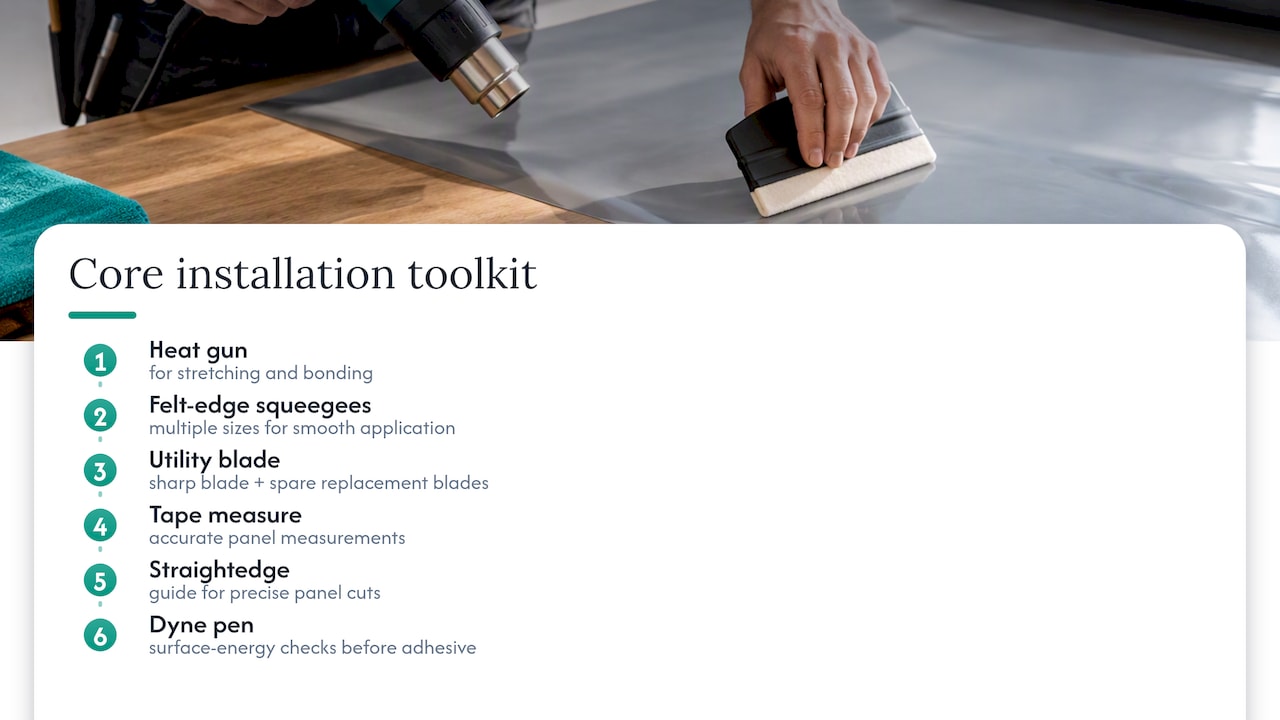
A core toolkit covers most jobs: a quality heat gun for stretching and bonding, a set of felt-edge squeegees in multiple sizes, a sharp utility blade with replacement blades on hand, and a tape measure and straightedge for accurate panel cuts. A Dyne pen belongs in every kit for quick surface-energy checks before committing adhesive to an unfamiliar material.
Beyond hand tools, a laser level speeds up multi-panel wall layouts, and a steam cleaner helps with stubborn surface residue during prep. On the business side, estimating software or even a structured spreadsheet template keeps your square-footage and waste-factor math consistent across every quote, which matters more than it sounds once you’re juggling several active projects.
Marketing and Client Acquisition for Film Businesses
Your marketing budget works hardest when it’s aimed at trade relationships rather than broad consumer advertising. Commercial property managers and hospitality procurement teams search for vetted installers, so a certified-installer listing and a handful of strong case studies do more than a paid ad campaign in the early months.
Local search matters for residential and small commercial leads: a well-photographed portfolio page with before-and-after shots of real projects, paired with basic local SEO, captures homeowners and small business owners searching for a refinishing option instead of a full renovation. For the design trade specifically, physical sample mailers and in-person drop-offs at design studios still outperform cold digital outreach, since designers prefer to feel the material before specifying it.
Why Manufacturer-Backed Training Changes the Math
The temptation for a new installer is to learn by doing on a paying job. That’s a costly way to discover that a substrate was wrong for the product. Manufacturer training compresses months of trial and error into a structured curriculum, and it shows up directly in fewer callbacks and faster ramp time for a new crew member.
A broad catalog also wins design-led work that a narrow offering can’t touch, and eco-friendly manufacturing claims give hospitality and commercial clients a sustainability story worth repeating in their own marketing.
— Bodaq
How Bodaq Helps You Start: Catalog, Samples and Training
We built our catalog and training program around exactly this launch problem: new installers need proven products and a clear path to competence, not a guessing game. Our Wood Collection, Metal Collection, Stone & Marble Collection and two more cover the core finishes most projects call for, from Smoked Charcoal Oak to Travertine.
- Request a sample kit to see stretch, texture and finish quality firsthand.
- Enroll in our training program to learn installation technique before your first paid job.
- Ask about dealer terms once you’re ready to stock inventory at volume.
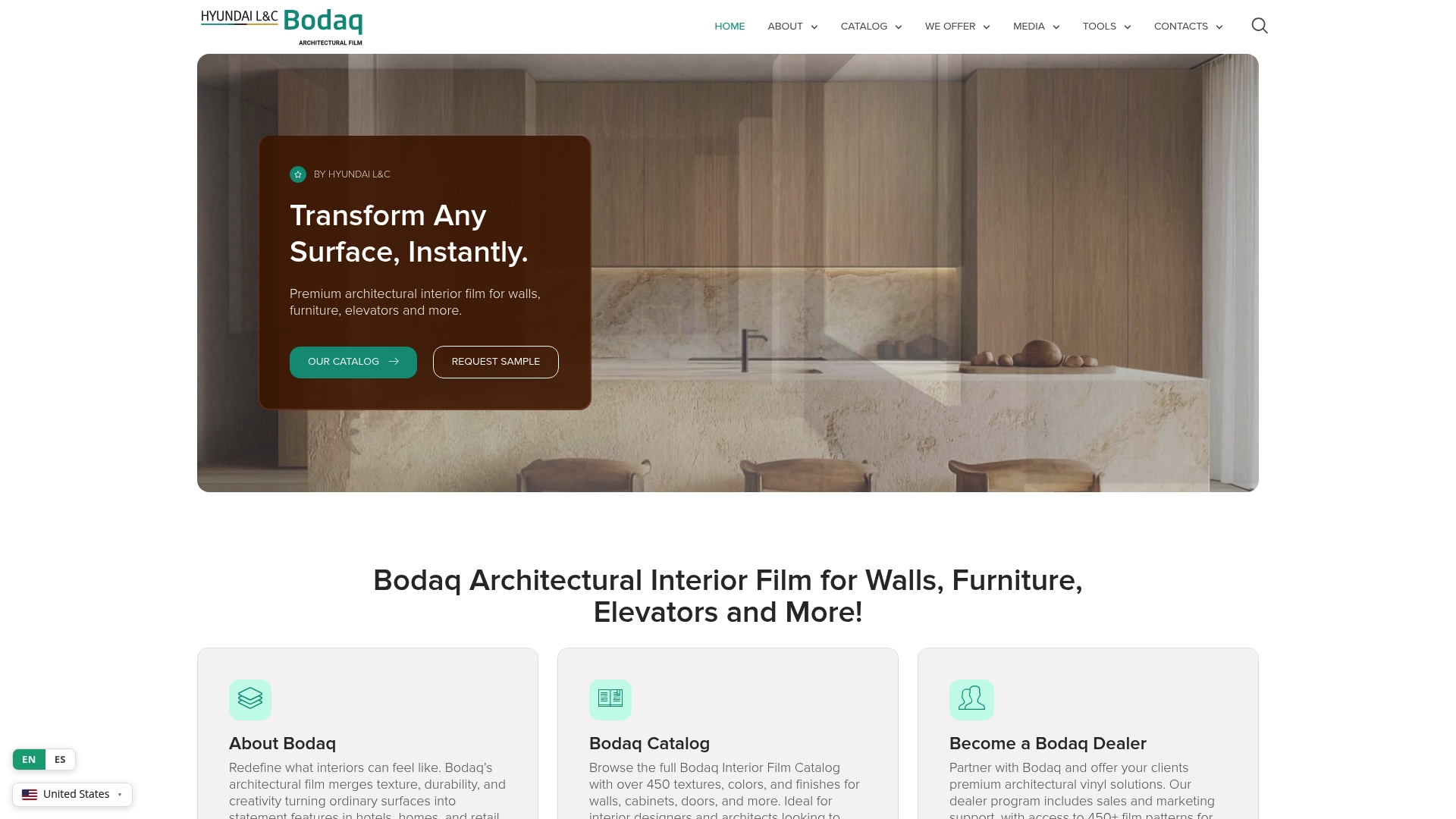
If you’re ready to move past research, start with our Interior Film catalog and request your first sample kit this week.
FAQ
How much does it cost to start an architectural film business?
Startup costs depend heavily on tools, inventory and insurance choices, and we don’t publish a fixed startup budget since every market and crew size differs. Expect your largest early expenses to be sample kits, core tools, and your first general liability policy, with inventory scaling as projects come in.
Do I need certification to install architectural film professionally?
Certification isn’t universally required by law, but the PDAA Architectural Films credential and manufacturer training programs significantly improve installation quality and can generate leads through certified-installer directories. Many commercial clients also prefer or require a certified installer before awarding a contract.
What insurance does an architectural film installer need?
Most installers carry general liability, product liability, and workers’ compensation once they have employees, alongside commercial property coverage for stored inventory. Requirements vary by state, so confirm specifics with an insurance agent familiar with contracting or specialty trades in your area.
How do I test if a surface is suitable for film installation?
Run a Dyne pen test to check surface energy and a small peel test on an inconspicuous area to confirm adhesion before committing to a full installation. If the surface can’t be verified clean, dry and smooth, professional installers typically require a signed waiver or decline the job rather than risk a non-compensable failure.
What products should a new architectural film business stock first?
A practical starter range covers wood tones like Natural Oak, stone visuals like Sierra Stone, and a few solid colors such as Evening Snow, since these three families cover the bulk of early commercial and residential requests.