
Class A finishes score a Flame Spread Index (FSI) of 0 to 25 and a Smoke-Developed Index (SDI) of 0 to 450; Class B tops out at FSI 75; Class C runs up to FSI 200. Every one of those numbers comes from ASTM E84, the 10-minute Steiner Tunnel test that generates both figures. If you’re specifying a wall finish for a corridor, exit enclosure, or any space governed by IBC Chapter 8, require a tested material or a tested assembly, and demand the full lab report in the submittal package, not a marketing sheet.
TL;DR:
- ASTM E84 testing produces separate flame spread and smoke indices, which must both meet specific thresholds to certify a finish for code compliance.
- The flame spread index determines the fire class, with Class A requiring FSI 0-25, Class B up to 75, and Class C up to 200, all with SDI capped at 450.
- Mounting, substrate, and installation methods significantly influence test results, so matching these conditions in testing is essential for reliable submittals.
- Providing full test reports, exact product descriptions, and installation details with submittals streamlines permitting and reduces review delays.
- For films and laminated finishes, confirm test data is based on the actual substrate, adhesive, and orientation to ensure code and performance compliance.
Table of Contents
- What does ASTM E84 wall finishes testing actually measure?
- Where does the IBC require Class A, B, or C wall finishes?
- Why do specimen mounting and substrate change E84 results?
- What spec language and documents speed up permit approval?
- Applying E84 guidance to architectural films: what to check on Bodaq products
- Managing design intent against code constraints on finish selection
- How to request Bodaq samples and E84 documentation for submittals
- Sources
What does ASTM E84 wall finishes testing actually measure?
ASTM E84 produces two separate numbers, and architects who treat them as one score end up specifying the wrong product. Flame Spread Index tracks how fast fire moves across the surface of a material during the test. Smoke-Developed Index tracks how much smoke that same burn generates. A finish can post a low FSI and a surprisingly high SDI, or vice versa, because the two properties don’t move together.
The Steiner Tunnel test that generates these numbers runs for exactly 10 minutes inside a horizontal tunnel furnace. The lab calibrates the equipment against two reference materials: select grade red oak flooring, which is assigned a baseline FSI of 100, and fiber-cement board, assigned an FSI of 0. Every test specimen gets scored against that same scale, which is what makes the test comparative rather than absolute. A material tested in one lab should track closely with the same material tested elsewhere, provided both labs follow the standard’s mounting and calibration procedures.
Reading a report comes down to isolating both numbers before you assign a class:
- Locate the FSI value first. It determines the class ceiling: 0 to 25 for Class A, 26 to 75 for Class B, 76 to 200 for Class C.
- Check the SDI value separately. Under most IBC applications, the smoke ceiling is 450 regardless of class, so a low FSI doesn’t rescue a finish with an SDI over that threshold.
- Confirm the specimen description matches your project material exactly, down to thickness and finish coat, since a substitution invalidates the reported numbers.
A finish reporting FSI 18 and SDI 130 clears Class A on both counts. One reporting FSI 22 and SDI 480 fails the smoke threshold even though the flame spread number looks clean. That distinction trips up more submittals than any other single detail in an E84 report.
Where does the IBC require Class A, B, or C wall finishes?
The International Building Code doesn’t treat all interior spaces equally, and matching class to occupancy is where most spec errors originate. The numeric bands themselves come straight from IBC Chapter 8: Class A covers FSI 0 to 25, Class B covers FSI 26 to 75, and Class C covers FSI 76 to 200, with SDI capped at 450 across all three.
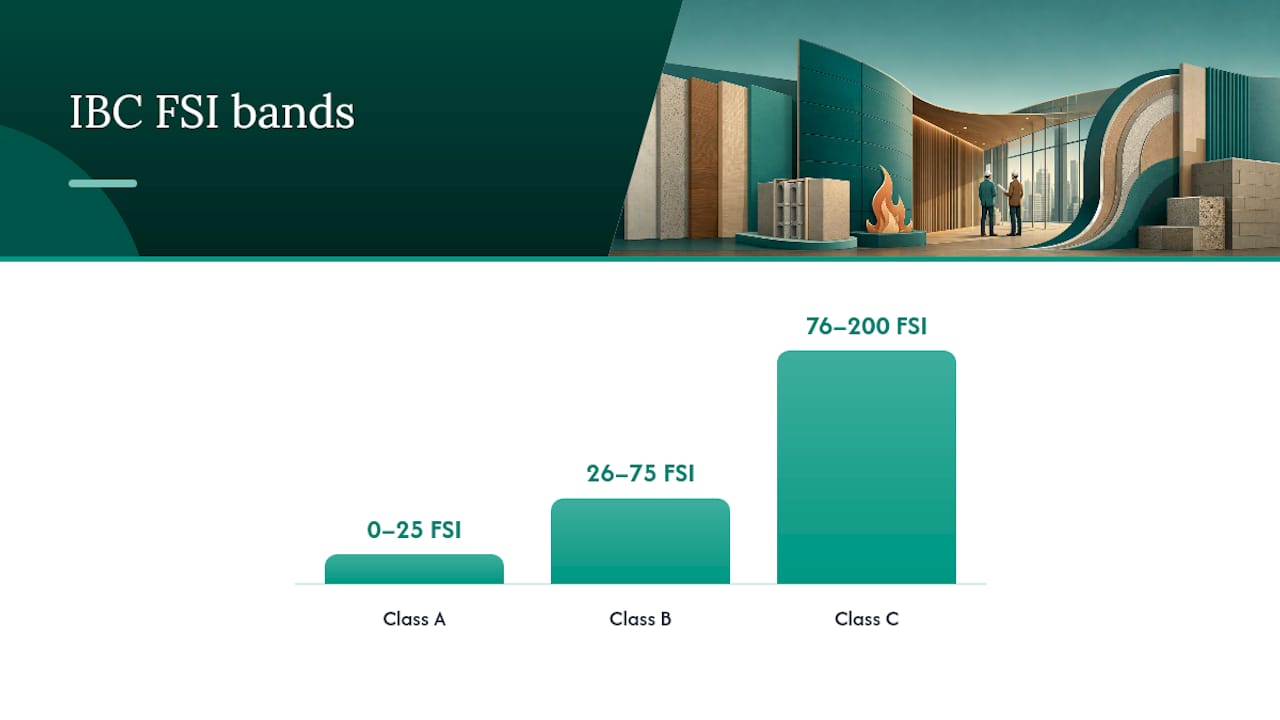
Table 803.13 cross-references those classes against occupancy type and room function, and it’s worth pulling up early in design rather than after a finish has already been selected. Design teams that consult Table 803.13 during schematic phases avoid the change orders that come from discovering, at permit review, that a chosen finish doesn’t meet the required class for its location.
Common triggers worth flagging for your project team:
- Exit enclosures and exit passageways typically demand Class A finishes, with limited exceptions for sprinklered buildings.
- Corridors serving certain occupancies (institutional and some assembly groups especially) require Class A or B depending on the specific use group and sprinkler status.
- Rooms and enclosed spaces generally allow a wider range, often down to Class C, when the building is fully sprinklered.
- Textile wallcoverings and expanded vinyl wallcoverings carry additional testing requirements beyond E84 in many jurisdictions, since fabric-backed materials can behave differently once mounted.
- Resilient floor and interior finish products installed in strips or with visible seams may need documentation confirming the seam pattern used in testing matches field installation.
Sprinkler protection frequently allows a one-class reduction from what an unsprinklered space would require, but that exception varies by occupancy group. Always verify against the specific edition of the IBC your jurisdiction has adopted, since amendments to Chapter 8 aren’t uniform across states.
Why do specimen mounting and substrate change E84 results?
The Steiner Tunnel test mounts every specimen face down in the ceiling position of the tunnel, and that detail matters more than most spec writers realize. A thin material like an architectural film or wallcovering doesn’t burn the same way on its own as it does laminated to a substrate. The substrate can act as a heat sink, an adhesive can add fuel load, and a mechanical fastening system can create air gaps that change how flame propagates across the surface.
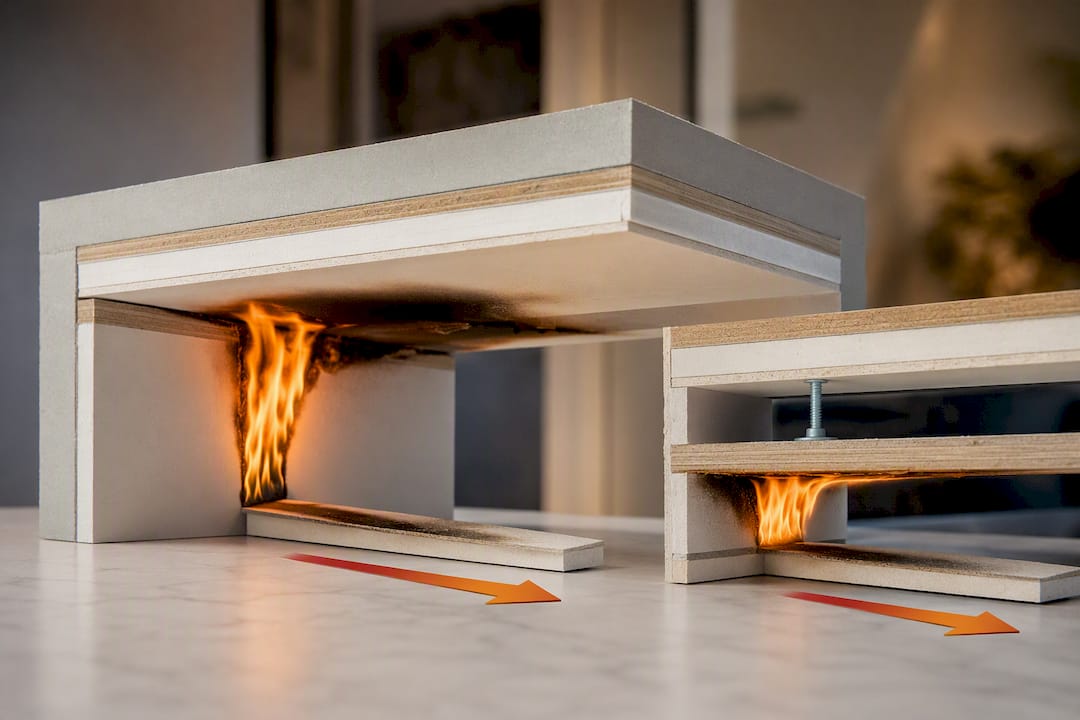
Capital Testing Laboratory’s guidance on E84 setup makes the point directly: specimen mounting and assembly details can shift FSI and SDI meaningfully. A film tested unmounted, or tested on a substrate different from what’s specified on your project, doesn’t tell you what will happen once it’s installed on gypsum board with contact adhesive in a real corridor.
Use this sequence to decide whether a material-only report is enough or whether you need an assembly test:
- Confirm whether the manufacturer’s tested specimen used the same substrate, adhesive, and thickness your project specifies.
- If the substrate differs, request either a new assembly test matching your exact conditions or a signed manufacturer letter confirming equivalency.
- If the finish will be mechanically fastened rather than adhered, verify the tested specimen used the same fastening method.
- Flag any project-specific detail, such as a fire-rated backer board substitution, that wasn’t part of the original test.
- Attach the resulting documentation, whichever path you take, directly to the submittal rather than referencing it separately.
Pro Tip: When you send a submittal package to the lab or reviewing authority, include a one-page installation note describing substrate, adhesive, fastening method, and specimen orientation. Reviewers spend less time chasing clarifications when that detail sits next to the E84 report instead of buried in a spec section three pages away.
What spec language and documents speed up permit approval?
Spec clauses that reference the standard without naming a class create ambiguity, and ambiguity is exactly what triggers reviewer pushback. A clause reading “wall finish shall comply with ASTM E84 Class A, FSI 0 to 25 and SDI 0 to 450, tested as installed assembly per project substrate” leaves no room for a reviewer to ask what you meant.
Attach these documents to every submittal involving a fire-classified finish:
- The complete E84 test report, not a summary page, including the lab’s accreditation statement.
- A specimen description matching the exact product, thickness, and finish specified on your drawings.
- Installation instructions showing substrate, adhesive, and fastening method consistent with the tested assembly.
- A certificate of conformity from the testing lab, when the manufacturer provides one, since reviewers weigh accredited lab documentation over marketing claims.
Third-party certification isn’t always required by code, but it streamlines review considerably. Manufacturers who route their products through accredited certification bodies give inspectors a documented chain of custody between the tested specimen and the labeled product, which reduces the odds of an RFI. The most common red flag reviewers cite is a manufacturer data sheet that states a class without attaching the underlying report. If your submittal can’t produce the report on request, expect a delay.
Applying E84 guidance to architectural films: what to check on Bodaq products
Architectural films present a specific documentation challenge: the film’s fire performance depends heavily on what it’s laminated to. A film tested alone tells you less than a film tested on the substrate and adhesive system your project actually uses, which is why Intertek’s guidance on assembly testing recommends either a project-matched assembly test or a manufacturer statement confirming equivalency.
When requesting E84 documentation for any film product, verify these items are present before you accept the package into a submittal:
- Specimen description matching the exact film pattern and thickness specified.
- Substrate and adhesive system used in the tested assembly.
- Test date and the issuing lab’s accreditation credentials.
- Confirmation that installation orientation matches the tested condition.
Bodaq’s Easy Clean high-performance collection ECF01, Rustic Stone EXF52, and Onyx EXF51 collections are common candidates for wall and panel refinishing where a fire-classified finish is required. Request test documentation and physical samples for each before finalizing a submittal, and confirm the tested substrate matches your project condition.
Managing design intent against code constraints on finish selection
Design intent and code compliance collide more often on finishes than on almost any other building element, largely because the visual sample rarely comes with the tested assembly attached. Coordinate with the manufacturer and testing lab early when a nonstandard substrate or installation method is under consideration, not after the finish is already drawn into the set.
A change as small as swapping adhesive brands can shift an SDI result enough to drop a class. Document every substitution, and keep the full test package, not a summary, in the closeout binder for future renovations or tenant alterations.
— Bodaq
How to request Bodaq samples and E84 documentation for submittals
Specifying a wall finish without the underlying test package is how projects end up in RFI limbo two weeks before a permit deadline. E84 documentation tied to each film collection helps architects and code reviewers attach real lab data, not a summary claim, directly into their submittal set.
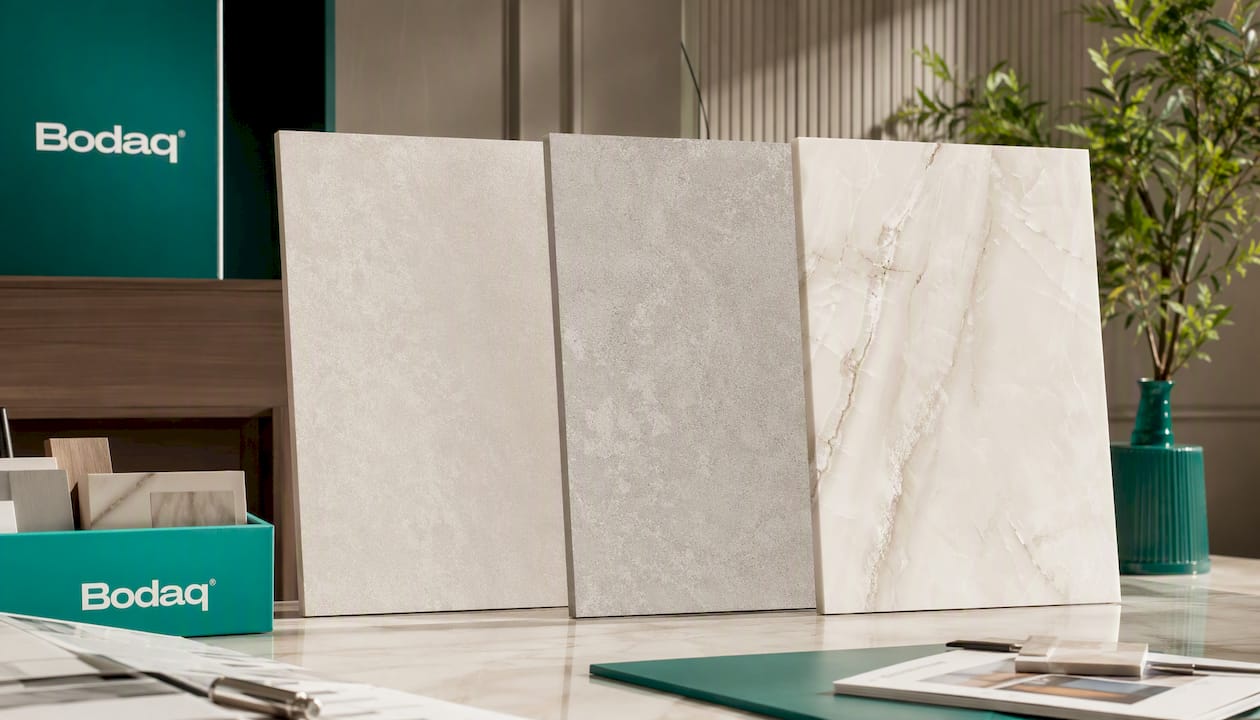
Start by requesting samples and the corresponding test reports for the Easy Clean ECF01, Rustic Stone EXF52, or Onyx EXF51 collections through Bodaq’s product pages, where specimen details and substrate information are available alongside the sample request flow. If your project substrate or adhesive differs from the tested condition, installation guidance may be provided to help match the field application to the documented assembly, which keeps your submittal package consistent from spec to inspection. For teams weighing film against other finish categories, the interior wall finishing material overview and the interior film benefits guide for general contractors are useful next stops before you lock a spec section. Request your samples and documentation now, and get the E84 package into your submittal before the reviewer asks for it.
Sources
- E84 Standard Test Method for Surface Burning Characteristics of Building Materials (ASTM)
- ASTM E84: Standard Test Method for Surface Burning Characteristics of Building Materials (Intertek)
- ASTM E84 surface burning laboratory testing (Capital Testing Laboratory)