
Interior door wraps typically run $150 to $400 installed for a single residential door, entry doors land between $160 and $600 depending on finish, and commercial or fire-rated doors climb to $350 to $1,000 or more per opening. The main factors driving cost variation are film grade and installation labor, rather than the door itself. The breakdown below shows exactly where your money goes.
TL;DR:
- Door wrap costs are mainly influenced by film quality and installation labor, with material representing about 30 to 40 percent of total expenses.
- Larger, denser, or specialty doors like metal or fire-rated types usually add 50 to 150 percent to wrapping costs compared to hollow-core interior doors.
- Commercial door wraps cost between $350 and $600 per door to withstand high traffic, durability requirements, and code compliance, unlike residential pricing.
- DIY wrapping might save money initially but risks bubbling, miscuts, and wasted material, making professional installation more reliable for complex or double-sided jobs.
- Over five years, vinyl wraps tend to be more cost-effective than repainting or door replacement, especially with premium films lasting up to 10 years and protecting against wear.
Table of Contents
- What Drives Door Wrap Cost Per Door?
- How Does Door Size and Wrapping Style Affect Price?
- Residential vs. Commercial Door Wrap Pricing
- Is DIY Door Wrapping Worth the Savings?
- How Long Do Door Wraps Last Compared to Paint?
- What Should Be in Your Door Wrap Quote Request?
- How Film Quality Affects Installation Cost and Waste
- Why Does Door Wrap Pricing Vary by Region?
- What Hidden Fees Show Up in Door Wrap Quotes?
- How Does Warranty Coverage Affect What You Pay?
- How Should You Budget for a Door Wrap Project?
- Why Value Beats the Lowest Bid
- Find the Right Bodaq Finish for Your Door Project
- Sources
What Drives Door Wrap Cost Per Door?
A door wrap quote typically includes costs for film, finishing, and installation labor. Understanding the split helps you catch a quote that’s padded in the wrong place.
Material typically accounts for 30 to 40 percent of total wrap cost, a ratio that holds across vinyl wrapping projects whether you’re covering a car panel or a door slab. Budget solid-color vinyl runs at the low end of that range. Textured, stone-look, or metallic architectural films cost more per square foot because they require thicker gauge material and more careful handling during application.
Labor makes up the rest, and this is where most of your invoice lives. A standard residential door wrap install often falls in the $160 to $400 installed range, while a custom printed wrap with heavier material yardage can push the total toward $232 in material plus $160 in labor, for roughly $392 total.
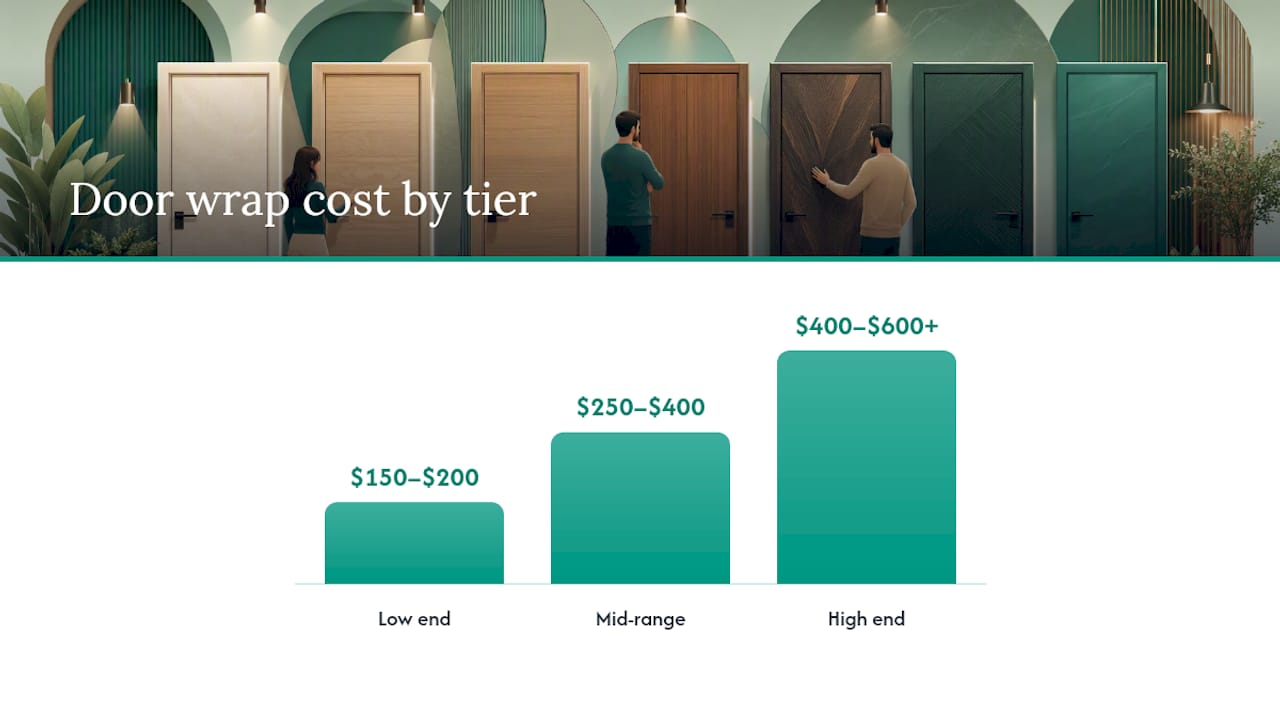
Here’s how three real-world scenarios stack up:
- Low end: Budget solid vinyl, single-sided, simple flat door: $150 to $200 total
- Mid-range: Architectural textured film, single-sided, standard prep: $250 to $400 total
- High end: Custom printed graphic or premium finish with extra prep work: $400 to $600+ total
Pro Tip: Ask for a quote broken into material cost, labor cost, and any printing or template fee separately. A single lump-sum number makes it impossible to tell whether you’re overpaying for film or for hours on the job.
How Does Door Size and Wrapping Style Affect Price?
Not every door costs the same to wrap, even at the same finish level. Door construction and coverage style shift the price meaningfully.
- Hollow-core interior doors are the cheapest to wrap. Flat, lightweight, and simple to prep, they sit at the low end of most pricing tables.
- Solid-core and entry doors add $50 to $150 over hollow-core pricing because the denser substrate takes longer to prep and the film has to conform to a heavier panel.
- Metal and fire-rated doors carry the highest premiums. Some finishes require certified films and installers familiar with code requirements, which pushes labor time and material cost up.
- Single-sided wraps cover only the visible face, which keeps cost down for closets or storage doors.
- Double-sided wraps roughly double material use and add labor time for edge wrapping and hardware removal, often adding 60 to 90 percent to the single-sided price rather than a flat double.
- Special cases that add fees: glass inserts requiring cutouts, louvered doors with slats to work around, and heavy commercial hardware that must be removed and reinstalled.
Residential vs. Commercial Door Wrap Pricing
Commercial jobs cost more per door, and the reason isn’t just volume. Commercial door resurfacing with high-performance architectural film typically runs $350 to $600 per door, a figure that reflects spec-grade materials built to hold up under heavy foot traffic, frequent cleaning, and in many cases fire-rating requirements that residential jobs never touch.
Facility managers budgeting for hotels, offices, or healthcare spaces should factor in:
- Volume pricing: Per-door cost usually drops as the number of doors in a single project increases, since setup and travel costs get spread across more units.
- Sequencing: Wrapping in phases to avoid shutting down an entire wing or floor at once adds coordination but reduces downtime.
- Code compliance: Fire-rated and high-traffic spec finishes take longer to source and install, which is part of why commercial quotes trend toward the top of the range.
Choosing a film built for durability upfront usually costs less than repeat touch ups over a five year lease cycle.
Is DIY Door Wrapping Worth the Savings?
Material-only costs for a DIY single door wrap typically fall between $80 and $180, plus a squeegee, heat gun, and utility knife if you don’t already own them. That’s real savings on paper.
The catch shows up during application:
- Bubbling from trapped air, usually caused by rushing the squeegee pass or working in a room that’s too cold.
- Miscuts around hinges, handles, and edges that waste film and force a second roll purchase.
- Wasted material from misjudging door dimensions, especially on doors with panel details or beveled edges.
DIY tends to work fine for a single flat interior door. Commercial jobs, double-sided wraps, or anything you want covered under an installer’s warranty are worth handing to a professional.
Pro Tip: Order 10 to 15 percent more film than your measured square footage. That margin covers mistakes without forcing a second order and a second shipping wait.
How Long Do Door Wraps Last Compared to Paint?
Standard vinyl films typically hold up for 3 to 5 years on interior doors, while premium architectural films with textured or high-performance finishes often last 7 to 10 years, depending on traffic and sun exposure. High-touch commercial doors near entrances wear faster than a quiet interior closet door.
- Maintenance dos: wipe with a soft cloth and mild soap, avoid abrasive scrubbers near seams.
- Maintenance don’ts: skip pressure washing or harsh solvents, which can lift edges prematurely.
Run the numbers over five years and wrapping usually wins. A $300 wrap lasting five years costs about $60 a year. Repainting every two years at $150 a job averages $75 a year, and door replacement at $800 amortized over a decade still runs $80 a year before installation. Vinyl wrapping over paint also skips the drying time and fumes that come with a repaint.
What Should Be in Your Door Wrap Quote Request?
A comparable quote starts with comparable information. Send every installer the same package and you’ll actually be able to compare apples to apples.
Measurements and photos to provide:
- Door height, width, and thickness in inches
- Photos of the door face, edges, and any glass or hardware
- Whether the door is hollow-core, solid, or metal
- Current finish condition (painted, stained, damaged)
Specifications to state clearly:
- Desired finish or texture
- Single-sided or double-sided coverage
- Custom graphic or print vs. solid color film
- Fire-rating requirements, if applicable
Questions to ask before signing:
- What prep work is included in the base price?
- Is there an extra charge for damaged or uneven substrate?
- What warranty comes with the material and the labor separately?
- What’s the turnaround from measurement to finished install?
Installers commonly quote several business days for production and 1 to 2 hours per door for the install itself, so ask for both numbers up front.
How Film Quality Affects Installation Cost and Waste
Not all architectural film behaves the same way on the job site, and that difference shows up directly in your labor bill. Bodaq film, developed by Hyundai L&C, is stretchable and self-adhesive, which changes the math for installers working around curves, panel details, and hardware cutouts.
- Less wasted film: stretch-conforming material reduces the miscuts and scrap that eat into a DIY or entry-level install budget.
- Faster installs: a film that conforms without excessive heat gun work shaves time off labor hours, which is the largest line item on most quotes.
- More finish options without a material upcharge jump: with over 450 textures and colors available, matching a specific aesthetic doesn’t automatically mean paying a specialty-film premium.
Pro Tip: When comparing quotes, ask installers which film brand they’re using. Self-adhesive, stretch-grade films install faster than rigid alternatives, and that time savings should show up as a lower labor line, not just a marketing claim.
Why Does Door Wrap Pricing Vary by Region?
Geography moves door wrap pricing in ways that aren’t always obvious from a quote alone. Labor rates are the biggest regional swing factor. Metro areas with higher costs of living generally see installer hourly rates run higher than rural or smaller-market regions, and that difference shows up directly in the labor half of your quote.
Local competition matters too. Markets with several established commercial wrap installers tend to see tighter pricing than regions where only one or two providers handle architectural film work, simply because comparison shopping keeps quotes closer together.
Climate plays a role on the material side. Buildings in high humidity or extreme temperature regions may need film rated for those conditions, which can push you toward a higher-performance product line than a temperate climate would require. Doors facing direct sun exposure, particularly exterior-facing commercial entries, benefit from UV-resistant finishes that cost more upfront but resist fading and edge lifting longer.
Shipping and material availability add a smaller but real factor. Specialty textures or custom print runs sourced from a distant supplier may carry freight costs that a locally stocked standard film avoids. If you’re getting quotes from installers in different regions, ask whether their pricing reflects local labor rates, national material costs, or a combination of both. That single question often explains a surprising gap between two quotes for what looks like the same job.
What Hidden Fees Show Up in Door Wrap Quotes?
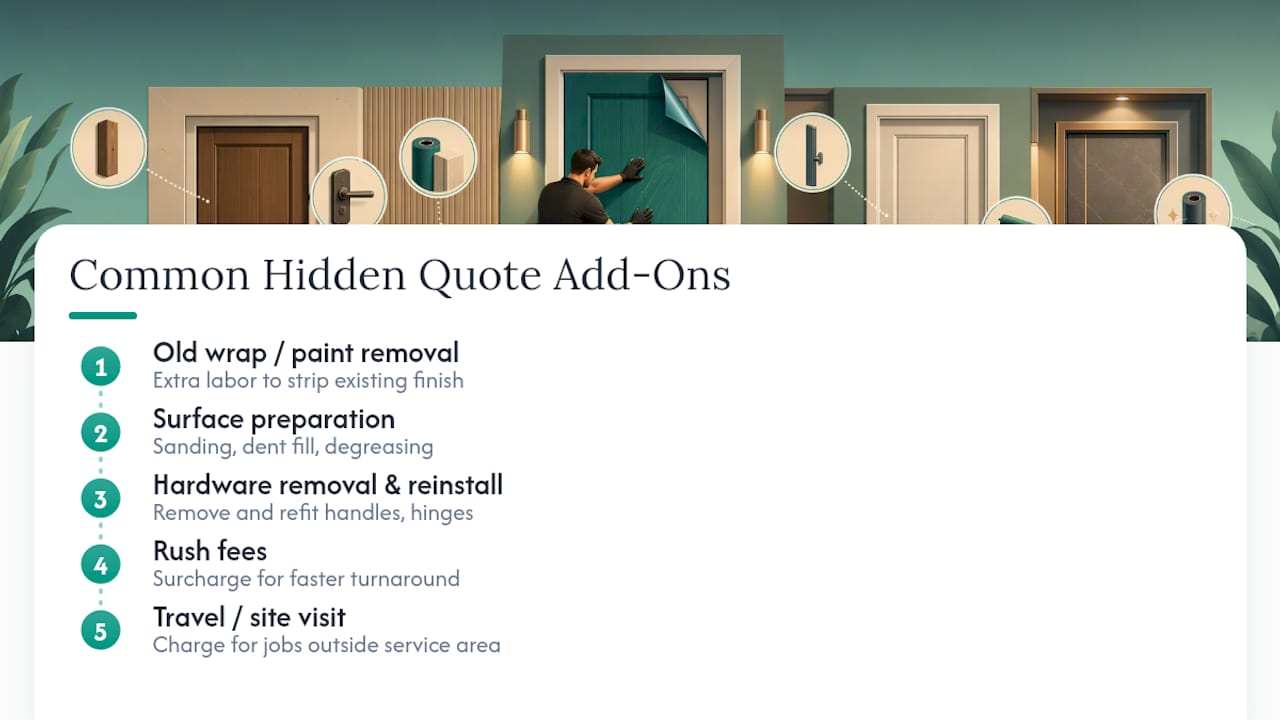
The advertised price range rarely tells the whole story. A handful of add-on charges appear often enough that you should ask about them before signing anything, not after.
Old wrap or paint removal is one of the most common surprise fees. If a door already has a failing wrap or peeling paint, that surface has to come off before new film goes on, and stripping it adds labor time that a bare-door quote won’t include.
Surface preparation covers sanding down uneven spots, filling small dents or gouges, and degreasing the surface so the adhesive bonds properly. Doors with heavy wear or old hardware stains often need more prep than a newer door, and installers frequently quote prep as a separate line once they see the door in person rather than from photos alone.
Hardware removal and reinstallation for handles, hinges, kick plates, and closers takes time on both ends of the job. Some installers fold this into the base price; others bill it separately, especially on commercial doors with heavier-duty hardware.
Rush fees apply if you need a turnaround faster than the standard several-business-day production window. If your project has a hard deadline, ask about rush pricing before you’re locked into a timeline that doesn’t work.
Travel or site visit fees show up for installers traveling outside their normal service radius, particularly relevant for multi-location commercial projects spread across a region.
Ask for an itemized quote that calls out each of these separately, so you know exactly what you’re paying for and what’s included.
How Does Warranty Coverage Affect What You Pay?
Warranty terms are one of the biggest reasons two quotes with similar-looking prices can represent very different value. Most reputable installers separate material warranty from labor or workmanship warranty, and you should expect to see both spelled out.
Material warranties from established film manufacturers typically cover defects like premature discoloration, cracking, or adhesive failure under normal use, generally for several years depending on the product line. A budget vinyl film usually carries a shorter or more limited warranty than a premium architectural film built for high-traffic durability.
Labor or workmanship warranties cover installation errors, like bubbling, lifting edges, or seams that fail early. This is where installer skill genuinely matters. A lower quote from an inexperienced installer without a workmanship guarantee can end up costing more than a slightly higher quote from a certified installer, if the cheaper job needs a redo within a year.
Commercial projects should pay particular attention here, since warranty gaps on a hospitality or healthcare door wrap can mean redoing work in a space that’s difficult to take offline twice. Ask every installer for their warranty terms in writing, including what voids coverage, before comparing final numbers. A quote that looks $50 cheaper per door isn’t a bargain if it comes with half the coverage.
How Should You Budget for a Door Wrap Project?
Start with a per-door estimate based on your door type and finish level, then multiply by your total door count for a baseline project number. From there, build in room for the variables that catch most first-time buyers off guard.
Set aside a contingency of 10 to 15 percent above your baseline estimate. This covers the surface prep, hardware removal, or old-wrap-removal fees that often only become clear once an installer sees your doors in person rather than from photos.
For multi-door commercial projects, ask about volume pricing early. Per-door cost typically drops as door count increases, so a facility manager quoting 20 hotel room doors should expect a meaningfully better per-unit rate than someone wrapping a single office entry.
Time your project around your traffic patterns, not just your budget cycle. Scheduling installs during lower-traffic periods, like an off-season for hospitality properties, can reduce the sequencing costs installers sometimes build into commercial quotes to work around occupied spaces.
Finally, get at least two itemized quotes before committing. Comparing material cost, labor cost, and warranty terms side by side, rather than just a bottom-line number, is the single best way to catch an underpriced quote that’s cutting corners on prep or film quality.
Why Value Beats the Lowest Bid
The cheapest quote on your desk almost never accounts for warranty coverage or installer certification, and that gap tends to show up within a year as lifted edges or premature fading. We’d rather see a homeowner or property manager pay a bit more upfront for a certified installer and a durable finish than gamble on a rock-bottom bid with no workmanship guarantee. When timelines are tight, prioritize finish durability first and expedited scheduling second. A fast install on the wrong film just means redoing the job sooner.
— Bodaq
Find the Right Bodaq Finish for Your Door Project
Once you know your budget range, matching it to the right film makes the rest of the decision straightforward. Bodaq’s catalog covers everything from entry-level solid colors to spec-grade textures built for high-traffic commercial doors.
For budget-conscious residential projects, Silver Mist delivers a clean solid-color finish without the premium price tag of a textured film. If durability and a natural stone look matter more than upfront cost, Wild Concrete and Deep Wild Concrete hold up well in commercial hallways and lobbies that see constant foot traffic. Hospitality and healthcare properties dealing with high-touch doors should look at Easy Clean, a finish built specifically to resist staining and simplify daily wipe-downs. For a darker, moodier interior statement, Deep Forest works well on both doors and cabinetry.
Stretchable, self-adhesive film products can reduce installation time by conforming easily to surfaces, helping installers complete projects more efficiently. Request a sample kit or start the process for your architectural film project to get a project quote tailored to your door count and finish preferences.
Sources
The commercial pricing figures in this guide come from 3M DI-NOC preferred installer data on commercial door wraps, while residential price anchors and installation timelines draw from Design Online’s door wrap pricing page. Material-to-labor cost splits reference TheHowMuch’s wrap cost breakdown, and worked per-door examples come from RMwrapsstore’s custom door wrap listings. For a broader look at repainting versus door replacement, One Day Doors & Closets offers a useful comparison on cost and timeline tradeoffs.
- Commercial Door Wraps | 3M DI-NOC Preferred Installer
- Door Wraps | Fast and Cheap | Design Online
- How Much Does It Cost to Wrap a Car? Honest Pricing Guide (2026) | TheHowMuch
- Custom printed vinyl door wraps — RMwrapsstore