For durable, design-forward elevator finishes that avoid demolition, architectural interior film is the best practical choice. It replicates stone, metal, and wood at a fraction of full replacement cost, with installation measured in hours rather than weeks. An extensive catalog of textures gives architects and property managers a specification-ready path to a cab that looks custom without the downtime.
TL;DR:
- Architectural film resists daily wear such as scuffs and fingerprints for around a decade if properly maintained, but is vulnerable to impact and deliberate damage.
- Proper installation involves substrate assessment, thorough cleaning, precise seam planning, and should be performed by certified professionals to ensure a seamless appearance.
- Regular maintenance requires non-abrasive cleaning and immediate patching of damage, with protective hardware like kick-plates and corner guards prolonging finish life.
- Light conditions in the elevator significantly influence how film colors read, making lighting samples crucial before final selection.
- Resurfacing with architectural film offers a cost-effective, quick upgrade that avoids demolition, especially when the cab structure remains sound and damage is limited to surface wear.
Table of Contents
- Elevator Wrap Design Ideas by Building Type
- How Durable Is Architectural Film in an Elevator?
- What Does Elevator Wrap Installation Actually Involve?
- How Do You Maintain an Elevator Film Finish?
- Which Bodaq Collections Fit Which Elevator Use Case?
- Film or Full Replacement: An Editorial Take
- Ready to Specify Your Elevator Finish?
- Sources
Elevator Wrap Design Ideas by Building Type
The right finish depends less on personal taste than on where the elevator sits and who rides it a hundred times a day. A boutique hotel lobby wants warmth and texture. A medical office wants a surface that reads clean under fluorescent light. Match the finish to the building’s job first, then to the mood you’re after.
- Rich wood grain for hotel and hospitality lobbies. A warm walnut or oak-look film softens metal cab walls and pairs naturally with brass hardware.
- Brushed metal for corporate towers. A cool, linear metallic finish photographs well in lobby marketing and reads as understated rather than flashy.
- Natural stone for luxury residential and mixed-use. Rustic Stone – High-Performance Collection EXF52 gives multifamily buildings a lobby-grade look without the weight or cost of slab.
- Solid matte color for a calm, contemporary statement. Deep Slate S261 or Obsidian Blue S265 work well where the building wants one confident color rather than a pattern.
- Two-tone paneling to break up a tall cab. A darker base with a lighter upper band visually shortens a cab that otherwise feels like a chute.
- Textured stucco for a tactile, gallery-like feel. Ivory Stucco PNC59 adds shadow and depth under directional lighting.
- Bold accent walls for branding-forward properties. Deep Forest S266 works on a single feature wall in a corporate or hospitality cab that wants a signature color.
- Neutral gray palettes for service and freight elevators. Pebble Grey S264 or Silver Mist S263 hide scuffs better than white and cost less to maintain over time.
- Inset feature panels framed in a contrasting solid. A stone-look center panel bordered by a solid color reads as custom millwork.
- High-touch surfaces finished in an easy-clean film. Buildings with heavy foot traffic, healthcare tenants, or 24-hour lobbies benefit from a wipeable, stain-resistant surface.
- Mirror-adjacent coordination. Where cabs include mirrored panels, choose a finish with a similar reflectivity and undertone so the transition between mirror and film doesn’t look accidental.
- Seam-conscious layout planning. Order panels so seams land in corners or behind handrails, never across a sightline a rider faces while standing still.
One detail architects tend to underestimate is how much elevator lighting changes a finish. A stone-look film that reads warm under incandescent lobby lighting can look flat and gray under the cooler LED strips common in modern cabs, so requesting a sample under the actual fixture matters more than judging a swatch under office light.
Pro Tip: Order a sample panel and hold it against the cab’s actual ceiling light for at least ten minutes before finalizing a finish. Elevator lighting is often warmer or cooler than showroom lighting, and colors shift more than most people expect.
How Durable Is Architectural Film in an Elevator?
Architectural film is engineered for daily wear, not for surviving deliberate abuse. It resists the scuffs, fingerprints, and general friction of normal ridership, and indoor vertical applications commonly carry an expected performance life of around a decade, though substrate condition and installer skill affect how well that estimate holds up in practice.
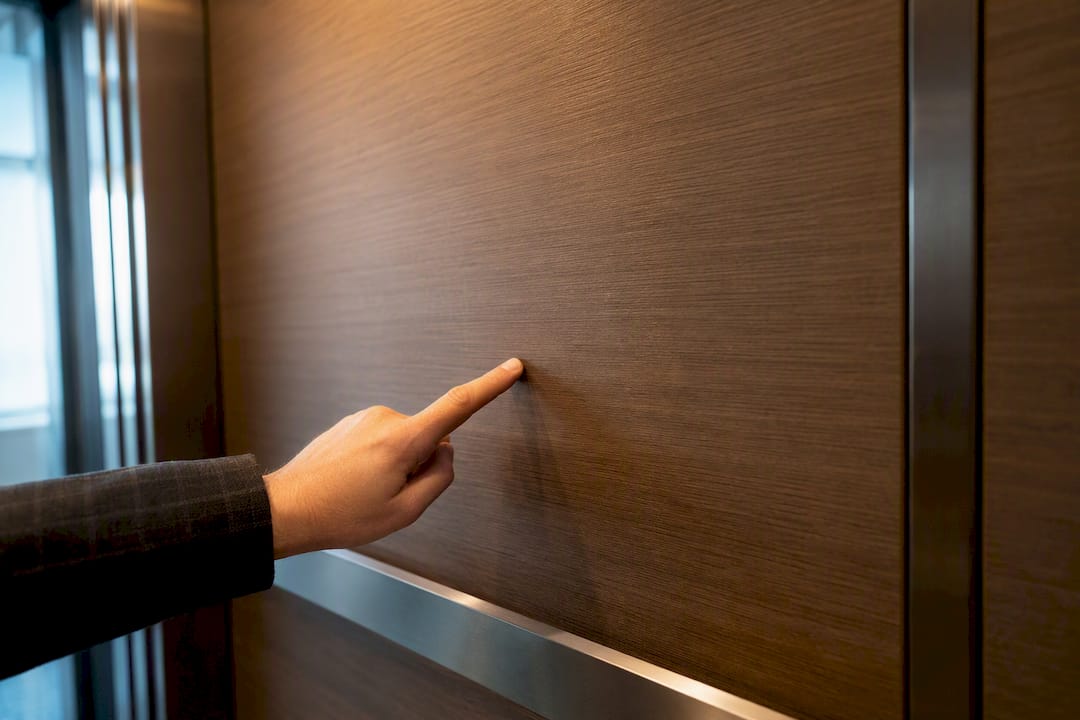
Where film has real limits is impact and intent. It’s not built to shrug off a dropped hand truck, a keyed scratch, or repeated abuse from move-in traffic. The manufacturers behind these products are direct about this: film handles everyday wear well but needs help against sharp objects and sustained impact.
That’s where protective hardware earns its cost:
- Stainless or film-clad kick-plates absorb the scuffs that dollies and carts cause at floor level.
- Corner guards protect the most exposed edges of a cab, where most real damage concentrates.
- Temporary wrap-over protection during move-ins or construction traffic keeps a finish looking new through the building’s rougher weeks.
Specifiers writing performance requirements should also confirm any applicable Class A or UL fire classification for the specific film and adhesive system, since code requirements vary by jurisdiction and building type. Weighed against full cab replacement, which routinely runs $50,000 or more against a $5,000 to $10,000 film resurfacing project, film wins on cost even before accounting for the weeks of downtime a full teardown demands.
What Does Elevator Wrap Installation Actually Involve?
A film project moves fast, but the sequence still matters:
- Assess the substrate. Check for corrosion, dents, or loose panels. Damage beyond a certain point forces replacement instead of resurfacing, so this step decides the whole project.
- Clean and degrease every surface. Adhesion fails on oily or dusty metal long before it fails on the film itself.
- Dry-fit and trim panels. A trained installer maps seams to corners and handrail lines before adhesive ever touches the wall.
- Apply with heat and pressure. Stretchable film conforms to curves and trim details that rigid laminate can’t follow.
- Inspect seams and edges under full lighting. Small lifts are easy to fix now and nearly impossible to fix later.
Most cabs take a few hours to a full day, with tight corners, ornate trim, or ceiling panels adding time. Certified installers matter here as much as the product choice, since seam planning and pattern alignment determine whether the finish reads as intentional or as an obvious wrap. Coordinate with building management on out-of-service windows and plan the work to minimize tenant disruption, ideally overnight or during low-traffic hours.
Pro Tip: Ask your installer for photos of a comparable elevator job, not just a general portfolio. Cab corners and handrail cutouts are where amateur seam work shows up first.
How Do You Maintain an Elevator Film Finish?
A film finish only holds its performance life if the maintenance matches the product. Skip abrasive pads and solvent-based cleaners. A soft cloth with a mild, non-ammonia cleaner handles fingerprints and daily grime without dulling the surface.
- Wipe high-touch zones (buttons, handrails, lower walls) daily in busy commercial buildings.
- Address scuffs immediately rather than letting them set, since fresh marks lift more easily than old ones.
- Patch or replace a single damaged panel rather than resurfacing the whole cab; film’s panel-based install makes localized repair realistic.
- Keep kick-plates and skirting in place permanently, not just during construction, since they take the daily abuse the wall itself would otherwise absorb.
- Cover cab walls with temporary protection during any tenant move or renovation work elsewhere in the building.
Building teams should also write these expectations directly into janitorial or facilities contracts. A step-by-step cleaning guide gives cleaning crews a clear reference instead of leaving finish care to guesswork on the night shift.
Which Bodaq Collections Fit Which Elevator Use Case?
Bodaq’s film is stretchable and self-adhesive, which is what makes the cab upgrade itself so fast: installers conform it around handrails, corners, and trim without the seams and gaps that rigid laminate leaves behind. That’s the practical difference between a finish that looks applied and one that looks original to the cab.
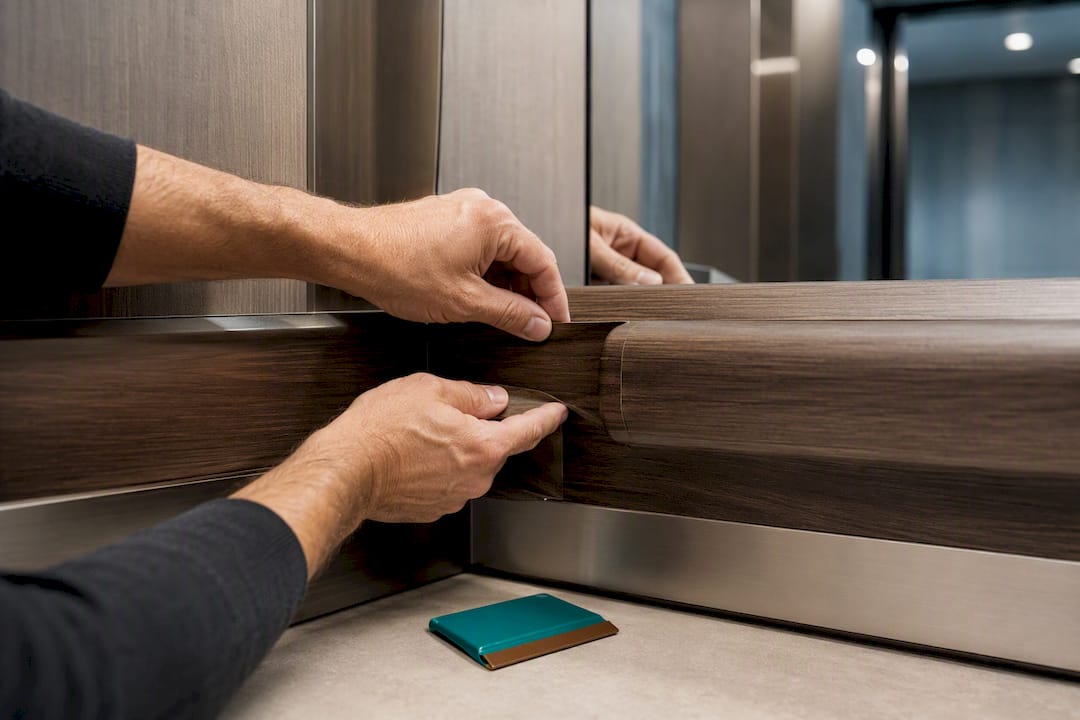
Here’s how some common elevator finish options map to typical scenarios.
For specifiers who want the fundamentals before choosing, Bodaq’s continuing-education webinar on architectural film walks through material properties and installation practices in under an hour, and the full collection catalog lets you request samples for any finish before committing to an order.
Film or Full Replacement: An Editorial Take
Most elevator refresh decisions get treated as a budget question when they’re really a substrate question. If the cab walls are sound, structurally and visually, resurfacing wins on every axis that matters: cost, downtime, and waste. Replacement only makes sense when panels are physically damaged beyond patching or the cab’s proportions themselves need to change.
The real value of film isn’t just the upfront savings. It’s the ability to update a building’s most visible five square feet without touching demolition, letting design teams commit to a bolder look precisely because changing course later costs far less than it would with laminate or steel panels.
— Bodaq
Ready to Specify Your Elevator Finish?
There are specification paths available with many textures in one catalog, engineered to stretch and self-adhere around the tight corners and handrails that make elevator cabs harder to finish than flat walls.
Start with a sample. Order swatches of Rustic Stone EXF52 or Easy Clean ECF01 directly from the collection catalog and hold them against your cab’s actual lighting before you finalize a direction. If you’re scoping a larger property or portfolio, the installation guide walks through prep and seam planning, and the architectural film webinar is a fast way to get your whole design team speaking the same technical language. When you’re ready to move from concept to installed finish, reach out through Bodaq to request a certified installer referral for your building.
Sources
- Elevator Cab Vinyl Wrap | Resurface Wraps
- Setting the Record Straight: What Architectural Film Can and Cannot Do in Your Elevator
- 3M DI-NOC Architectural Film: The Complete Guide 6 C17media