
Leather architectural film is a self-adhesive, textured vinyl or PETG surface material engineered to reproduce the grain, hand, and depth of real leather on walls, doors, and furniture. It works best as a fast, lower-waste alternative to reupholstery or wall paneling wherever you need a leather look without leather’s maintenance headaches. Reach for a high-performance or fire-rated grade whenever the surface sees heavy traffic, food service, or heat exposure.
TL;DR:
- Deep-embossed textures offer a more realistic leather grain and help hide scuffs and fingerprints in high-contact public spaces.
- Embossed PETG film resists scratches and stains better than standard vinyl, making it suitable for furniture panels exposed to daily wear.
- The installation process requires thorough surface prep, precise measurement, and heat softening to ensure a flawless, bubble-free finish.
- Ordering specifications should confirm substrate material, adhesive type, roll dimensions, texture depth, and warranty, with samples recommended before full purchase.
- Cleaning is easy with mild detergents and microfiber cloths, but products near heat sources must be rated for fire and heat resistance to ensure safety.
Table of Contents
- What Are the Different Types of Leather Look Film?
- Where Does Leather Architectural Film Work Best?
- How Do You Install Leather Architectural Film?
- What Specs Should You Check Before Ordering?
- How Do You Clean and Maintain Leather Look Film?
- What Makes Bodaq’s Leather Collection Worth Specifying
- Should You Wrap It or Replace It?
- Ready to Source Leather Look Film for Your Project
- Sources
- FAQ
What Are the Different Types of Leather Look Film?
Not all leather finish materials read the same way, and the texture family you pick determines how the surface will actually behave under fingertips and light. Deep-embossed, three-dimensional leather textures carry the most convincing grain because the tooling cuts real peaks and valleys into the surface, scattering light in a way that resembles tanned hide. Fine-grain and smooth leather-look film sit at the other end, offering a tighter, more refined surface for millwork and cabinetry where a subtle hand feels more intentional than rustic.
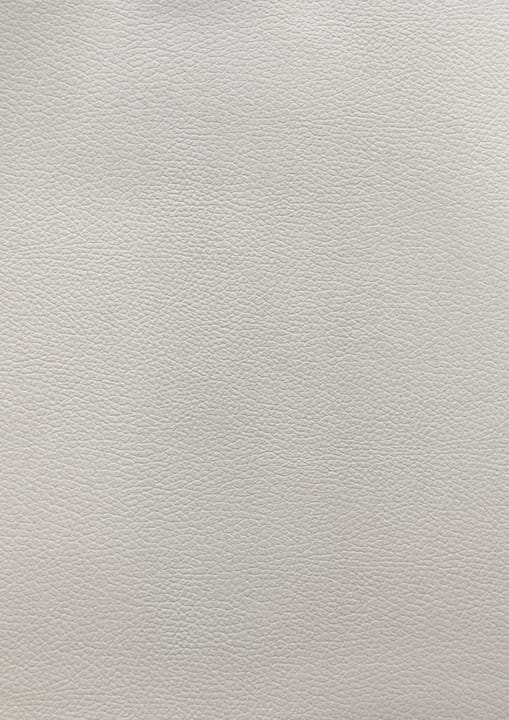
Finish also changes the personality of a panel. Matte and low-sheen matte options mute glare and suit boardrooms or hospitality corridors, while a slight sheen picks up ambient light and works well on smaller accent pieces.
Construction matters just as much as looks. Most faux leather wrap products use PVC/vinyl with an acrylic pressure-sensitive adhesive, though embossed PETG sheets are also common where thermoforming and higher scratch resistance matter more than cost.
- Deep-embossed 3D textures for a dramatic, tactile leather look
- Fine-grain and suede-like finishes for understated luxury
- Matte, low-sheen, and light-sheen finish options
- PVC/vinyl with pressure-sensitive adhesive, typically sold in 48-inch roll widths
- PETG embossed sheets for panels that need to be heat-formed
- Sample swatches and quick-ship rolls for fast decision-making
Where Does Leather Architectural Film Work Best?
Feature walls, reception desks, elevator interiors, cabinet faces, and furniture refinishing projects are the classic proving ground for decorative leather films. Hospitality and retail environments lean on it hardest, because a lobby wall or check-in counter needs to look premium on day one and still look premium after a thousand hands have touched it.
Deep embossing does more than add visual richness here. Designers report that 3D texture diffuses light and helps conceal scuffs and fingerprints, which matters enormously in high-contact public spaces where a smooth, glossy surface would show every mark within a week.
Quick fact: embossed PETG leather-textured film is noted for scratch and stain resistance that outperforms standard vinyl, making it a candidate for furniture panels that take daily abuse.
Trade-offs still exist. Smooth, low-texture films look cleaner in photography, but show wear faster, so match the finish to the traffic pattern, not just the mood board:
- Feature walls and accent panels where texture depth reads from across a room
- Elevator interiors and reception desks that see constant hand contact
- Cabinet, door, and furniture faces needing a leather look without reupholstery
- High-performance or easy-clean grades for kitchens, food service, and public restrooms
How Do You Install Leather Architectural Film?
Surface prep decides whether an installation looks flawless or shows every flaw within a month. Start by cleaning the substrate thoroughly, confirming it is flat and fully dry, and priming bare or porous surfaces. Remove hardware, hinges, and switch plates before you unroll anything, and soften sharp edges slightly so the film wraps instead of tearing.
- Measure the surface and plan seam placement before cutting, accounting for pattern repeat on embossed textures.
- Dry-fit the panel and set tack points to hold position without stretching the material prematurely.
- Apply with a felt-edged squeegee, working from the center outward to push out air and avoid trapped bubbles.
- Use a heat gun or infrared heater to soften the film around curves, corners, and recessed details.
- Trim excess with a sharp blade and finish seams with a roller for a tight, invisible bond.
A modest desk wrap can realistically take about two hours and several yards of material, which gives you a rough benchmark for staffing larger wall or cabinet runs. Most kits marketed for leather-look furniture film already include a squeegee and cutting tool, which helps if you’re training a crew that hasn’t wrapped deep-embossed material before.
Pro Tip: On deep-embossed leather textures, always align your seam along a natural grain line or shadow groove rather than across a flat panel face. The eye reads seams far more easily on smooth stretches than where the embossing already breaks up the surface.
What Specs Should You Check Before Ordering?
Reading a spec sheet correctly saves you from ordering the wrong roll twice. Confirm the substrate material (PVC/vinyl versus PETG), adhesive type, roll width and length, thickness, texture depth, and any stated warranty or expected service life before you commit to a quantity.
Sizing rules matter almost as much as the spec itself. Measure total surface area first, then add extra material for seams, pattern matching, and curved sections. Flat walls need less overage than furniture with rounded edges or recessed panels, where heat-forming and pattern loss both eat into your yield. Ordering a sample and running a dry mock-up on a curved test piece before cutting your full order avoids an expensive surprise mid-installation.
Matching spec to use case is where experienced specifiers separate themselves from guesswork:
- Match roll width and adhesive type to substrate porosity and installer experience level
- Add extra material for seams and pattern repeat on textured, embossed rolls
- Order a sample swatch before committing to a full roll on any new texture
- Choose easy-clean grades for hospitality counters and high-performance grades for kitchens or constant-contact zones
- Confirm warranty terms in writing for any commercial installation over 100 square feet
How Do You Clean and Maintain Leather Look Film?
Cleaning leather architectural film is simpler than caring for real hide, provided you stick to mild methods. A damp microfiber cloth and a mild detergent handle most daily grime; skip solvents, ammonia-based cleaners, and abrasive pads, which can dull the finish or lift the embossing over time.
Deep embossing has a practical side benefit here too: because the texture already scatters light and hides small marks, a panel installed in a medium-traffic hallway tends to look presentable years longer than a smooth, glossy alternative would in the same spot. High-traffic commercial zones will still show wear sooner and may need spot replacement before a full room refresh.
Heat and fire exposure deserve their own conversation before you specify anything. Not every decorative film is rated for installation near ranges, fireplaces, or radiators, so check the product’s fire rating and heat-resistance data sheet before placing leather finish materials adjacent to a heat source.
- Clean with mild detergent and microfiber cloths, never abrasive pads or solvents
- Expect longer visual life from embossed textures in medium-traffic settings
- Confirm fire rating and heat tolerance on the datasheet before installing near appliances
What Makes Bodaq’s Leather Collection Worth Specifying
Bodaq’s Fabric & Leather Collection is part of a catalog spanning more than 450 textures and colors, which matters when a project needs matching finishes across walls, cabinetry, and furniture without hunting through multiple suppliers. The stretchable, self-adhesive construction is built to reduce waste and simplify forming around curves, corners, and hardware cutouts, an advantage crews notice most on furniture with rounded edges.
Common specification scenarios often include:
- A lighter, fine-grain leather look suited to refined furniture faces and accent walls where subtlety matters more than drama.
- A durable, high-performance pattern built for transitional commercial spaces that need texture with real wear resistance.
- A solid-color, high-performance finish aimed at food-service-adjacent zones and other high-traffic surfaces where cleanability outranks pattern.
Should You Wrap It or Replace It?
Film wins on time and disruption almost every time. A wall or cabinet run that would take weeks to reupholster or rebuild can usually be wrapped in a day or two, with far less demolition debris and downtime for an occupied space.
Reupholstery or full replacement still makes sense when the underlying substrate is damaged, when a client wants genuine hide for resale value, or when the surface will sit inches from an open flame. Before signing off, walk through warranty terms, cleaning requirements, and fire rating with the client or contractor. Those three questions catch more mismatched specifications than any texture sample ever will.
— Bodaq
Ready to Source Leather Look Film for Your Project
Some brands give specifiers a direct path to leather-look surfaces, reducing the guesswork of piecing together vinyl, adhesive, and tools from separate vendors. Self-adhesive, stretchable constructions can cut installation waste compared to traditional wrapping methods, and a deep catalog can allow matching a leather texture to a project’s exact palette instead of settling for the closest available option.
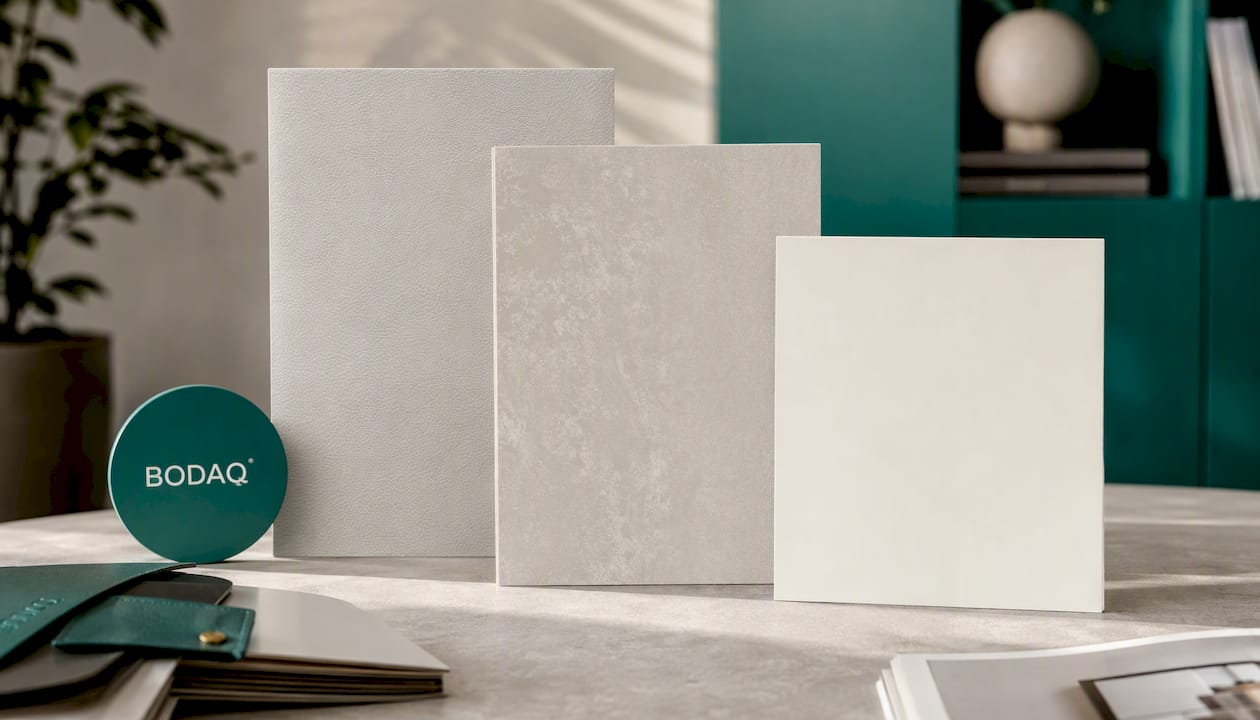
Three starting points cover most specification needs. Soft Leather Light SL401 suits refined interiors that want a lighter grain. Rustic Stone EXF52 handles transitional commercial spaces that need durability alongside pattern. Easy Clean ECF01 fits food-service and high-contact zones where cleanability comes first.
Request a sample swatch, browse the full interior film collections, or contact the Bodaq team directly for a project quote or a referral to a certified installer in your area.
Sources
Fire ratings, adhesive formulations, and cleanability claims vary by product line, so confirm every figure against the manufacturer’s current datasheet before finalizing a spec.
- TNS10 deep emboss leather interior film — Surface AU
- Vinyl Leather Film Black Self-Adhesive | Furniture Film
- Embossed PETG leather-textured film — Goflexpet
- Furniture Film Leather — MyFolie
FAQ
How Can I Make Vinyl Look Like Leather?
Deep-embossed vinyl or PETG sheets are tooled with a three-dimensional grain pattern that mimics real hide, then finished in matte or low-sheen coatings to control glare. The embossing is what creates the tactile, light-scattering effect that flat-printed vinyl can’t replicate.
What Is an Architectural Film?
Architectural film is a self-adhesive vinyl or PETG surface material used to resurface walls, furniture, doors, and cabinetry with wood, stone, metal, or leather-look finishes. Bodaq’s version is stretchable, which helps installers form it around curves and hardware with less waste than rigid alternatives.
What Is Leather Lamination?
Leather lamination generally refers to bonding a leather-look or genuine leather layer onto a substrate using adhesive, heat, or pressure. In architectural applications, this usually means applying a self-adhesive leather-texture film directly onto a prepared wall, door, or furniture surface.
Is PU Leather the Same as Vinyl?
PU (polyurethane) leather and vinyl leather-look film are related but not identical. PU leather uses a polyurethane coating over a fabric backing to mimic hide, while most leather architectural film relies on PVC/vinyl or PETG with embossed texture and a pressure-sensitive adhesive, making it better suited to rigid surfaces like walls and cabinetry than to soft goods.