Film is a viable, often preferable, approach to office renovation when your existing substrates are sound and your goal is a faster path to a polished, private, more durable workspace. It suits decision-makers who need a lobby, elevator cab, or suite of doors looking sharp again without a demolition schedule, and it’s why some film products offer collections designed specifically for high-touch commercial jobs.
TL;DR:
- Architectural film is ideal for rapidly refreshing sound substrates like metal, wood, and glass without structural repairs or demolition.
- Installation is flexible, often completed overnight or in phases, keeping office operations running with minimal disruption.
- Cost benefits include lower material and labor expenses, plus waste reduction, making film a more sustainable option for cosmetic upgrades.
- High-touch areas benefit from specialized collections that resist fingerprints and are easy to clean, ensuring durability in busy commercial spaces.
- Proper surface prep and testing are essential, as film adheres best to flat, stable surfaces and cannot fix water damage or structural issues.
Table of Contents
- What Architectural Film Can Do for Your Office
- Is Your Office Ready for Film? A Surface Suitability Checklist
- Installation Timelines and Minimizing Business Disruption
- Cost, Lifecycle Performance, and Sustainability
- Choosing the Right Film: Design and Privacy Options
- Why Our Film Fits Commercial Office Projects
- A Facilities Manager’s View on Film-First Renovations
- Ready to Start? Request Samples and a Walkthrough
- FAQ
- Sources
What Architectural Film Can Do for Your Office
Film works best as a surface-first strategy: it refreshes what’s already there instead of tearing it out. Across office fit-outs, the highest-value applications tend to cluster around the surfaces people touch, see, and judge a brand by.
- Lobbies and reception walls gain a cohesive, branded finish without new drywall or paint cycles.
- Elevator cabs get a durable, scratch-resistant wrap that survives daily cart traffic and shoe scuffs.
- Doors and door frames take on wood, metal, or solid-color finishes that match a broader design refresh.
- Millwork and built-ins, which are expensive to replace, can be resurfaced in hours rather than days.
- Glass partitions gain privacy or light-control properties without structural changes, as explained in how to create a private office without losing the open feel.
Beyond looks, film adds a protective layer that shields the original substrate from scuffs, moisture, and daily wear, which matters most in corridors, elevators, and shared surfaces. For areas with constant hand contact, like door pulls, reception counters, and elevator panels, our Easy Clean – High-Performance Collection ECF01 is built specifically to resist fingerprints and stay cleanable under repeated contact. For a deeper look at how these applications compare to full replacement, our piece on why interior film wins over replacement breaks down the practical tradeoffs.
Is Your Office Ready for Film? A Surface Suitability Checklist
Film is a finish, not a structural repair. It bonds to sound, properly prepared substrates. It won’t fix water damage, fix a failing wall assembly, or change a room’s layout. Before committing to a film-based renovation, confirm the basics.
- Identify the substrate: smooth metal, wood, interior glass, and high-pressure laminate generally accept film well, according to Bodaq’s architectural film properties guide.
- Rule out structural or moisture issues: cracked plaster, active leaks, or warped substrates need repair first, not film.
- Schedule a site walkthrough so an installer can test adhesion and flag problem areas before ordering material.
- Confirm cleanliness and flatness requirements, since dust, grease, and texture irregularities affect bond quality.
- Order sample swatches to test color and finish against your actual lighting and surrounding materials.
Pro Tip: Always request a small test patch on your actual substrate before ordering a full roll; adhesion varies more by surface condition than by film type.
Installation Timelines and Minimizing Business Disruption
One of film’s biggest practical advantages is scheduling flexibility. Because installs don’t require wet trades, curing time, or heavy equipment, crews can often work around your business hours rather than forcing you to work around theirs.
- Overnight installs are common for elevator cabs, reception desks, and door sets, letting staff walk into a finished space the next morning.
- Phased, floor-by-floor approaches let larger offices stay operational while each section gets resurfaced in sequence.
- Door and frame installs typically run a few hours per unit; elevator cab wraps and millwork panels take longer depending on complexity.
- Clear occupant communication, staged material delivery, and a short QA walkthrough after each phase keep projects on track.
Project write-ups on office refreshes completed without downtime describe this same pattern: overnight and after-hours work on elevators, doors, and millwork that avoids the need to relocate staff or hoard off entire floors.
Cost, Lifecycle Performance, and Sustainability
Film’s cost structure is straightforward: material by the roll or panel, plus labor for prep and installation, both of which scale with surface area and detail complexity rather than with construction permits or demolition crews. Compared with full replacement, the total cost of ownership often favors film, since you’re paying for a finish layer instead of new substrate, new installation labor for that substrate, and the waste disposal that comes with tearing out the old one.
Resurfacing instead of replacing reduces construction waste and supports occupant health goals, a point USGBC’s overview of green building benefits makes in the context of lower-waste, lower-emission materials. Case studies of prefabricated surface systems have also reported measured waste reduction and schedule gains over traditional finishes, as detailed in this sustainable office transformation case study.
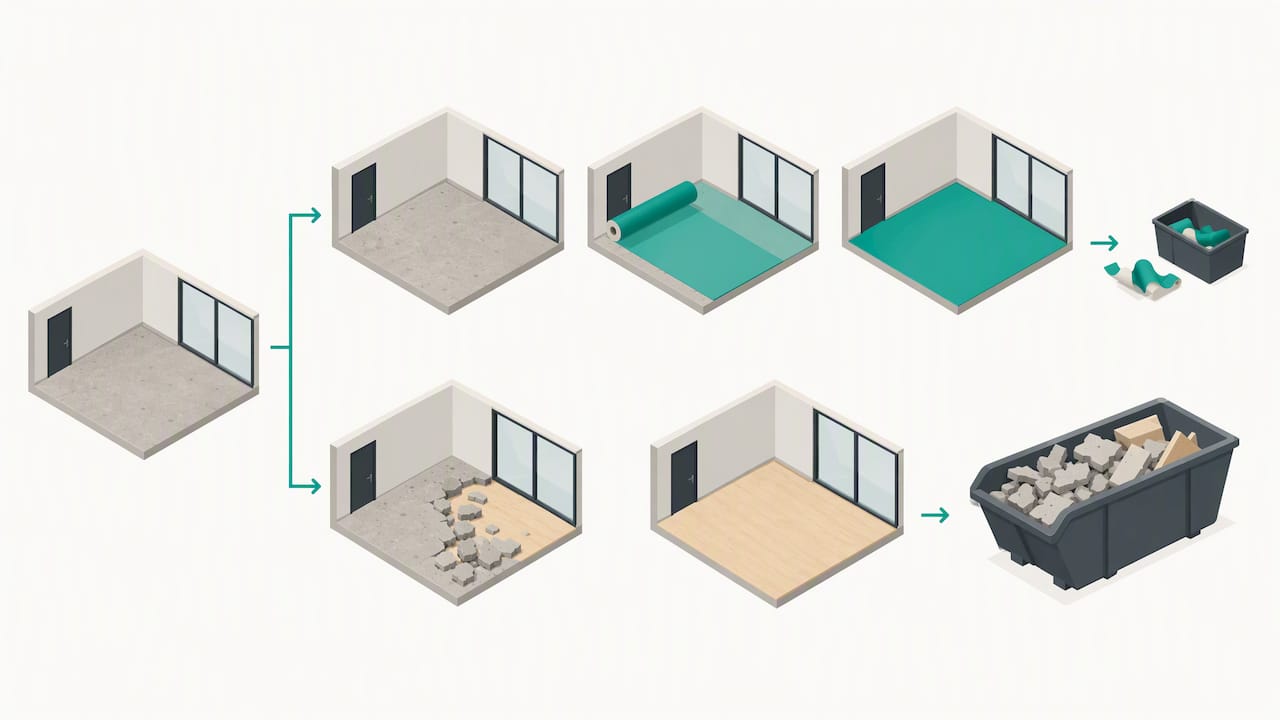
Replacement still makes sense when the underlying substrate has failed, when a layout change is part of the renovation, or when fire, acoustic, or code requirements demand new assemblies rather than a new face.
Choosing the Right Film: Design and Privacy Options
Not every film serves the same purpose, so matching the type to the job matters as much as picking a color. Decorative finishes, wood grains, stone patterns, solid colors, pair naturally with millwork and furniture to unify a space without a full refit. Privacy and frosted films control sightlines into offices or conference rooms while still letting daylight through, which keeps glass partitions from feeling closed off.
- Decorative wood and stone finishes work well on doors, built-ins, and accent walls.
- Frosted and etched-look privacy films suit glass partitions and conference room walls.
- Light-transmission varies by film density, so confirm how much daylight a room needs before specifying.
- Seam placement and pattern alignment separate a premium result from an obviously applied wrap.
Request physical mockups before full ordering, since lighting and viewing angle change how a pattern reads on an actual wall versus a sample card. Our guide to using interior film for statement patterns covers alignment technique in more detail.
Why Our Film Fits Commercial Office Projects
Our architectural interior film is stretchable and self-adhesive, which means installers can wrap curves, corners, and edges cleanly instead of fighting a rigid material. We offer the finish in over 450 textures and colors, covering wood, metal, stone, solid color, and fabric looks, so a single supplier can usually cover an entire office’s material palette.
- Some Easy Clean collections are recommended for high-touch commercial surfaces like door handles and elevator panels.
- Eco-friendly manufacturing standards by some suppliers support lower-waste renovation goals without sacrificing finish quality.
- Typical projects often start with swatches, proceed to a site walkthrough, and continue through phased installation with QA checks at each stage.
- Dealer and certified installer programs aim to maintain consistent quality standards across projects of various scales.
A Facilities Manager’s View on Film-First Renovations
Choosing film over a gutted renovation meant our team avoided a multi-week shutdown. We started with samples, had a walkthrough done to check our substrates, and ran the install in phases over a few weekends. One honest caution: if your walls have real water damage or structural issues, film won’t fix that, get those repaired first.
— Bodaq
Ready to Start? Request Samples and a Walkthrough
If your substrates are sound and your goal is a faster, lower-disruption refresh, the next step is simple: request swatches, schedule a site walkthrough, and ask for a mockup before committing to a full order.
When you talk to any supplier, ask about warranty terms, cleaning and maintenance requirements, and how they verify substrate compatibility before installation, since those answers tell you more about long-term performance than any sample card can. Browse our Easy Clean – High-Performance Collection ECF01 for high-touch areas, or explore the full range through Bodaq’s interior film collections and our main Bodaq Interior Film site to start a project.
FAQ
Can architectural film go over painted drywall?
Film generally needs a smooth, stable, non-porous surface, so painted drywall often needs priming or a smooth underlayment first. A site walkthrough is the fastest way to confirm whether your walls qualify as they are.
How long does a typical office film installation take?
Door and frame installs usually take a few hours each, while elevator cabs and millwork panels take longer depending on size and detail. Many projects use overnight or phased scheduling, as described in writeups on office refreshes completed without downtime, so staff return to a finished space without a multi-day closure.
Does film hold up in high-traffic commercial areas?
Yes, when the right product is matched to the application; our Easy Clean collection was built specifically for frequently touched surfaces like door handles and elevator panels. Proper installation and seam detailing matter as much as the film itself for long-term durability.
Is film a sustainable alternative to full renovation?
Resurfacing instead of replacing reduces construction waste and supports lower-emission material choices, both of which align with the green building benefits USGBC outlines. It’s not a fix for structural problems, but for cosmetic and protective upgrades, it’s a lower-waste route than full teardown.
What surfaces are not good candidates for film?
Water-damaged walls, structurally compromised substrates, and surfaces requiring a layout change still need traditional construction. Film performs best on sound, properly prepped metal, wood, glass, and laminate surfaces.
Sources
- Benefits of green building (USGBC)
- Case study: Modern office transformation with sustainable TFL (Designer Charrette)