The best student housing finishes are the ones that take a year of scuffs, stickers and furniture dragging, then reset in days instead of weeks. Campus standards point to abuse-resistant walls, easy-clean floors and a stocked supply of matching repair material. For surfaces you want to refresh without demolition, such as walls, doors, built-ins and furniture fronts, a stretchable self-adhesive architectural film gives you design range and a simpler install. Bodaq offers more than 450 textures and colors for exactly that job.
TL;DR
- Campus design standards favor durable, low-maintenance materials with a track record: abuse-resistant gypsum board, easy-care flooring and scrubbable surfaces.
- Turnover speed is money. One 2026 cost model puts a vacant day at roughly $60 on a $1,800 per month unit.
- Match the finish to the zone: corridors and corners take the beating, bedrooms need a look that resets quickly, kitchens and baths need moisture performance.
- Surface prep decides whether any finish lasts. Test moisture, repair, clean and prime before you apply anything.
- Bodaq film refreshes walls, doors and furniture in one catalog, so a property can keep a consistent look from building to building.
Table of Contents
- What student housing finishes have to withstand
- Match the finish to the zone
- Dorm room wall coverings and apartment wall coverings: what to consider
- Multifamily turnover finishes: protect the calendar
- Prepare the surface before you apply anything
- Where Bodaq film fits in a student housing plan
- Request samples and plan your rollout
- Our perspective
- FAQ
- Sources
What student housing finishes have to withstand
A student room is a small, heavily used space with turnover built into the calendar. Every May and August, dozens or hundreds of rooms are emptied and reset in a short window. That is why the finish list for dorms and student apartments reads differently from a typical rental.
Public university standards show the pattern. New York’s DASNY residence hall guidelines recommend painted gypsum board or concrete masonry walls in student rooms, with linoleum, vinyl composition tile or carpet underfoot. The University System of Georgia’s guidelines call for impact-resistant gypsum board with a level 4 finish in community rooms, plus a wood base that can take gouging.
Three demands come up again and again:
- Impact and abrasion. Old Dominion University suggests abuse-resistant board for the first four feet above the floor in residence halls, which is where carts, chairs and bed frames hit.
- Cleanability. Georgia Tech specifies abuse-resistant paint in student kitchens and epoxy coating systems on painted bathroom walls and ceilings.
- Repairability. Standards favor materials you can patch or swap in small pieces. The USG guidelines recommend carpet tile over sheet goods for easier repair and less waste.
Notice the shared logic: durable surface, small repair unit, minimal waste. Those three ideas shape every choice below.
Match the finish to the zone
Not every wall in a student building faces the same abuse. Planning by zone keeps budgets sensible and avoids over-specifying quiet rooms.
Bedrooms and study rooms
Bedroom walls take furniture rubs, tape, posters and the occasional dent. Campus standards still lean on painted drywall here, and that is a fine substrate: it is the surface a film bonds to. Where a property wants a headboard wall, a feature wall or a door that reads as design rather than institution, film gives you wood, stone, fabric or solid-color looks without re-framing anything. DASNY also notes that suspended acoustical ceilings in bedrooms feel institutional, a reminder that look and feel matter even in budget-conscious housing.
Corridors, lounges and entries
This is the high-wear zone. One 2026 turnover guide for rental properties suggests corner guards at outside corners, wainscot or chair rail where chair backs meet walls, and durable wall finishes in corridors and amenity rooms in patterns that hide scuffs and seams. A textured or woven-look pattern does that job better than a flat pale color. Our guide to high-traffic wall coverings walks through how to choose for these zones, and our piece on scratch-resistant wall finishes covers the ASTM D3363 pencil-hardness test designers often ask for.
Kitchens, laundry rooms and bathrooms
Moisture and splatter change the rules. Standards in these rooms are the strictest: abuse-resistant board in stud-framed kitchen and laundry partitions, epoxy systems in baths. If you are considering film anywhere humid, start with our 48-hour adhesion test explainer on moisture-resistant wall finishes so the specification rests on data and not a guess.
Floors, bases and the rest
Film is a wall, door and furniture solution, so keep the floor decisions separate. ODU prefers luxury vinyl tile over VCT in student rooms where budget allows because it needs less maintenance, while Oklahoma State’s standards say LVT is not recommended where furniture is routinely moved. Read your own furniture plan before choosing.
Dorm room wall coverings and apartment wall coverings: what to consider
When designers search for dorm room or apartment wall coverings, they usually want one of two things: a more designed look than a painted box, or a faster way to renew worn walls. The question is which product type fits the use.
The zone guidance from residential wallcovering specialists is consistent. Scrubbable coverings suit kitchens, textured heavy-duty types suit hallways, and delicate natural materials belong in dry living spaces away from water, grease and strong sun. Another 2025 room-by-room guide pairs durable, scrubbable types with entries and high-traffic zones and reserves textured or mural options for living areas.
For student housing, translate that into five questions:
- How hard will the wall be hit? Corridor and entry walls need a tough, textured look. Bedroom walls can be more decorative.
- How will it be cleaned? Pick a finish that tolerates routine wiping.
- How will it be repaired? A material you can replace in a panel or section beats one that forces a full-wall redo.
- How much disruption can you tolerate? Occupied buildings and short summer windows reward simple installs.
- Does it meet code? Interior finishes are regulated for flame spread and smoke development. Our ASTM E84 guide for U.S. architects explains how Chapter 8 of the International Building Code treats wall finishes so approvals do not stall your schedule.
Because these are health-and-safety matters, confirm requirements with your local building official or fire marshal before specifying. Indoor air quality is part of the same conversation: USG guidelines recommend low-VOC paints for indoor air quality, and our overview of low-VOC interior finishes helps you compare options. Bodaq adheres to eco-friendly standards, which suits that goal.
Multifamily turnover finishes: protect the calendar
Student apartments behave like multifamily properties with a sharper deadline. Lease-up dates are fixed, so a unit that finishes late is a unit that loses rent.
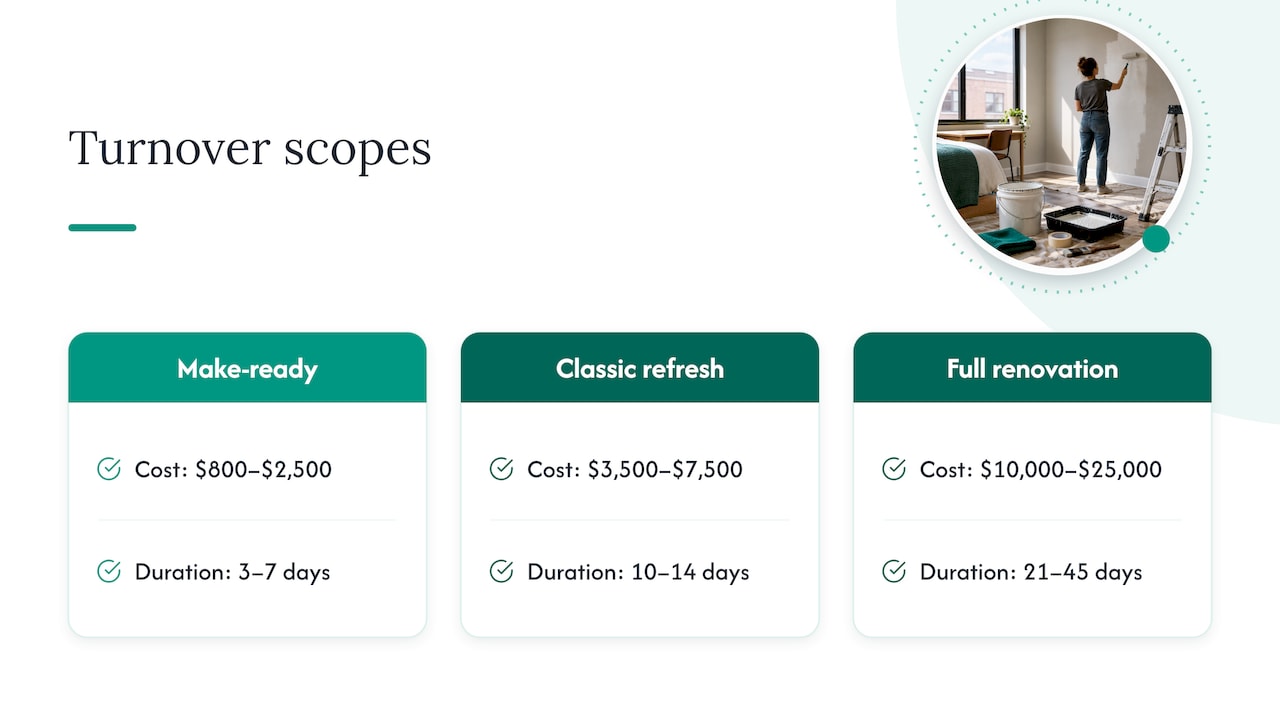
The numbers show why scope matters. A 2026 cost model puts make-ready turns at $800 to $2,500 and 3 to 7 days, classic refreshes at $3,500 to $7,500 and 10 to 14 days, and full renovations at $10,000 to $25,000 over 21 to 45 days. Using its own example, a $1,800 per month unit loses about $60 for every vacant day. Treat these as planning ranges: your market, unit size and labor costs will move them.
A Massachusetts turnover contractor describes a similar tiered approach and says the bottleneck is usually paint dry time rather than labor. That points to a useful principle: choose finishes whose installation steps do not stack up sequentially, so trades are not waiting on each other.
A renovation firm’s case study of a 500-plus-unit occupied community credits standardized finishes and mock-up units approved before rollout for typical 12 to 14 day turnarounds. Standardization is the lever property managers control most. When every unit uses the same small palette, crews stop making decisions and start repeating a routine.
Build a repair kit, not just a finish schedule
Attic stock is extra material from the original install, kept on site and labeled by product, color and location. The same turnover guide explains why it matters: product lines change and dye lots vary, so material ordered later often will not match. Order a spare allowance for every finish you expect to damage. For film, keep spare cut lengths of each pattern and note the collection and code on the label.
Do not over-repaint
The Massachusetts contractor also argues that touch-ups often look the same in photos and recommends full repaints every two to three tenancies, depending on wear. The takeaway: target the heavy-wear surfaces rather than redoing everything each turn.
Prepare the surface before you apply anything
Surface preparation is where most finish failures begin. A university guide specification for wall coverings lays out a rigorous sequence that is worth borrowing for any applied finish. It calls for verifying the substrate is ready, measuring moisture with an electronic meter and stopping if it exceeds the recommended level, filling and sanding cracks, washing impervious surfaces and sealing bleed-through marks.
A practical checklist for a student building:
- Check moisture. Damp walls, exterior-wall condensation and recent wet work all cause adhesion problems.
- Repair first. Fill gouges and holes, sand smooth, and remove loose paint.
- Clean. Remove dust, grease, tape residue and cleaning-product film.
- Test a small area. Confirm the finish bonds to the existing paint or substrate.
- Plan removal. ODU asks for substrates to be prepared for future wallcovering removal, a good habit when you expect to change the look in a few years.
If the building is older, check the rules that apply. NYCHA’s design guidelines, for example, require lead testing and abatement before work in its apartment renovations. Lead-safe practices are a legal and health matter, so involve a certified professional where pre-1978 paint is present.
Where Bodaq film fits in a student housing plan
Bodaq is a premium architectural interior film from Hyundai L&C. It is stretchable and self-adhesive, and the adhesive is air-channeled, which is designed to make installation cleaner and easier. The catalog spans more than 450 textures and colors across wood, metal, stone and marble, solid colors, and fabric and leather.
That range matters in student housing for a few reasons:
- One catalog, many surfaces. Walls, doors, built-in furniture and other surfaces can share a coordinated palette, so a property reads as one brand.
- Less waste. Our film is designed to minimize waste, which supports the lean, repair-friendly logic campus standards already favor.
- Refresh instead of rebuild. Where a surface is sound but tired, film changes its look without replacing it.
- Standardization. Choosing two or three patterns per building type gives crews a repeatable routine and gives you a clear attic stock list.
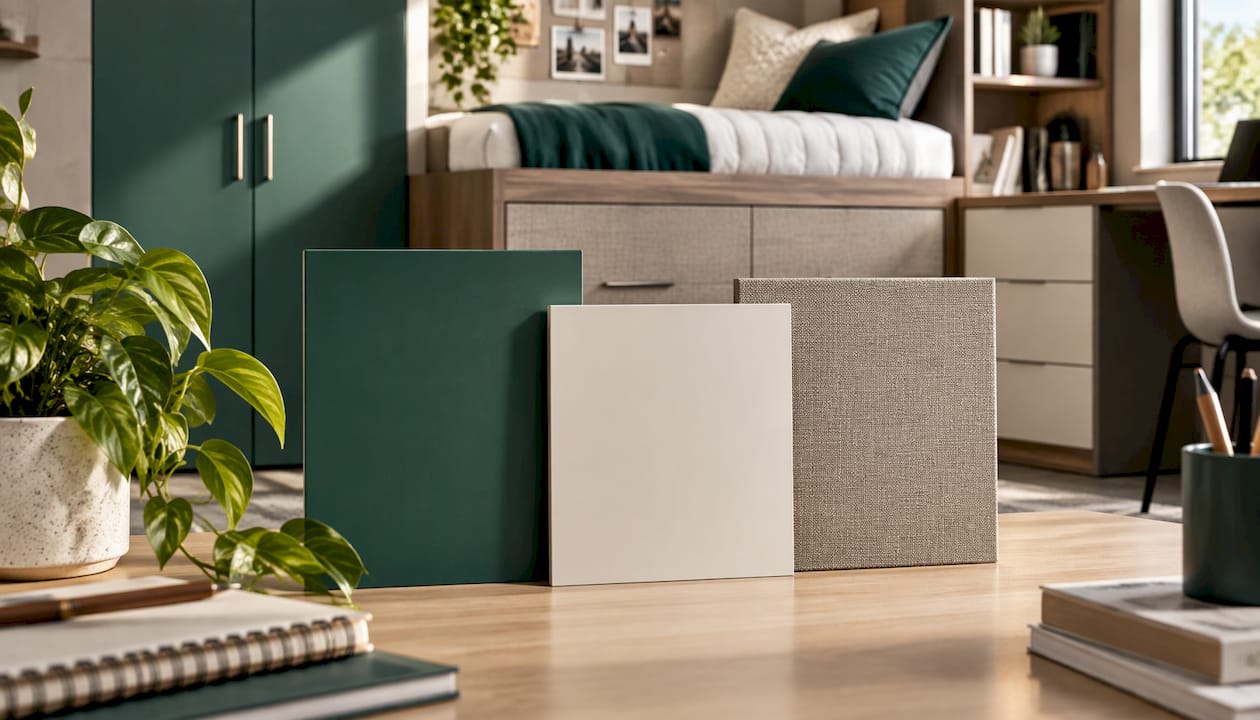
A few combinations work well. A solid color such as Deep Forest or Silver Mist on doors gives a clean, consistent line down a corridor. A fabric-look pattern such as Silver-Ash Linen brings a soft, tailored feel to a headboard wall. Wood and stone patterns warm up lounges and entry lobbies.
Request samples and plan your rollout
If you are scoping a student housing refresh, start with the collection that matches your zones and request samples so your team can see color and texture in the actual light of your rooms. Bodaq also offers installation tools and certified training for professional installers, and a dealer program for installers and resellers, which helps when you are coordinating a multi-building schedule.
Browse the full Bodaq collections to shortlist patterns, or head to Bodaq Interior Film to start a sample or order request for your property.
Our perspective
Student housing is a design problem disguised as a durability problem. Everyone agrees the finishes must last, but residents also decide where to live by how a room feels, and a corridor that looks like an institution is a hard sell.
We built Bodaq to close that gap. Our film stretches around corners and shapes, bonds with an air-channeled adhesive, and comes in more than 450 textures and colors, so you can give a door, a wall or a built-in the look of wood, stone or fabric without a rebuild. That makes it a natural fit for properties that reset the same rooms every year.
Our advice to property teams: pick a small, coordinated palette, standardize it across buildings, label your spare stock, and treat surface preparation as part of the finish. Do those four things and a refresh becomes a routine, not a project.
Bodaq
FAQ
What finishes are most common in student housing?
Public university standards typically list painted or abuse-resistant gypsum board walls, vinyl composition tile, luxury vinyl tile or carpet on floors, and durable bases. Kitchens and bathrooms get tougher coatings. Film is a way to add design range to sound walls, doors and furniture on top of that baseline.
What is the best wall covering for an apartment with high turnover?
Choose by zone. Scrubbable, textured and durable surfaces suit corridors, entries and kitchens, and decorative patterns suit bedrooms and lounges. Bodaq film offers wood, metal, stone, solid color and fabric looks in one catalog, which makes a standardized palette easy to keep.
How do I speed up multifamily turnovers?
Standardize finishes, approve a mock-up unit before rollout, and keep labeled spare material on site. One renovation case study reports 12 to 14 day turnarounds with that approach. Match scope to unit condition rather than repainting everything every time.
Do I need to prepare walls before applying film?
Yes. Check moisture, repair damage, clean the surface and test a small area first. University specifications for applied wall finishes treat substrate preparation as a required step, and the same discipline applies to any finish you plan to keep for years.
Can I use the same finish in bedrooms and corridors?
You can share a palette, but the wear differs. Corridors take more impact, so pick patterns that hide scuffs and seams there, and save the more delicate or dramatic looks for bedrooms and lounges.
Sources
- DASNY College and University Residence Hall Design Guidelines
- University System of Georgia residence hall guidelines
- Old Dominion University Division 9 Finishes
- Georgia Tech Housing Residence Life standards
- Oklahoma State University interior finish standards
- UTA Division 09 72 00 Wall Coverings guide specification
- NYCHA apartment renovation design guidelines
- Wall covering options for NYC apartments
- Types of wallpaper for every room in your home
- AI Unit Turn Cost Modeling for Multifamily 2026
- Mill Creek Apartments case study
- Apartment turnover repairs in Massachusetts
- Durable apartment finishes for high-turnover rentals