
Architectural film typically runs $8 to $25 per square foot installed, depending on the finish and job complexity, according to installer and community pricing discussions. A full roll covering 656 square feet can list around $2,650 before labor, which works out to roughly $4 per square foot for material alone. Your actual number will move based on film type, surface prep, and how much cutting and seaming the job demands.
TL;DR:
- Material costs for architectural film typically average around $4 per square foot, but installation can range from $8 to $25 per square foot depending on surface complexity.
- Flat surfaces like walls or large cabinets are priced toward the lower end, while detailed, curved, or edge work significantly increases labor and total costs.
- Budget deviations often occur due to surface repairs, pattern matching, and added prep work, so including a contingency is essential.
- Ordering samples, providing detailed surface photos, and requesting itemized quotes help ensure accurate budgeting and avoid surprises.
- Full rolls cost approximately $2,650 for 656 square feet, but commercial projects or trade discounts can lower material costs, with total installed costs varying widely.
Table of Contents
- At-a-glance cost summary: material, roll pricing, and installed rates
- What drives the total cost of an architectural film project
- Sample price calculations and budgeting examples
- How to get accurate quotes, samples, and trade pricing in the U.S.
- Bodaq product lines and how U.S. trade pricing works
- Pro budget perspective: when film wins and when replacement makes more sense
- Request Bodaq samples, a trade quote, and pricing details
- Primary product and procurement pages to check
- Sources
- FAQ
At-a-glance cost summary: material, roll pricing, and installed rates
Material-only pricing for architectural film generally falls in a wide band, since finish complexity (a matte solid color versus a textured stone or wood grain) changes the sticker price considerably. Roll pricing gives you the clearest apples-to-apples comparison before labor enters the picture.
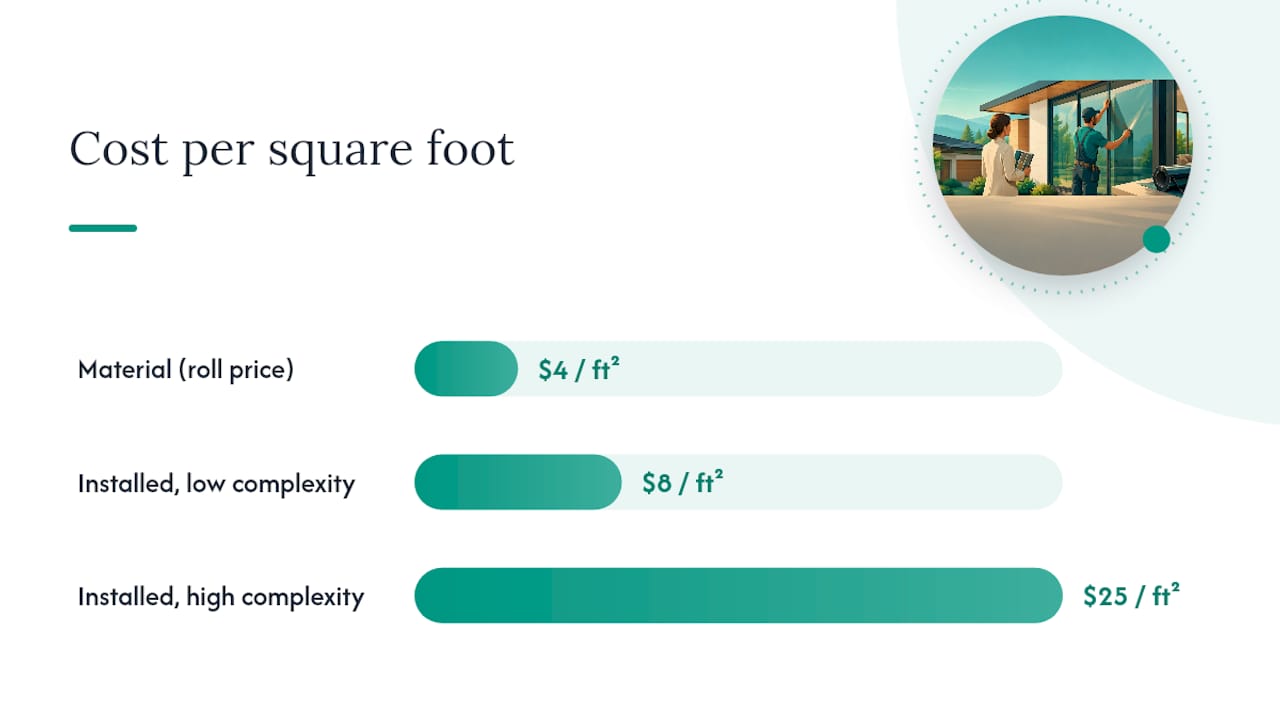
Some vendors list a 4 foot by 164 foot roll (656 square feet) at a few thousand dollars, one example of how full-roll product listings translate into a per-square-foot figure once you divide the total price by coverage. That math alone (2,650 divided by 656) lands close to $4 per square foot in raw material, before waste, trim, or labor are added.
Installed pricing tells a different story because labor, prep, and job complexity dominate the final number. A few things shape where you land within that range:
- Simple flat surfaces (a straight wall or a large cabinet face) sit toward the lower end of the installed range.
- Detailed work involving curves, inside corners, or cabinet edges pushes labor time and total cost higher.
- Substrate condition (whether the surface needs sanding, patching, or priming before film goes on) adds hours regardless of film choice.
Reported installed ranges of $8 to $25 per square foot reflect this spread, and most residential jobs land somewhere in the middle once you account for realistic prep and finish work, per community pricing reports.
What drives the total cost of an architectural film project
Four variables decide where your project falls in that pricing range, and understanding each one helps you read a quote critically instead of just comparing bottom-line numbers.
Film type and performance grade matter first. A solid color finish is generally simpler to source and apply than a textured stone, wood, or metal pattern, and high-performance collections built for commercial durability often carry a different price point than standard residential grades.
Coverage math comes next. You calculate usable square footage from the roll’s width and length, then subtract a waste allowance for pattern matching, trimming, and mistakes. A roll rated for 656 square feet rarely yields that full amount on an actual job once corners, seams, and offcuts are accounted for.
Installation complexity is where labor estimates diverge most. Flat panels install quickly. Cabinet edges, door frames, curved surfaces, and detailed trim work all slow the process and raise labor hours per square foot.
Additional costs round out the estimate:
- Primers or adhesion promoters for surfaces that need extra prep.
- Squeegees, heat guns, and cutting tools if you or your installer are supplying them.
- Travel fees for installers coming from outside their normal service area.
- Repair or trim work discovered once the old surface is exposed.
Pro Tip: Always ask your installer to itemize material, labor, and prep costs separately so you can see exactly where your budget is going.
Sample price calculations and budgeting examples
Real numbers make this easier to plan around. Here are three scenarios that scale to most residential and commercial projects.
- Small room accent wall. Say you’re covering 100 square feet of flat drywall. At roughly $4 per square foot in material, you’re looking at about $400 in film. Add installed labor at the lower end of the $8 to $25 range for simple flat work, and your total project cost lands well under $1,500.
- Kitchen cabinet refacing. A typical kitchen might have 150 square feet of cabinet surface, but edge detailing and door fronts add a waste factor, so you should plan on ordering closer to 180 square feet of film. Labor runs higher here because of corners and edges, pushing the installed total toward the middle to upper end of the per-square-foot range.
- Full-roll commercial job. A property manager ordering a full roll for 656 square feet, with a trade discount applied, can often bring the material cost per square foot down further, then add commercial labor rates for a large-format installation across multiple rooms or units.
Budgets most often deviate from these baselines when substrate repairs surface mid-project or when a pattern requires more matching than initially measured, so build in a contingency before you finalize a number.
How to get accurate quotes, samples, and trade pricing in the U.S.
A precise quote starts with precise information. Give any supplier or installer your measured square footage, clear photos of the surface, and notes on substrate condition (drywall, laminate, wood, metal) before asking for numbers.
- Request physical samples with the exact pattern code rather than relying on a screen image, since color and texture render differently in person.
- Ask whether trade pricing applies to your account and how it differs from retail sample requests.
- Confirm distributor lead times, since stocked trade orders typically ship faster than custom runs.
- Treat an unusually low bid as a flag to ask what prep work, if any, is included.
Pro Tip: A supplier offering free trade samples with fast turnaround is often a sign of a well-organized fulfillment process, which tends to mean fewer delays once you place the real order.
Bodaq product lines and how U.S. trade pricing works
- The Rustic Stone finish from the High-Performance Collection suits surfaces where a natural stone look matters more than material cost.
- The Easy Clean finish targets high-traffic commercial spaces where maintenance and durability drive the decision.
- The Onyx finish from the same High-Performance Collection offers a bold, deep tone for accent applications.
Ordering a physical sample and confirming the pattern code before purchase remains the simplest way to avoid a costly reorder.
Pro budget perspective: when film wins and when replacement makes more sense
Film wins when the underlying substrate is sound and you want a fast, low-mess upgrade, particularly in hospitality or office renovations where downtime carries its own cost. Replacement makes more sense when you discover water damage, rot, or structural issues once the old surface comes off, since no film budget covers hidden repair work. Fold in expected maintenance and how long you plan to keep the space before deciding, since a five-year hold and a twenty-year hold justify different choices.
— Bodaq
Request Bodaq samples, a trade quote, and pricing details
Once you know your square footage, requesting a Bodaq quote is straightforward: gather your pattern codes, a few clear photos of the surface, and your measured square footage before reaching out.
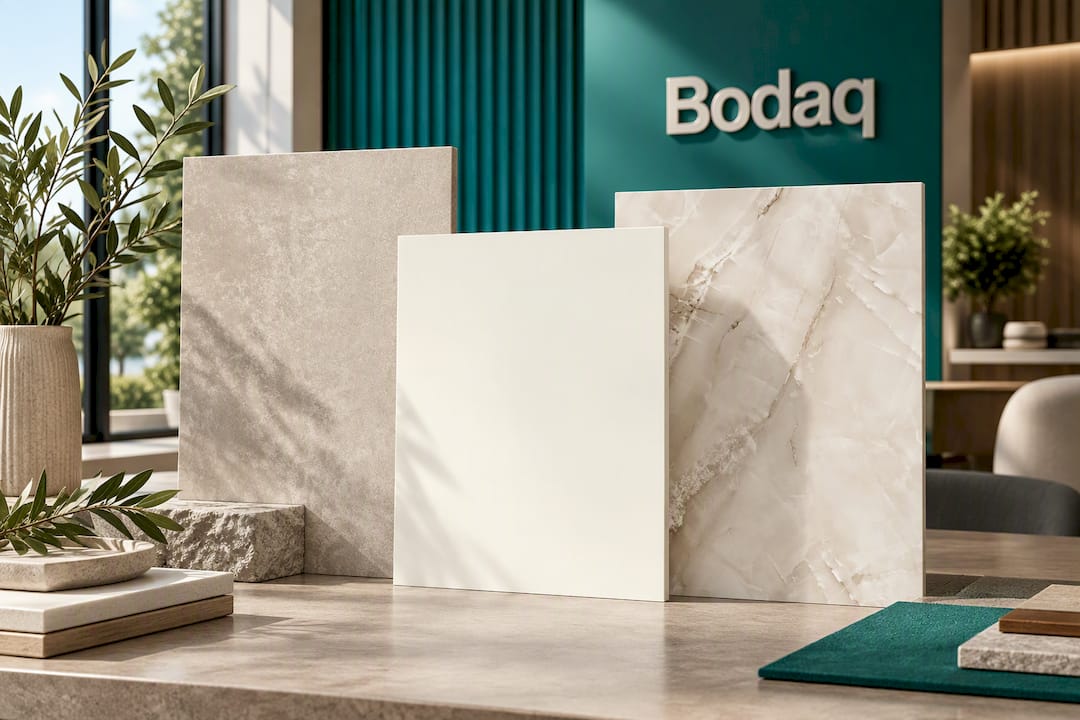
- Browse the Wood, Metal, Stone & Marble, and other collections to narrow down a finish before requesting samples.
- Start your order or ask about trade pricing directly through the Bodaq Interior Film site.
- Compare the material-only quote against the fully installed quote so you know exactly what labor adds to your total.
Confirm stock and lead times before locking in a renovation schedule, since fulfillment speed varies by pattern and order size.
Primary product and procurement pages to check
For product specs, sample requests, and trade information, start with Bodaq’s U.S. trade site and its kitchen refinishing guidance for contractors, both of which cover pricing context, sample policy, and installation advantages in more detail.
FAQ
What is the price of 3M architectural film?
Pricing for 3M architectural film varies by finish and retailer, and no single published rate applies across all patterns and grades. For a specific project, request a quote based on your measured square footage and chosen finish rather than relying on a general figure.
How much does a roll of architectural film cost?
Roll pricing depends heavily on size and finish, though one commonly cited example lists a 4 foot by 164 foot roll (656 square feet) at around $2,650. That works out to roughly $4 per square foot in raw material before labor or waste factors are added.
Where can I buy Bodaq film?
Bodaq film is available through its U.S. site, which lists product collections, trade pricing information, and sample requests. Trade accounts can also access distributor fulfillment for faster turnaround on stocked orders.
How much does architectural film installation typically cost per square foot?
Installed pricing for architectural film generally runs $8 to $25 per square foot, depending on film type, surface complexity, and labor rates in your area. Simple flat surfaces land toward the lower end, while detailed cabinet work or curved surfaces push costs higher.
What affects the total cost of an architectural film project the most?
Labor and surface complexity usually affect total cost more than the film itself, since cutting, seaming, and edge detailing take significantly more time than flat panel work. Substrate prep, such as sanding or patching damaged surfaces, also adds hours that show up in the final invoice.