Architectural film upgrades walls, millwork, doors, and fixtures with new textures and finishes at a fraction of the cost, downtime, and waste of material replacement. The highest-value applications include feature walls, cabinetry refacing, elevator interiors, retail fixtures, and hospitality fixtures. Success comes down to one thing: matching the film grade to the substrate and confirming adhesion before you commit to full production.
TL;DR:
- Architectural film is ideal for short-term or high-touch surfaces where full replacement is impractical, such as elevators, retail fixtures, and millwork.
- Cast vinyl conforms to textures and curves, making it suitable for complex surfaces, while calendered vinyl is best for flat, smooth, short-term applications.
- A 24-hour adhesion test on the actual substrate is essential to prevent costly failures, especially when working with new paint or textured surfaces.
- Permanent adhesives provide strong bonds but risk damaging paint upon removal, so testing is critical before full application.
- Starting with samples and scheduling certified installer training can help ensure proper adhesion and a successful installation.
Table of Contents
- What Are the Best Architectural Film Uses for Design Projects?
- Which Film Grade Fits Your Substrate and Service Life?
- How Do You Test Adhesion Before Full Installation?
- How Long Does Architectural Film Last, and How Do You Maintain It?
- How Do You Write a Film Spec Designers and Contractors Can Follow?
- Where Film Adds the Most Value on a Project
- Where to Start With Bodaq Architectural Film
- Sources
- FAQ
What Are the Best Architectural Film Uses for Design Projects?
Once you understand where film actually earns its place on a spec sheet, the applications multiply fast. These are the projects where it consistently outperforms replacement or paint.
Feature walls and murals. Film handles both ends of the spectrum: short-run promotional graphics that need to change with a season, and long-term wall finishes meant to last a decade. A textured stone or wood-grain finish gives a lobby wall the depth of natural material without the structural load or lead time.
Cabinetry, doors, and millwork refacing. This is where architectural film uses shine hardest for renovation timelines. Refacing existing casework with film instead of tearing it out and rebuilding cuts both labor time and landfill waste, while giving designers access to finishes that would be cost-prohibitive in solid material.
Elevator interiors and other high-touch verticals. Elevator cabs get thousands of hand contacts a week. Commercial-grade film absorbs that abuse and gets swapped out in hours, not the days a cab replacement demands.
Retail and hospitality fixtures. Brands that refresh store environments on a seasonal cycle rely on film to keep fixture finishes consistent across dozens of locations without rebuilding displays each time. Hospitality projects lean on the same logic for durability in guest-facing spaces.
Small-format applications. Appliance panels, countertop edges, reception desks, signage backers, and product displays all benefit from film’s ability to wrap curves and corners that rigid materials can’t follow.
Consider film over full replacement when:
- The existing substrate is structurally sound but visually dated
- Weight restrictions rule out stone, tile, or heavy panel systems
- The project schedule can’t absorb demolition and rebuild time
- Sustainability goals favor resurfacing over landfill-bound demolition debris
Signage shops and general contractors increasingly diversify into architectural vinyl work precisely because these use cases keep expanding into new verticals.
Which Film Grade Fits Your Substrate and Service Life?
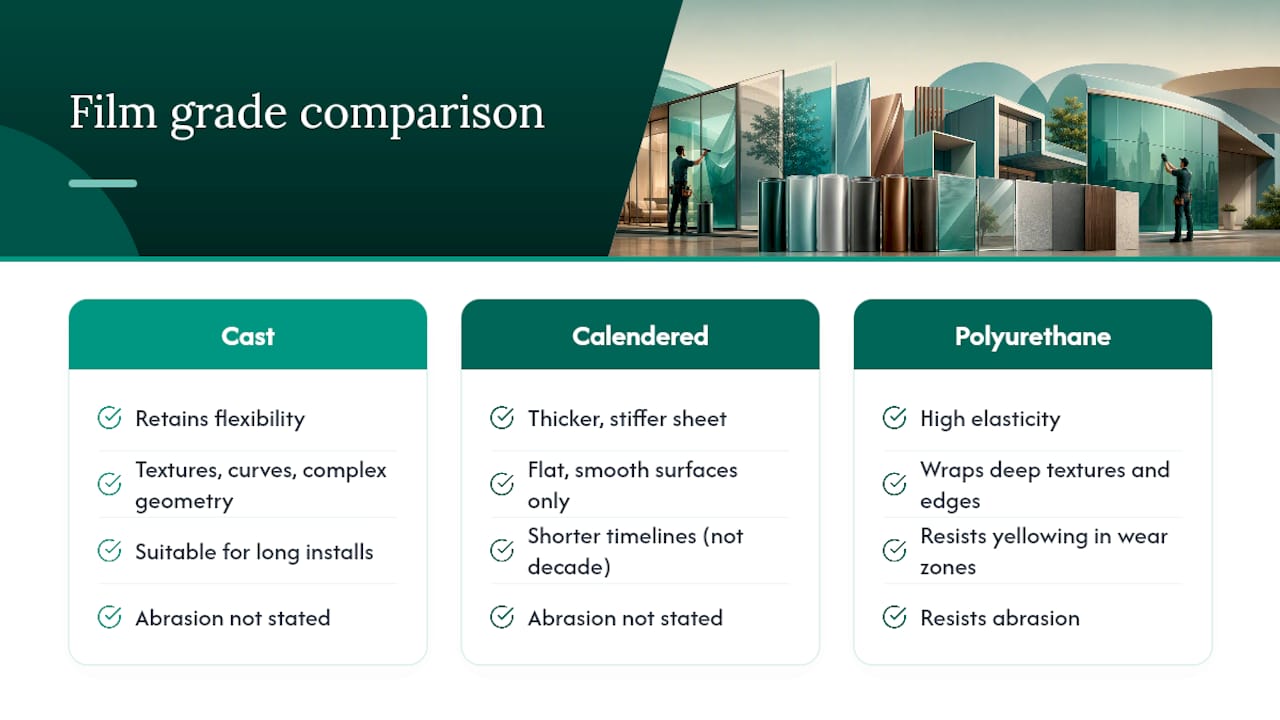
Film selection starts with understanding three core constructions, because picking the wrong one is the single most common cause of installation failure.
Cast vinyl is extruded thin and retains flexibility, which lets it conform to texture, curves, and complex geometry without lifting at the edges. Calendered vinyl is manufactured under heat and pressure into a thicker, stiffer sheet. It costs less and installs quickly, but it’s best reserved for flat, smooth surfaces on shorter timelines rather than decade-long installations. Polyurethane films sit at the premium end, offering the elasticity to wrap deep textures and edges while resisting yellowing and abrasion in high-wear zones.
Adhesive choice matters just as much as the face film. Removable adhesives suit rental properties, retail resets, and any wall a landlord expects back in original condition. High-tack removable options split the difference: strong hold with a defined removal window. Permanent adhesives deliver the strongest bond but carry real risk of pulling paint off the wall on removal, so specify them only where the film is meant to stay indefinitely.
Within Bodaq’s High-Performance Collection, Rustic Stone EXF52 suits feature walls and vertical surfaces where a natural stone look is the goal. Easy Clean ECF01 targets high-touch zones like reception counters and elevator interiors where cleanability drives the spec. Onyx EXF51 fits dark, matte applications, including exterior-capable finishes where a low-sheen, modern look is the brief.

How Do You Test Adhesion Before Full Installation?
Skipping the test phase is how a beautiful mockup turns into a callback six months later. Follow this sequence on every job:
- Clean and prep the surface. Remove dust, grease, and residue. Wall film manufacturers generally recommend semi-gloss or satin paint finishes for the strongest bond, and flat paint should be avoided where possible.
- Let new paint cure fully before applying film, and prime bare or repaired drywall so the adhesive has a stable surface to grip.
- Run the adhesion test. Apply a sample piece to the actual wall or substrate and let it dwell for at least 24 hours before inspecting the bond. This single step catches most compatibility failures before they become expensive.
- Check moisture on masonry. Brick and block substrates need a moisture meter reading before film goes anywhere near them. High moisture content is one of the fastest routes to adhesion failure.
- Adapt technique for texture. On grout lines, block joints, or heavily textured walls, controlled heat and rivet brushes help settle the film into low points; trim away any bridged film that hasn’t seated into the texture.
Pro Tip: Never skip the 24-hour dwell test just because the paint looks fresh. Low-VOC paint formulations behave differently with adhesives than older paint chemistries, and there’s no single film that bonds equally well on every paint.
For textured masonry, heavy millwork, or any installation where the mockup is the client’s first impression, require a certified or factory-trained installer rather than a general contractor working from a manual.
How Long Does Architectural Film Last, and How Do You Maintain It?
Maintenance starts simple: mild soap and water handles the vast majority of daily cleaning. Save harsh solvents for cases where the specific film is rated for them, because aggressive cleaners can degrade the surface finish over time. Bodaq’s own cleaning and maintenance guidance covers agent-by-agent recommendations for different finish types.
Removal expectations depend entirely on adhesive choice made at the spec stage:
- Permanent adhesives bond strongest but risk pulling paint on removal
- Removable and high-tack removable adhesives reduce that risk substantially, though testing the actual surface beforehand still matters
- High-traffic zones (elevator interiors, retail entries) warrant quarterly visual inspection so damage gets caught and patched locally instead of spreading
- Localized repair, rather than full-panel replacement, keeps lifecycle costs down and generates far less waste than tearing out and rebuilding
That waste reduction is one of film’s quieter advantages: resurfacing existing substrate keeps material out of the landfill compared to full replacement.
How Do You Write a Film Spec Designers and Contractors Can Follow?
Contract documents need language specific enough that a contractor can’t interpret their way around it. Build your spec section around these clauses:
- Substrate acceptance criteria: paint type, cure time, moisture threshold for masonry, and surface smoothness tolerance
- Adhesion test procedure: sample size, 24-hour minimum dwell, and documented pass/fail criteria before full application proceeds
- Mockup sign-off checklist: visual color and texture match, edge termination quality, seam placement, and adhesion confirmation
- Permitted film grades and finish IDs: name the specific product line and finish code, not a generic category
Sequencing matters as much as the language itself. Painters and finish carpenters need to complete their work and let paint cure before the film installer arrives. Naming the exact product ID, rather than “architectural film” as a category, is what turns a spec into something a distributor can actually quote and deliver on. For broader context on where film fits against other wall finishing materials, it’s worth reviewing what alternatives you’re specifying against before locking the language.
Where Film Adds the Most Value on a Project
The projects where film consistently outperforms alternatives share one trait: something else on the job (weight, schedule, budget, or all three) makes full replacement impractical. Elevator cabs can’t go offline for a week. Millwork budgets rarely stretch to full replacement across an entire hospitality property. That’s where a stretchable, self-adhesive product with an air-channeled adhesive system earns its place, because it cuts the labor time that traditional film installation demands.
A catalog with a wide selection of textures and colors means the finish conversation stops being “can we find something close” and starts being “which exact texture matches the vision.” Designers weighing options can also register for the architectural film webinar to see installation technique before specifying it on a live job.
— Bodaq
Where to Start With Bodaq Architectural Film
Architectural film gives you a faster path from concept to finished surface than sourcing natural stone, solid wood, or custom millwork, without sacrificing the texture options those materials offer.
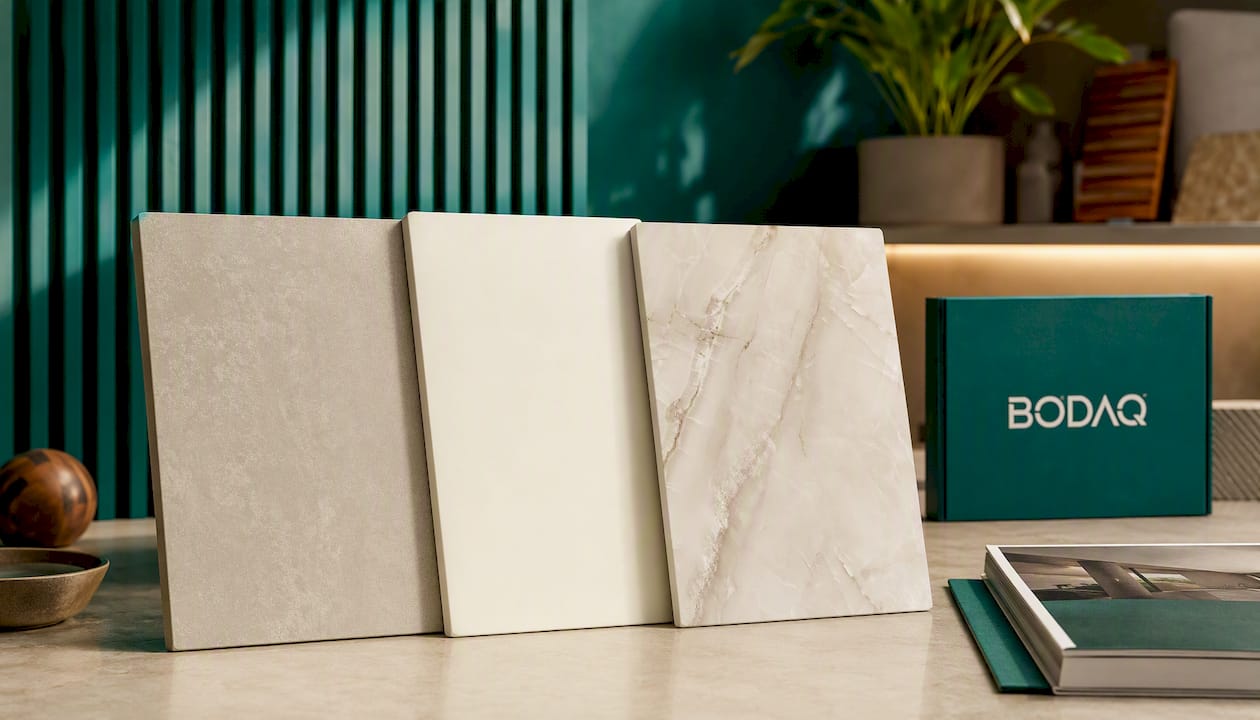
If a stone look is the brief, Rustic Stone EXF52 delivers it without the weight or lead time of quarried material. For elevator cabs, reception counters, and other high-touch zones, Easy Clean ECF01 is built around exactly that cleanability question. Projects calling for a dark, matte, exterior-capable finish should start with Onyx EXF51. If you’re still browsing finish families, the full collection catalog covers wood, metal, stone, solid color, and fabric and leather lines side by side.
The practical next step is simple: order a sample from the Bodaq Interior Film site, run the 24-hour adhesion test on your actual substrate, and if the project calls for it, schedule certified installer training before the job hits the schedule.
Sources
- Cast vs Calendered Vinyl Film: Which is Best for Your Project? — American Sign Products
- Avery Dennison — Instructional bulletin: interior wall graphics
- 3M guide to wall applications (excerpt)
FAQ
What Is Architectural Film Used For?
Architectural film resurfaces walls, cabinetry, doors, elevator interiors, and fixtures with new textures and colors without the cost or downtime of full replacement. It’s most valuable on projects where weight, schedule, or budget rule out natural materials like stone or solid wood.
Cast vs Calendered: Which Film Type Should I Specify?
Cast vinyl conforms to texture and curves, making it the right choice for masonry, textured walls, and complex millwork. Calendered vinyl works better for flat, smooth surfaces on shorter-term applications where cost matters more than longevity.
How Long Should an Adhesion Test Run Before Installation?
Apply a sample to the actual substrate and let it dwell for at least 24 hours before inspecting the bond. This single step catches most compatibility issues between the film’s adhesive and the specific paint or substrate before full production begins.
Can Architectural Film Be Removed Without Damaging Paint?
Removable and high-tack removable adhesives reduce that risk significantly compared to permanent adhesives, though permanent adhesive can pull paint on removal in some cases. Testing the actual surface before full installation is the only reliable way to know how a given wall will behave.
Does Bodaq Offer Samples Before I Commit to a Project?
Yes, samples for any Bodaq collection, including the High-Performance Collection films, can be requested through the Bodaq Interior Film site. Running your own adhesion test on the actual project substrate before full purchase is the recommended next step.