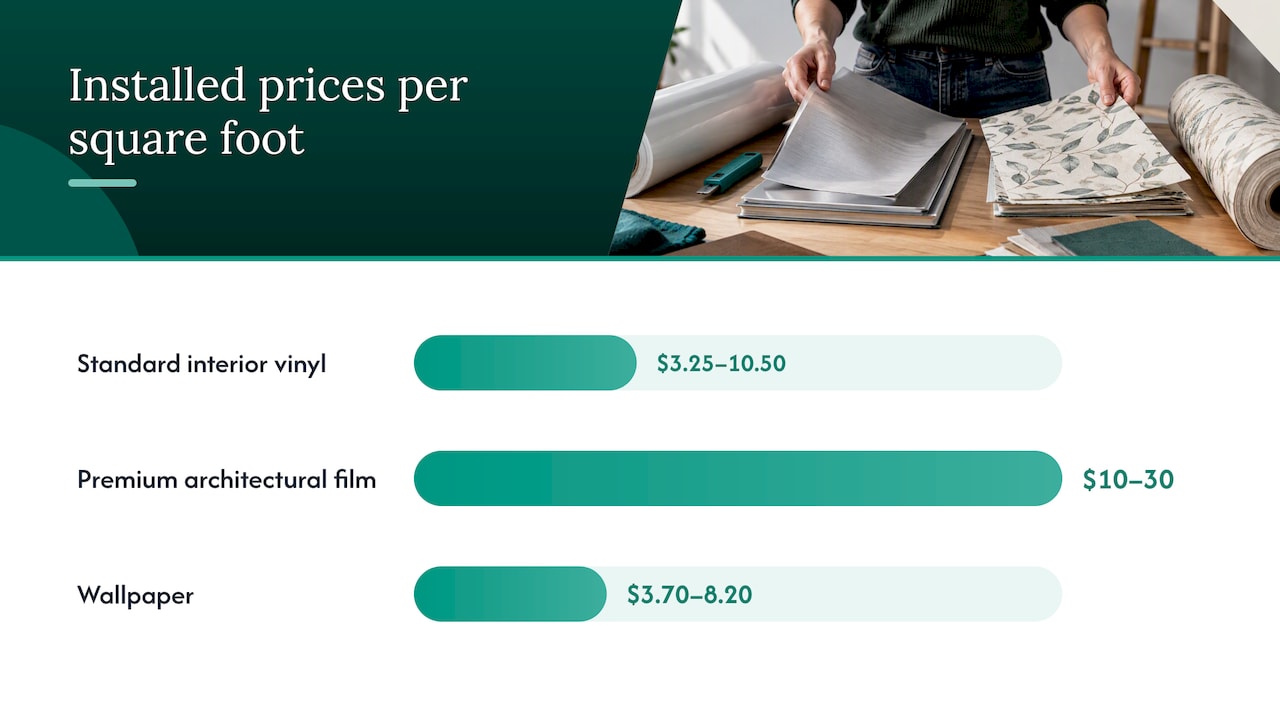
Architectural wrap pricing in the U.S. usually lands between about $3.25 and $10.50 per square foot installed for standard interior vinyl, according to one cost guide, and climbs well above that for premium films, curved surfaces and tight-access jobs. The film itself is only part of the number. Surface condition, edges, openings, access and installer time often decide whether a wall costs a little or a lot. Below, we break the price into pieces you can quote, compare and defend to a client or a budget committee.
TL;DR
- Published installed estimates for interior vinyl wrap run roughly $3.25 to $10.50 per square foot, while premium architectural films are often cited at $10 to $30 installed, so confirm every figure with a written quote.
- Labor is estimated at $40 to $85 per hour, and preparation, seams, edges and access usually move the total more than film area does.
- Price flat areas by the square foot and price edges, returns and openings separately, so two quotes can be compared line by line.
- Hold back a 5 to 10 percent contingency for surface tests, extra prep and disposal.
- Film is typically a fraction of the cost and downtime of replacing a surface, which is why designers and facility teams reach for it.
Table of Contents
- What “architectural wrap” pricing actually covers
- Typical price ranges in the U.S.
- What moves the price up or down
- How much installation adds
- Architectural film versus replacing the surface
- Our perspective: price the project, not the roll
- Get a quote you can actually compare
- Planning your budget, step by step
- Where the budget works hardest
- Mistakes that inflate the final bill
- FAQ
- Sources
What “architectural wrap” pricing actually covers
Search this phrase and you will see car wraps, signage wraps and printed wall graphics mixed in with architectural film. They are different products with different price logic. Architectural film is a self-adhesive decorative vinyl made for interior surfaces: walls, doors, cabinet fronts, columns, elevator cabs, reception desks and furniture. A vehicle wrap is priced by the vehicle. A custom printed mural is priced by artwork and print. Architectural film is priced by the square foot of surface, plus the work needed to get a clean finish.
When someone asks “how much is an architectural wrap,” they are usually asking one of three things:
- Material only: the cost of film rolls delivered.
- Installed price: film plus labor, typically quoted per square foot.
- Project total: installed price plus prep, protection, contingency and any after-hours premium.
Mixing these three is the most common reason quotes look wildly inconsistent. Always ask which one you are reading.
Typical price ranges in the U.S.
Public pricing for architectural film is fragmented. Many suppliers publish nothing, and the figures that do circulate come from cost guides rather than manufacturers, so treat them as planning ranges, not promises. The two ranges below are the ones we see cited most often for the U.S. market.
| Category | Typical installed range | Notes |
|---|---|---|
| Standard interior vinyl wrap | $3.25 to $10.50 per sq ft | Simpler flat surfaces, moderate scale |
| Premium architectural film | About $10 to $30 per sq ft | Small or complex jobs can cost more |
| Wallpaper, for comparison | $3.70 to $8.20 per sq ft | Vinyl-coated, materials and labor |
Two things stand out. First, the spread is wide because “architectural wrap” covers everything from a flat drywall accent wall to a curved column with returns. Second, premium film is not automatically the expensive choice over a project’s life, because durability and reduced repair cycles matter in high-traffic spaces. We come back to that below.
On our side, we do not publish list prices for Bodaq film rolls. Pricing depends on collection, quantity and whether you are a homeowner, contractor or dealer, so the way to get a real number is a quote request. Our architectural film cost guide walks through the same budgeting logic for U.S. homeowners and designers.
What moves the price up or down
If two bids for the same lobby differ by 40 percent, the difference is almost never the logo on the film box. It is one or more of these.
Surface condition and preparation
Film will only look as good as the substrate beneath it. Fresh, smooth, painted drywall needs little. Textured plaster, flaking paint, old wallpaper glue, dust and residue from cleaning products need real work, and that work is billed by the hour. Skipped prep is also the main cause of edge lifting later. Our five-step surface prep guide for film installers shows what a proper start looks like, and it is worth reading before you accept a very low bid.
Edges, seams and openings
A flat, uninterrupted wall is the cheapest case. Every window return, outlet, door frame, corner and seam adds minutes. A sound way to quote this is to price flat area by the square foot and price edges and openings separately, so the client can see where the money goes. A 300-square-foot corridor with 12 door frames is not the same job as a 300-square-foot blank wall.
Access and downtime
Working in a vacant apartment on a weekday is simple. Working in an occupied hotel corridor between midnight and 6 a.m., moving carts and protecting carpet, is not. Restricted access, after-hours schedules and phased handovers all raise labor cost. For hospitality and commercial managers, this is often where film wins, because the work is quieter and cleaner than demolition and rebuilding.
Film choice
Solid colors and simple woodgrains behave differently from deep embossed stone, directional patterns or metallic finishes. Patterns with a repeat or grain direction need more careful layout, and that can mean extra material to match across seams. Stretchable films with air-channeled adhesive are generally faster to position and easier to reposition, which can reduce labor time on curves and complex shapes.
Location
Geography matters. One guide reports that major metro areas can run 10 to 25 percent higher than suburban markets, while rural areas may fall 5 to 15 percent below national averages. A New York or San Francisco bid and a bid from a mid-sized Midwest city should not be compared without that in mind.
Installer skill
An experienced installer charges more per hour and finishes faster, with fewer callbacks. A cheaper hourly rate does not guarantee a cheaper job. This is why we run a certification and training program for installers: consistent technique is the best protection against rework.
How much installation adds
Labor is the line most people underestimate. One cost guide estimates installation at $40 to $85 per hour, with total hours set by surface complexity and scale. That means a day of work for a single installer might run from roughly $320 to $680 for eight hours, before any crew, travel or after-hours premium.
Here is how that plays out on paper. The figures below combine the ranges cited above and are illustrations, not quotes.
| Scenario | Area | Installed at $3.25 to $10.50 per sq ft |
|---|---|---|
| Single accent wall | 120 sq ft | $390 to $1,260 |
| Reception area and desk front | 250 sq ft | $812.50 to $2,625 |
| Hotel corridor refresh | 600 sq ft | $1,950 to $6,300 |
Add a 10 percent contingency to the top of that corridor range and you are at $6,930. That small buffer is the difference between a calm project and an awkward change order.
Architectural film versus replacing the surface
Price per square foot only tells half the story. The real comparison is film against the alternative: new laminate, veneer panels, stone, tile or a full cabinet replacement, each with demolition, disposal, lead time and downtime.
A few ways to frame it:
- Direct cost: Replacing a surface means buying new material, paying for demolition, and often paying trades to rebuild. Film covers what is already there.
- Time out of service: A restaurant, clinic or hotel floor that must close for a rebuild loses revenue every day. Film is often installed in a fraction of that time.
- Waste and disposal: Tearing out a surface creates debris. Wrapping it does not, which is a tangible benefit if your project has sustainability goals.
- Reversibility: Film can be removed and replaced when a brand refresh or tenant change comes, without refinishing the substrate from scratch.
Film is not a cure for structural damage. If a door has delaminated, or a wall has moisture problems, fix that first. For sound surfaces that simply look tired, film is usually the more economical path, and designers get a wider range of looks than most conventional finishes can match.
Our perspective: price the project, not the roll
We make Bodaq interior film with Hyundai L&C, and we have watched the same pattern repeat. Buyers compare price per roll, then discover that a cheap roll on a poorly prepared wall costs more than a premium roll installed right. We think the honest unit of comparison is the finished surface: how long it takes to install, how it handles the edges and curves in your actual space, and how it holds up after two years of carts, luggage and cleaning.
That is why we design around installability. Our film is stretchable and self-adhesive, with air-channeled adhesive that helps installers position it cleanly and release trapped air, and the catalog covers over 450 textures and colors across wood, metal, stone and marble, solid colors, and fabric and leather. A broad catalog matters for pricing too: when one family of films can cover walls, doors and furniture in a single scheme, you buy from one source, match finishes across surfaces, and simplify the install plan.
My advice to any specifier is simple. Ask every bidder to separate material and labor. Ask what prep is included. Ask how edges and openings are priced. A quote that answers those three questions is a quote you can trust.
— Bodaq
Get a quote you can actually compare
Better inputs produce better quotes. Gather these before you contact anyone.
- Measurements: Total square footage of each surface, plus a count of corners, door frames, windows, outlets and seams.
- Photos: Close-ups of surface condition, existing finishes and any damage.
- Surface type: Painted drywall, laminate, wood, metal, glass or previously wrapped.
- Access: Working hours, elevator access, parking, occupied or vacant.
- Timeline: Hard deadlines, phased handovers, after-hours requirements.
- Design intent: The look you want, ideally with sample references.
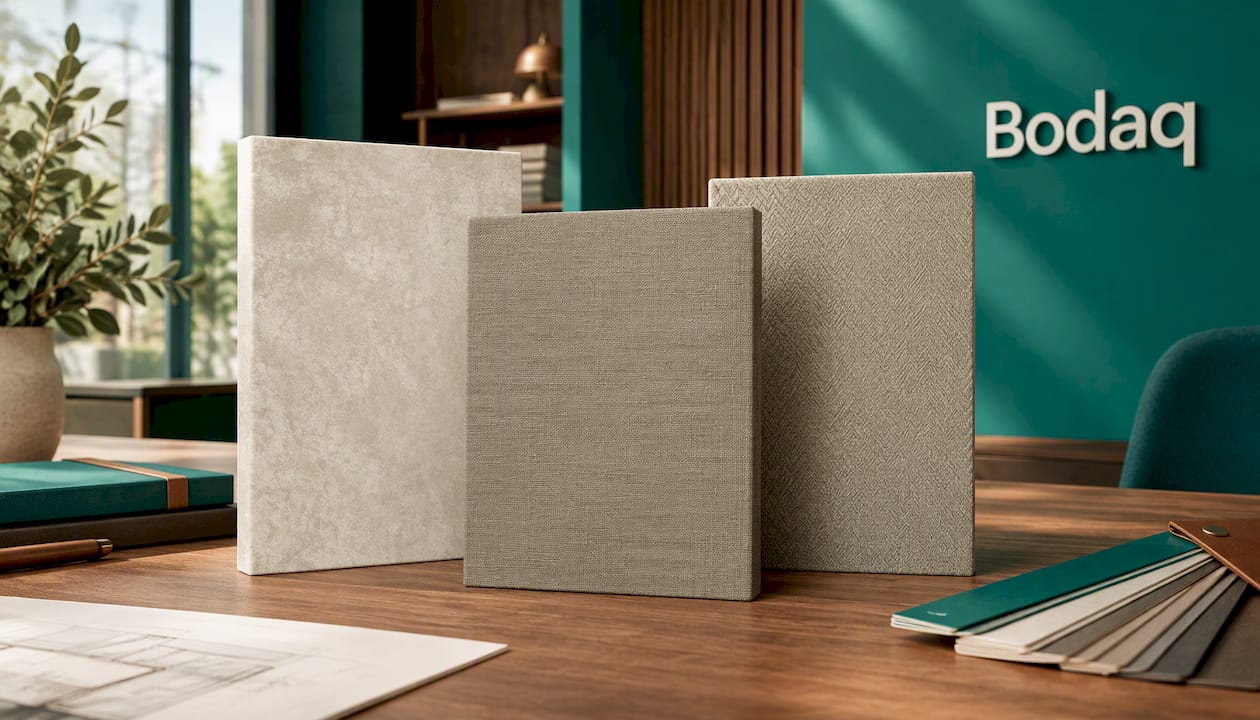
Request samples before you commit to a large area. Seeing a texture under your own lighting, next to your own flooring, avoids the expensive surprise of a finish that reads differently on the wall than on a screen. You can browse every Bodaq film collection and request samples or a quote for your project from there.
If you are a general contractor weighing how film affects schedule and labor, our guide for general contractors covers it. Facility teams managing multiple sites can see how we think about commercial wall wrap costs.
Planning your budget, step by step
Here is a practical sequence we recommend for homeowners and commercial teams alike.
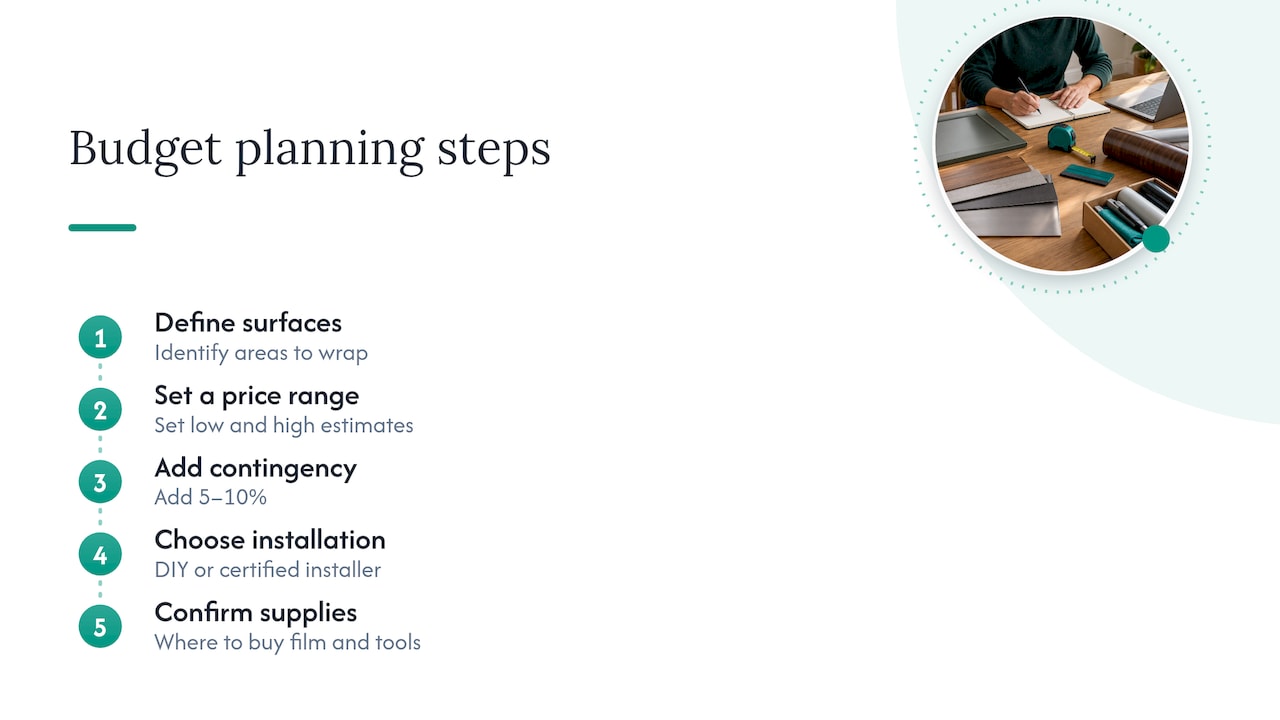
Step 1: Define the scope
List every surface you want to wrap. It is tempting to start with the biggest wall, but doors, frames and furniture fronts often deliver the most visual change per dollar because they are small, high-contact and quick to finish.
Step 2: Set a range, not a number
Use the per-square-foot ranges above to set a low and high case. Then compare to your real quotes. If a bid falls far below the low end, ask what has been left out. If one falls above the high end, ask what makes the site hard.
Step 3: Add contingency
Plan for a 5 to 10 percent contingency to cover diagnostic surface tests, extra substrate prep and disposal. On a $4,200 job, that is $210 to $420, which is small next to the cost of being caught short.
Step 4: Decide who installs
The choice is between a certified professional and doing it yourself. Straight flat walls are within reach of a careful DIYer, and our installation guide explains the process in detail, as does our shorter piece on post-heating technique. For curves, high-traffic areas or anything under a warranty or schedule, hiring an experienced installer protects your investment.
Step 5: Confirm where to buy
Source the film and the tools together so the installer is not improvising. Our guide to buying architectural vinyl in the USA explains your options.
Where the budget works hardest
Not every surface gives the same return. In our experience, these areas are where film tends to earn its cost:
- Feature walls and reception fronts: a bold stone or textured fabric pattern gives an immediate brand statement. A pattern such as Graphite Chevron or Carbon Woven brings a tailored, tactile feel to a plain wall.
- Stone looks without the stone: a film like Rustic Stone gives the weight of natural material without structural load or masonry labor.
- Doors and frames: worn doors in hospitality and multifamily buildings can be refreshed in place.
- Cabinetry and furniture: refinishing can extend the life of solid casework that is simply out of style.
For a wider look at what film can cover, see our overview of common areas of application.
Mistakes that inflate the final bill
- Comparing quotes with different scopes. One includes prep and the other does not.
- Ignoring seam planning. Poorly planned seams waste film and look amateur.
- Underestimating small details. Corners, returns and openings cost more per foot than open wall.
- Skipping a test patch. A small trial reveals adhesion issues before the whole wall is committed.
- Wrapping a damaged surface. Film follows the surface beneath it, so repair first.
- Not budgeting for the unexpected. See the contingency above.
FAQ
How much does architectural wrap cost per square foot?
Published guides put standard interior vinyl wrap at roughly $3.25 to $10.50 per square foot installed, with premium architectural films often cited at $10 to $30 installed. Your real number depends on surface, complexity, location and the film chosen. A written quote based on measurements is the only reliable answer.
Can you apply vinyl film to an interior wall?
Yes, architectural film is designed for interior walls, doors, ceilings, furniture and many other surfaces, flat or curved. The surface must be clean, dry, sound and properly prepared. Textured or poorly painted walls may need extra work before film will adhere well.
Is architectural film cheaper than replacing a surface?
For surfaces that are structurally sound, film is usually cheaper than replacement once you count demolition, disposal, new material and downtime. It also leaves you free to change the look later. If the substrate is damaged, repair comes first.
How much does professional installation add?
Installation labor is estimated at $40 to $85 per hour, and total hours depend on prep, edges and access. On complex or after-hours jobs, labor can be the largest part of the bill. Ask for material and labor on separate lines.
How do I get an accurate quote?
Send accurate measurements, photos of the surfaces, access details and your timeline, and request samples of the finish you prefer. Then ask each bidder what prep is included and how edges and openings are priced, so you can compare like with like.
Sources
- Vinyl Wrap Cost Per Square Foot: Price Guide
- Premium architectural film price: material and installation costs
- Wallpaper installation cost