
Most professional cabinet wraps land between $3,000 and $15,000 installed, with small kitchens ($2,000 to $6,000), mid-size kitchens ($4,000 to $9,000), and large or premium jobs ($8,000 to $15,000) marking the usual bands. DIY materials alone typically cost several hundred to over a thousand dollars. The swing between those numbers comes down to finish quality, cabinet door complexity, prep work, and local labor rates.
TL;DR:
- Cabinet wrapping costs vary from $2,000 to $15,000 depending on kitchen size and finish complexity, with coastal markets tending toward higher prices.
- Labor often accounts for more than half of the total cost, and prep work can significantly inflate quotes if bundled or overlooked.
- DIY wrapping can reduce expenses but risks quality issues like bubbles or misaligned seams, limiting savings to the material cost of $400 to $1,600.
- Accurate quotes require detailed measurements, clear communication about prep and warranty options, and a 10% to 15% buffer for unexpected damages.
- Wrapping is faster and mess-free compared to refacing or replacement, with a lifespan of 5 to 10 years, making it a cost-effective solution for budget-conscious upgrades.
Table of Contents
- How much does cabinet wrapping cost by kitchen size?
- What makes up the total cost to wrap kitchen cabinets?
- Is DIY cabinet wrapping actually cheaper than hiring a pro?
- How do you get an accurate cabinet wrap quote?
- Cabinet wrapping vs. painting, refacing, and full replacement
- Why architectural film makes sense for budget-conscious kitchens
- Which Bodaq finish fits your cabinet budget?
- Sources
How much does cabinet wrapping cost by kitchen size?
Your kitchen’s door count drives the estimate more than almost anything else, so it helps to see what real budgets look like at each scale.
A small kitchen with 10 to 15 doors usually falls in a moderate installed cost range. That covers a standard vinyl finish, basic prep, and a crew that can wrap most galley or single-wall layouts in a couple of days. Choosing a premium texture at this size pushes cost higher.
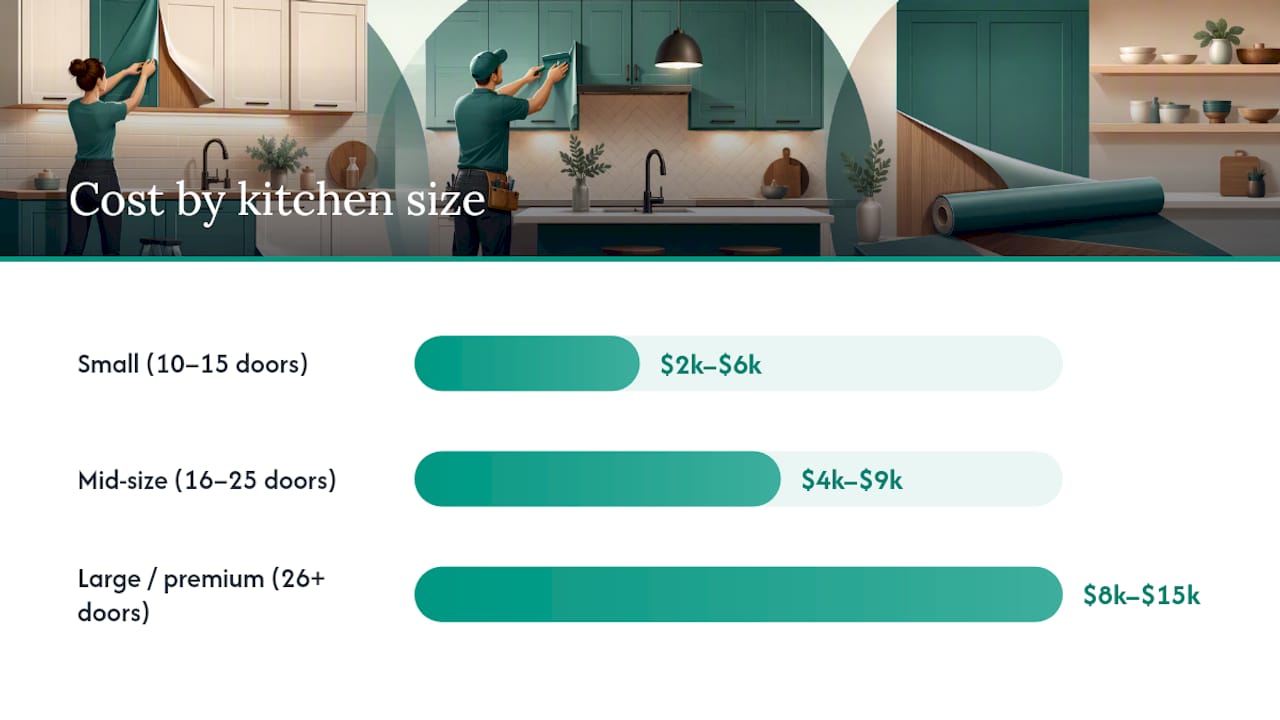
A mid-size kitchen with 16 to 25 doors typically has a medium price range. This is a common project type from homeowners, and it’s where finish choice starts to matter more than door count alone.
A large kitchen with 26 or more doors, or any kitchen requesting premium wood-grain or metallic finishes, tends to land at $8,000 to $15,000. Archie Remodels confirms this same small, mid, and large breakdown across the professional market.
- Small (10 to 15 doors): $2,000 to $6,000
- Mid-size (16 to 25 doors): $4,000 to $9,000
- Large or premium (26+ doors): $8,000 to $15,000
Urban markets with higher labor costs, like coastal metros, tend to sit near the top of each band.
What makes up the total cost to wrap kitchen cabinets?
Every quote breaks into four buckets: material, labor, prep, and extras. Knowing where the money goes helps you spot a fair quote from an inflated one.
Material runs $1.50 to $6.00 per square foot depending on whether you choose a standard solid color or a premium textured film, according to Design Transition Studio. Labor is usually quoted per linear foot ($35 to $90) or per door, and it’s typically the biggest line item on the invoice, often accounting for more than half the total bill.
Combined per-door pricing (material plus labor) averages $60 to $150, while combined per-linear-foot rates run about $25 to $65, per One and Done Prep.
Pro Tip: Ask your installer to quote prep separately from wrapping. Sanding, degreasing, and filling old hardware holes often get bundled into a vague “prep fee,” and that’s where quotes can quietly balloon.
- Prep work, including deglossing, sanding, and filling holes, adds additional cost for mid-sized kitchens.
- Edge finishing and wraparound corners increase labor time for all doors
- Metallic or wood-grain finishes add a significant premium on material and labor combined
- Post-install service or touch-up warranty costs vary by installer; inquire early.
Premium textures and complex door profiles, like raised panels or shaker styles, increase both material waste and install time. That premium represents the real additional effort for pattern-matching and extra edge work.
Is DIY cabinet wrapping actually cheaper than hiring a pro?
DIY saves you the labor line, which is the single biggest cost driver in any wrap project. Cutting labor hours, whether by removing your own hardware or limiting which surfaces get wrapped, is the most reliable lever for lowering the total bill.
- Material-only DIY budgets run $400 to $1,600 for a small to mid-size kitchen, since labor commonly makes up 50% to 60% of an installed job.
- Tools you’ll need: a heat gun, a felt squeegee, a sharp cutting knife, and painter’s tape. Budget another $50 to $100 if you don’t already own them.
- Pro installs are typically priced by the door or by crew hours, with experienced installers averaging 20 to 40 minutes per standard door, faster on flat-panel styles.
- Common DIY failure modes include trapped air bubbles, lifted edges from poor degreasing, and misaligned seams on corner cabinets, all of which shorten lifespan and sometimes require a costly professional fix.
Pro Tip: If you’re DIYing to save money, wrap only the most visible doors yourself and hire a pro for tricky corner or curved cabinets. You get the visual upgrade without risking the hardest cuts.
How do you get an accurate cabinet wrap quote?
Start by measuring every door, drawer front, and any exposed cabinet side you want covered. Multiply height by width for each piece, add them up, and you have your total square footage, the number every material and labor estimate is built on.
- Measure and count: doors, drawer fronts, exposed end panels, and any interior shelving you want included.
- Photograph everything: wide shots of each cabinet run, close-ups of hardware, and any existing damage or previous finish. Installers use these for remote quoting.
- Ask installers directly: What’s included in prep? Is there a warranty on adhesion? How is edge finishing handled on curved or beveled doors? Will they remove and reinstall hardware, or is that on you?
- Build in a buffer: add 10% to 15% to whatever quote you receive. Hidden damage under old hardware or an extra coat of degreaser almost always shows up once work begins.
Cabinet wrapping vs. painting, refacing, and full replacement
Wrapping sits in a clear middle ground on cost, and that’s exactly why it has become the go-to choice for budget-conscious renovations. Full cabinet replacement typically starts well above $15,000 for a mid-size kitchen and can climb past $30,000 with custom boxes and premium hardware. Professional repainting usually costs less than replacement but more than wrapping once you account for primer, multiple topcoats, and the labor-intensive prep needed to keep paint from chipping.
Cabinet refacing, where new veneer or solid doors get applied to existing boxes, often lands close to wrapping in the low range but climbs quickly with custom door styles, frequently exceeding wrap pricing once you add new hardware and matching trim.
Wrapping wins on speed and mess. A full wrap job typically finishes in 1 to 5 days, compared to a week or more for refacing and several weeks for replacement, which usually means living without a functional kitchen. Expected lifespan for a properly installed vinyl wrap runs 5 to 10 years, shorter than solid wood refacing but achieved at a fraction of the cost and disruption.
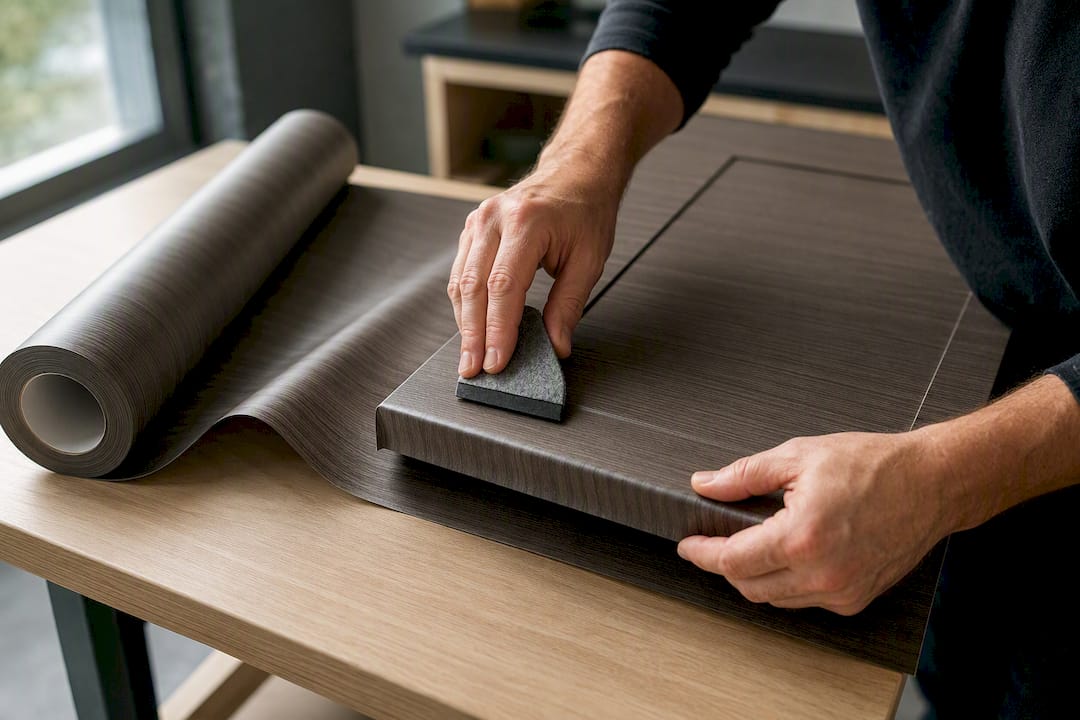
If your cabinet boxes are structurally sound and you just want a new look without a construction timeline, wrapping is the more practical dollar-for-dollar renovation.
Why architectural film makes sense for budget-conscious kitchens
Stretchable, self-adhesive film covers curves and edges that paint struggles with, and extensive catalogs spanning hundreds of textures mean a budget project doesn’t have to mean a limited look. Film also generates far less mess than sanding and spraying, which matters when your kitchen is the only kitchen you’ve got during the project.
— Bodaq
Which Bodaq finish fits your cabinet budget?
If you’re working within a tighter budget, the Easy Clean solid color collection and finishes like Deep Forest S266 or Deep Slate S261 deliver a clean, durable solid color without the premium texture surcharge. For mid to large kitchens where you want a standout focal wall of cabinetry, wood-grain options like Deep Walnut Oak LW109 and Sandstorm Oak LW116 bring warmth that reads as real wood at a fraction of a wood refacing budget.

If your project calls for a bolder statement, the Rustic Stone EXF52 and Onyx EXF51 high-performance finishes hold up to daily kitchen wear while giving your island or perimeter cabinets a premium, textured presence.
Not sure which finish fits your space? Download the Bodaq Catalog 2026/2027 to browse the full range and request samples before committing to a roll count. If you’d rather have a professional handle the install, certified installer networks can quote your project against the exact finish you choose, so your estimate reflects a real product instead of a generic placeholder price.
Sources
- Cost to Wrap Kitchen Cabinets: A Comprehensive Guide – Archie Remodels
- Cost to Wrap Kitchen Cabinets: A Complete Guide to Pricing and Factors – Design Transition Studio
- Vinyl Wrap Cabinets Cost 2026 – One and Done Prep
- Cost to Wrap Kitchen Cabinets: A Comprehensive Guide for Homeowners – Well Built Florida