
The fastest, lowest-disruption way to refresh a commercial interior is a surface-first approach: interior film for eye-level elements, paired with targeted lighting and a few strategic furniture moves. Most projects wrap up in days to a few weeks, at a fraction of the cost of full replacement, and the M&E share of fit-out budgets shapes where that savings show up most. We built interior film specifically for this kind of high-impact, low-waste turnaround.
TL;DR:
- Start with doors, reception desks, and elevator interiors; film can transform these high touch surfaces in a day or two with little site disruption.
- Use film only when the underlying surface is sound; structural damage or persistent moisture calls for replacement, not a cosmetic covering.
- Small jobs often take days, medium projects one to two weeks, and larger multi surface refreshes three to six weeks, with labor shortages extending schedules.
- Mechanical and electrical services account for roughly 29% of office fit out costs; upgrades can reduce energy costs by 10% to 40%, depending on scope.
- Before committing, request an on site mockup and verify installer credentials, written insurance and warranty terms, and fire testing requirements for the specific application.
Table of Contents
- High-impact, budget-friendly refresh ideas to prioritize first
- Where interior film and vinyl wrapping fit in a refresh plan
- Layering finishes and lighting for a modern, high-value look
- Process and timeline: what to expect from assessment to install
- Cost considerations and ROI: where to invest for lasting value
- Sustainability and operational benefits of low-waste refreshes
- How to choose materials and a certified installer
- Bodaq proof points and short case studies
- When to refresh vs. renovate: a short editorial recommendation
- Bodaq product solutions and next steps
- FAQ
- Sources
- When to refresh vs. renovate: a short editorial recommendation
High-impact, budget-friendly refresh ideas to prioritize first
When budgets are tight and downtime has to stay minimal, order matters. Here is the sequence we recommend for the best visual return per dollar:
- Wrap high-touch surfaces in film: doors, reception desks, and elevator interiors transform in a day or two with almost no site disruption, at a low to medium budget.
- Repaint one or two focal walls: a quick, low-cost way to reset a room’s mood in under a week.
- Swap lighting fixtures or lamps: new fixtures change how every other finish reads, often within a single afternoon.
- Reconfigure existing furniture: zero material cost, immediate layout improvement.
- Add new signage or art: inexpensive, fast, and effective for brand presence.
- Replace worn textiles: chairs, cushions, and drapery refresh a space’s feel without touching the structure.
- Add acoustic panels: improves comfort and sound quality in open offices within days.
- Spot-repair flooring: targeted patches instead of full replacement, keeping cost and downtime low.
Interior film earns its spot at the top of this list because it performs best exactly where hands and eyes meet a space most: doors, reception millwork, and elevator cabs.
Where interior film and vinyl wrapping fit in a refresh plan
Film performs best on surfaces people touch, see, and judge a space by, provided the substrate underneath is sound. We typically recommend it for:
- Entry and interior doors, which take daily wear and set the first impression
- Reception desks and front-of-house millwork
- Elevator interior walls and panels, where durability and appearance both matter
- Casegoods, cabinetry, and other built-in furniture
- Selected wall panels in corridors, lobbies, and meeting rooms
- Countertops, when the substrate beneath is structurally sound
Performance varies by collection, but film finishes generally hold up well against abrasion and are easy to wipe down, a quality our Easy Clean collection is built around. Texture and color choices range from matte solids like Silver Mist to bright, clean finishes like Refined White, so the look can match almost any brand standard. Full replacement still makes sense when a surface has structural damage or persistent moisture problems. Short of that, film is the faster route.
Layering finishes and lighting for a modern, high-value look
A refresh reads as “designed” when finishes and lighting work together instead of competing. The principle is simple: prioritize what people see at eye level, contrast textures so nothing blends into sameness, and layer warm lighting to create distinct zones within one open floor plan.
- Pair a wood-look film on casegoods with a stone-pattern accent panel behind reception for contrast without cost.
- Use metal-tone film trims alongside soft fabric seating to balance hard and soft textures.
- Create micro-environments (a warmer lounge corner, a brighter focus zone) with lighting alone, no construction required.
Pro Tip: Spend your first dollars on lighting and the materials people touch at eye level, doors, desks, and panel fronts, since that is where perceived value concentrates fastest.
Process and timeline: what to expect from assessment to install
A film-based refresh follows a predictable five-step path, which makes scheduling around business hours far easier than with construction-heavy renovations.
- Initial consultation: define scope, surfaces, and budget band.
- Site assessment: check substrate condition and confirm film is viable for each surface.
- Design sample and approval: review physical samples and finalize colors and textures.
- Installation scheduling: plan around off-hours or phased zones to keep operations running.
- Final walk-through and maintenance plan: confirm quality and hand off cleaning guidance.
Small refreshes (a few doors, a reception desk) often finish in days. Medium projects (a floor or department) run one to two weeks. Larger, multi-surface refreshes can take three to six weeks, and timelines can stretch further when skilled-labor shortages affect contractor availability in a given market.
Cost considerations and ROI: where to invest for lasting value
Fit-out budgets are not spent evenly. Builders’ works and mechanical and electrical systems typically dominate the spend, and that split should guide where a refresh budget goes.
Mechanical and electrical services represent roughly 29% of total office fit-out costs, and targeted M&E upgrades can cut operational energy costs by 10% to 40% depending on scope. That means a portion of any refresh budget often delivers more value tuning lighting controls or HVAC than replacing finishes that still function fine.
- Film and wrap work typically costs a fraction of full replacement for visible surfaces, since materials, labor hours, and disposal volume all shrink.
- Build in contingency for substrate prep, adhesion testing, and small repairs before film goes on.
- Reserve a portion of capital spend for M&E tuning, since that is where operational savings compound over time.
Sustainability and operational benefits of low-waste refreshes
Refinishing an existing surface instead of tearing it out avoids the embodied carbon and landfill volume tied to manufacturing and disposing of replacement materials. That difference matters more as sustainable fit-outs become a bigger factor in corporate real estate decisions.
- Wrapping a door or desk keeps the original substrate in service instead of in a dumpster.
- Reinstating a space at lease-end is faster and cleaner when finishes were refreshed rather than rebuilt.
- Simple cleaning regimens and the ability to patch or replace a single panel extend the useful life of the whole surface.
How to choose materials and a certified installer
A short checklist keeps procurement decisions fast and defensible.
Material criteria:
- Abrasion resistance and slip ratings appropriate to the surface’s traffic level
- Fire testing credentials, including ASTM E84 compliance for wall finishes
- Cleanability and warranty terms, which our Easy Clean collection is built to meet
Installer criteria:
- Certified training and documented project references
- Physical sample panels and an on-site mockup before full installation
- Clear insurance coverage and warranty terms in writing
Pro Tip: Ask any installer for a small on-site mockup before committing to the full project; it reveals adhesion quality and finish accuracy faster than any sample book.
Bodaq proof points and short case studies
The film is self-adhesive and stretchable, which keeps installation fast and cuts waste compared with rigid materials, and the catalog spans many textures and colors to match most brand standards.
- A lobby refinishing project replaced worn reception millwork and elevator panels over a single weekend, with the space reopening to normal traffic the following Monday.
- A hotel renovation wrapped guest-corridor doors and casegoods in phases, keeping rooms bookable throughout, a model we detail further in our piece on interior film versus replacement.
- Procurement teams evaluating materials can also review our guide to wall finishing options for how film compares with other surface treatments.
When to refresh vs. renovate: a short editorial recommendation
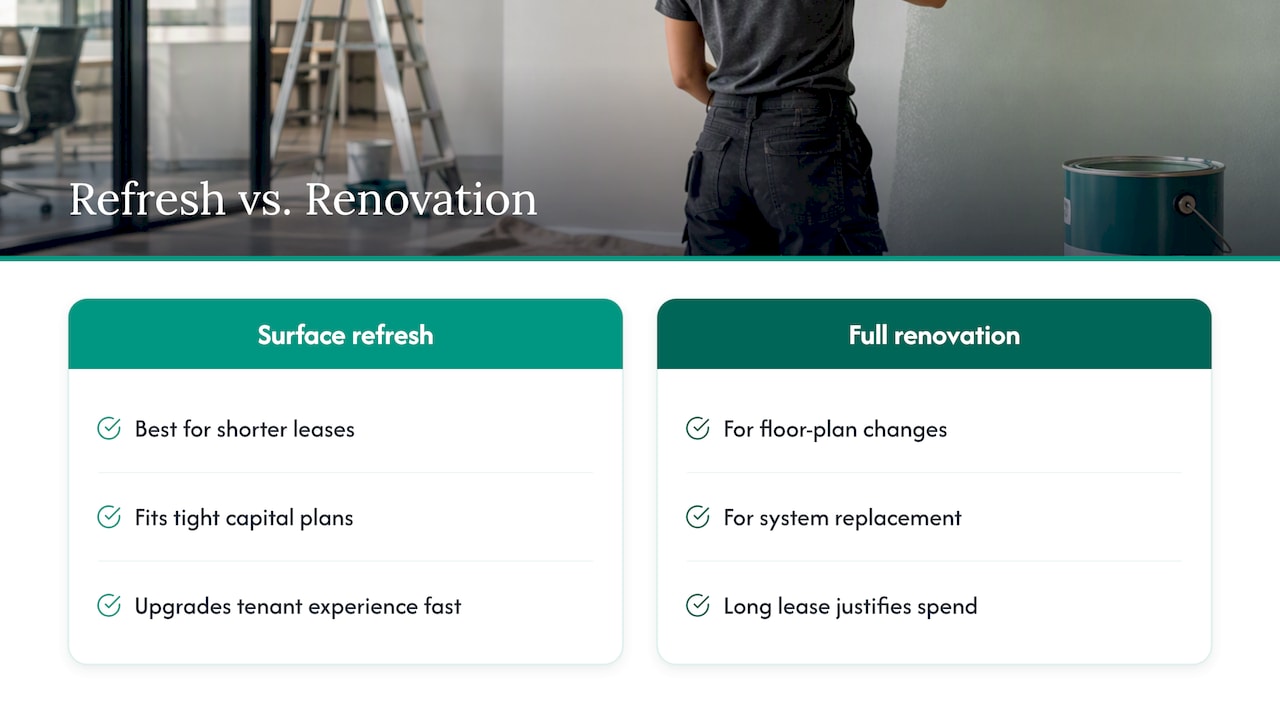
Shorter leases, tight capital plans, or a need to upgrade tenant experience fast all point toward a surface-first refresh. Full renovation earns its cost when you are changing a floor plan, replacing systems, or holding a long-term lease that justifies the spend.
Bring M&E and sustainability specialists in early regardless of route; their input changes where a budget does the most good. If you are weighing the two paths, requesting samples or a scoped quote clarifies the real numbers fast.
Bodaq product solutions and next steps
We built three collections specifically for the surfaces that take the heaviest daily wear and the most scrutiny. Refined White suits reception desks and panels that need a clean, bright finish. Easy Clean fits high-touch doors, elevator interiors, and countertops where wipeable durability matters most. Silver Mist works well on metal-adjacent trims and accent panels that need a quiet, neutral tone.
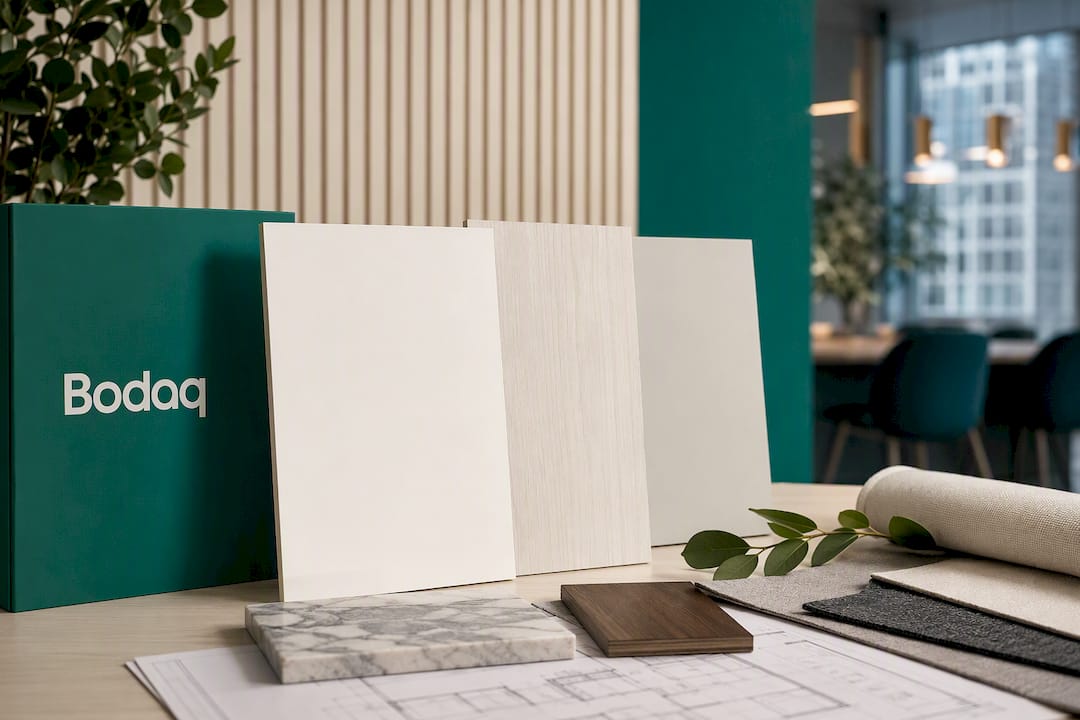
- Refined White – Premium Collection BLC07: a bright, clean finish for reception and panel work
- Easy Clean – High-Performance Collection ECF01: built for wipeable durability on doors and high-touch surfaces
- Silver Mist – Solid Color Collection S263: a neutral tone for trims and accents
Browse the full Wood, Metal, and Stone & Marble Collections or visit Bodaq Interior Film to request samples or get a scoped quote for your space. If you are also adding partition walls or private offices during the refresh, a quick-install option like a door solution that preserves the open feel can pair well with a film upgrade.
FAQ
How durable is interior film compared to paint or laminate?
Film finishes generally hold up well against daily abrasion and scuffing, particularly on high-touch surfaces like doors and reception desks. One collection is designed specifically for wipeable durability in high-traffic commercial settings.
Does interior film meet fire-rating requirements for commercial buildings?
Fire testing references for wall finishes, including ASTM E84 compliance, guide which materials are appropriate for a given application. Always confirm the specific rating required for your project type and jurisdiction before specifying a finish.
How much downtime should we expect for a film-based refresh?
Small projects like a handful of doors or a reception desk often finish in just a few days. Larger multi-surface refreshes can take one to six weeks depending on scope and labor availability in your market.
Is a surface refresh actually cheaper than full replacement?
Film and wrap work typically costs a fraction of full replacement for visible surfaces, since materials, labor hours, and disposal volume all shrink. The bigger savings often come from avoiding the mechanical and electrical costs tied to gutting a space, since M&E alone runs about 29% of total fit-out spend.
What maintenance does interior film need after installation?
Most film finishes need only routine wiping with standard cleaning products to stay looking new. Our Easy Clean collection is designed to simplify this further for high-traffic surfaces like doors and countertops.
Sources
- Office fit-out costs rise as firms adapt to new ways of working — Workplace Insight
- Fit-out costs escalate as high energy prices impact labor and materials — Facilities Dive
- What’s driving the global cost dynamics in office fit-outs — JLL
When to refresh vs. renovate: a short editorial recommendation
Most commercial property decisions default to “renovate” when “refresh” would serve the lease term, the budget, and the tenant experience goal just as well, often better. The conventional wisdom overvalues full teardown because it looks more thorough on paper, but thoroughness is not the same as value. A well-chosen surface refresh, timed with lighting and M&E input, frequently outperforms a full renovation on cost per point of visual and operational improvement.
— Bodaq