The best conference room wall covering does three jobs at once: it takes daily wear from chairs, carts and wipe-downs, it sets the tone for every meeting held there, and it goes up without emptying the room for weeks. A self-adhesive, stretchable architectural film such as Bodaq does all three. It wraps existing walls, doors, credenzas and panels in one continuous look, with more than 450 textures and colors to choose from, and it avoids the pasting, demolition and drying time of traditional wallcovering.
This guide walks through seven design ideas for conference rooms and offices, then covers how to judge durability, what to check for sound, and how to plan an installation that keeps the room in service.
TL;DR
- Treat the conference room as a showpiece that also has to survive daily use: choose a finish rated for commercial wear, not just one that photographs well.
- Wrapping walls, doors and built-ins in one film gives a unified, architectural look without new construction.
- Bodaq film is stretchable and self-adhesive, with air-channeled adhesive, so installation is cleaner and creates less waste than pasted wallcovering.
- Check sound separately: a finish sets the look, and acoustic performance is judged by octave-band test data, not by a single number.
- Order samples and view them in the actual room, under its actual lighting, before you commit to a collection.
Table of Contents
- What a conference room wall has to do
- 1. Color drenching the whole room
- 2. A wood-grain feature wall behind the screen
- 3. Stone and marble for a statement wall
- 4. Metal accents for a modern, technical edge
- 5. Fabric and leather looks for warmth
- 6. Wrapping the furniture and doors to match
- 7. Brand-consistent looks across multiple offices
- How to choose: durability, cleaning and fire rating
- Don’t forget sound
- Planning an installation with minimal downtime
- Promo: See Bodaq in your conference room
- Our perspective
- FAQ
- Sources
What a conference room wall has to do
A conference room is one of the few spaces in an office where design is expected to speak. Clients form an impression in the first thirty seconds, and the walls are most of what they see. At the same time, the room takes real punishment: chair backs knock against the walls, AV carts scrape corners, and cleaning crews wipe down the same surfaces every night.
That tension is why the choice matters. Designers working with commercial interiors have been moving toward durable contract surfaces for vertical walls that minimize sound, reflect light and stay easy to clean and install. Vinyl and textile both protect walls from dings, dents and scratches from desk chairs and carts, and the final choice often comes down to installation and maintenance rather than raw toughness.
So the practical brief for a conference room wall covering is simple to state:
- It must look intentional from every seat, including under video-call lighting.
- It must stand up to scuffs and be wipeable.
- It must be installed fast enough that the room is not lost for long.
- It should be easy to refresh when the brand, the team or the trend moves on.
That last point is where film has a real advantage. Because it applies directly over a prepared surface, a worn or dated room can change character without a gut renovation.
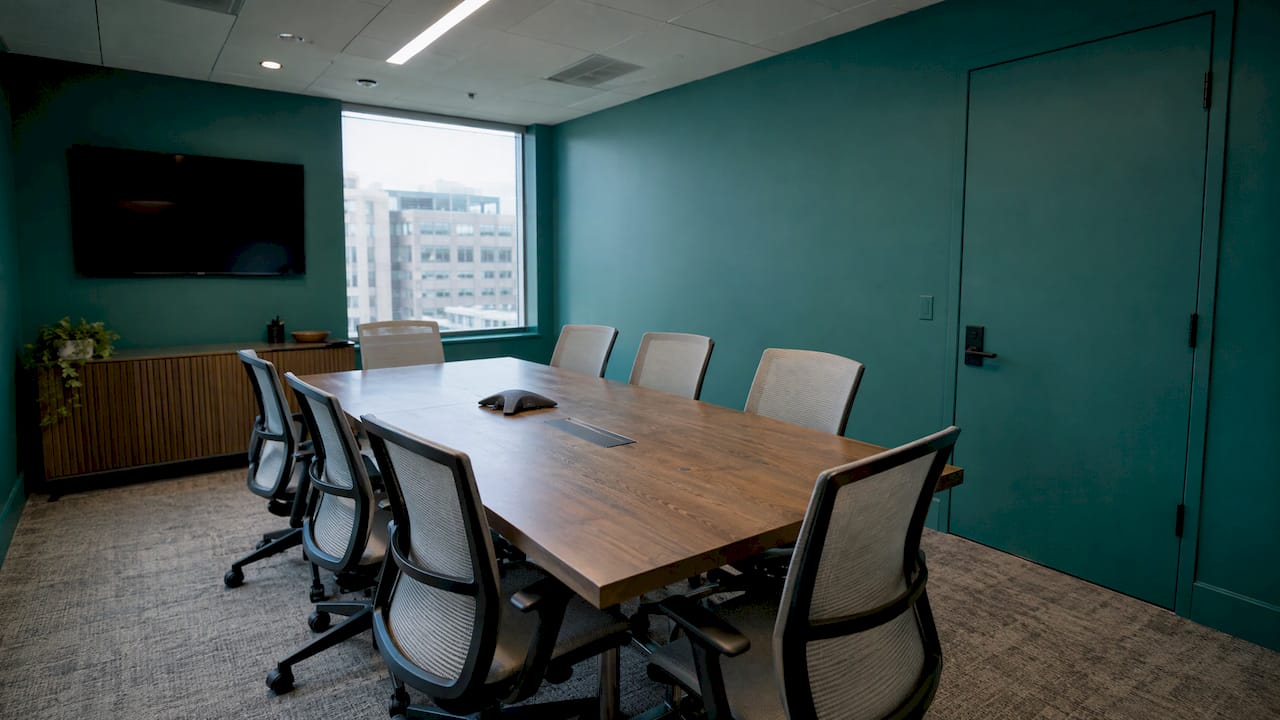
1. Color drenching the whole room
Color drenching means wrapping walls, trim and doors in the same hue so the room feels like one sculpted volume rather than a box with decorations. In a conference room it creates a cocooning effect: voices feel closer, the table becomes the focal point, and visual clutter disappears.
Why it works. A single saturated tone removes the hard lines where wall meets door meets baseboard. The eye rests, and the room reads as deliberate.
How film supports it. Bodaq’s Solid Colors Collection lets you carry one shade across flat walls, doors and built-in cabinetry, so every surface matches in tone and sheen. Film is also stretchable, so it can follow the shape of door frames and profiled edges that are tedious to finish in paint or paper.
Pro tip. Deep tones such as forest green, ink blue and warm charcoal photograph well on camera and flatter people on video calls. Hold a sample against the screen backdrop wall and look at it through a live call before you decide.
2. A wood-grain feature wall behind the screen
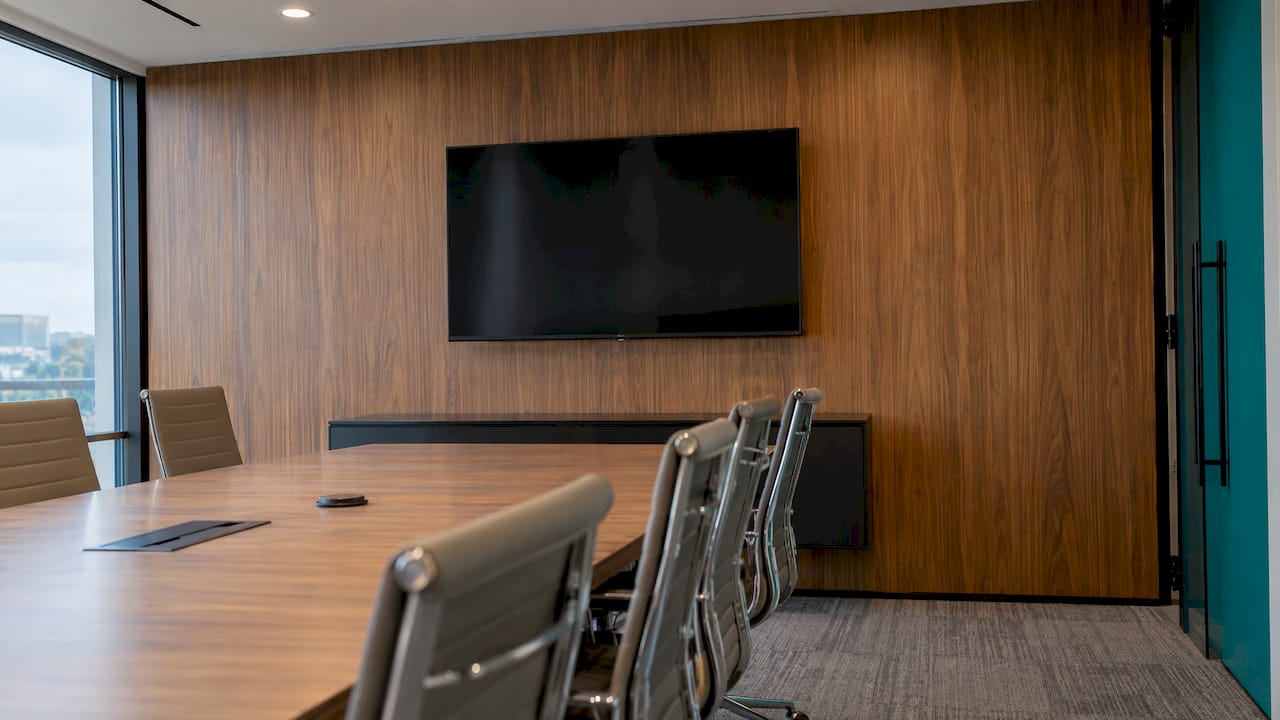
Wood is the quiet workhorse of boardroom design. A warm, organic grain behind the display wall softens the technology and gives the room a residential, trustworthy feel.
Why it works. Natural-looking grain adds texture without adding noise. It signals craftsmanship and pairs with nearly every table material and carpet.
How film supports it. The Wood Collection offers architectural wood looks in a thin film that wraps over drywall, existing paneling or tired laminate. You get the visual weight of a veneered wall without cutting, staining or installing real boards.
Pro tip. Run the grain vertically in rooms with low ceilings to add height, and horizontally in narrow rooms to widen them. Keep the same grain direction on the credenza and the doors so the whole room reads as one piece of joinery.
3. Stone and marble for a statement wall
For client-facing rooms in law, finance and hospitality, stone is shorthand for permanence. Veined marble and honed concrete looks deliver that authority without the structural load or cost of the real material.
Why it works. Large-scale pattern with natural variation creates depth. One bold wall in a calm room becomes the backdrop for every handshake photo and every presentation.
How film supports it. The Stone & Marble Collection brings those surfaces to walls, reception-adjacent meeting rooms and table bases. Because the film is self-adhesive, there is no wet work to schedule around.
Pro tip. Use stone on one wall only, and keep the rest of the room quiet. Let the pattern be the sculptural moment, not the whole composition.
4. Metal accents for a modern, technical edge
Brushed and patinated metal looks suit technology, engineering and creative firms. Used as a band, a column wrap or a door treatment, they add reflected light and a crisp, tailored line.
Why it works. Metal finishes bounce light, which helps interior rooms feel larger, and they contrast beautifully with softer elements such as wood and textiles.
How film supports it. The Metal Collection lets you cover columns, elevator-side walls and door faces with a metallic look without fabricating or hanging metal sheet.
Pro tip. Pair a metal door and frame with a matte solid wall. The contrast makes the entrance feel designed instead of default.
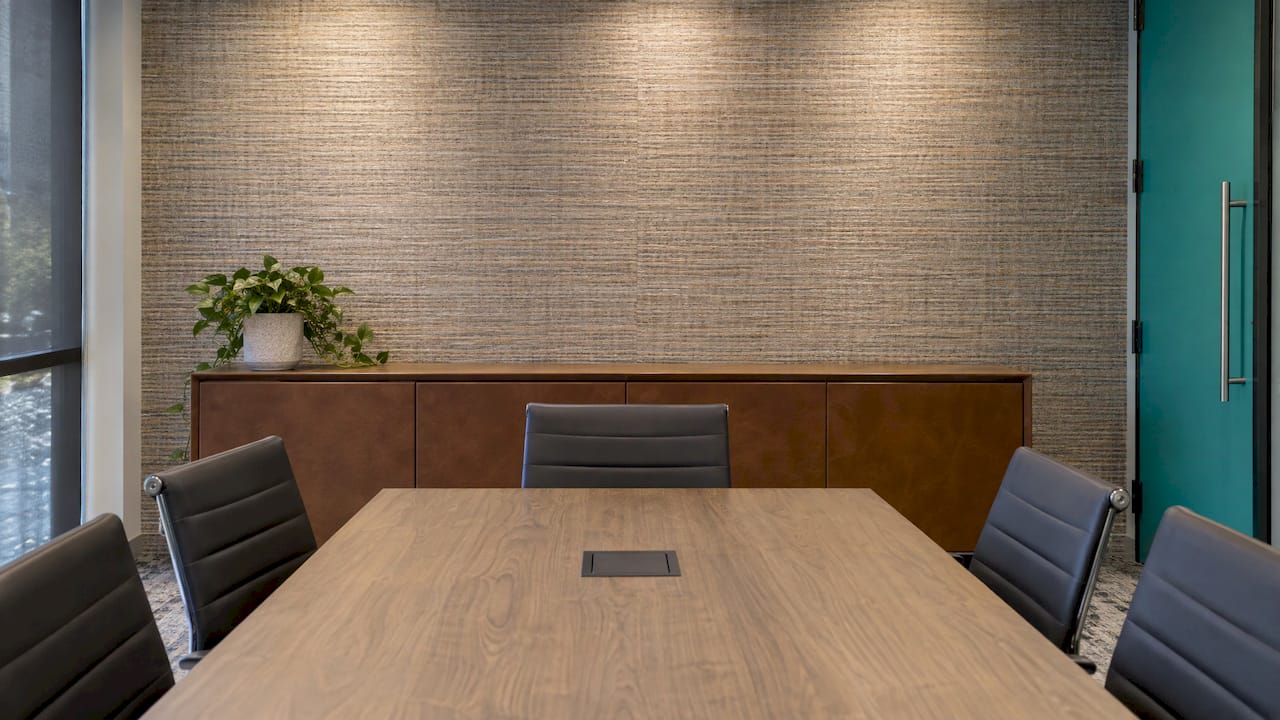
5. Fabric and leather looks for warmth
Conference rooms tend to be hard-edged: glass, laminate, screens. A tactile, upholstered look balances that. Fabric and leather patterns suggest the comfort of a lounge while staying practical.
Why it works. Texture is what makes a space feel immersive. Even a visual weave or grain adds richness that flat paint cannot.
How film supports it. The Fabric & Leather Collection gives you those tactile looks in a film that can be wrapped over a bench, a credenza front or a feature wall.
Pro tip. Use leather-look film on a surface that people touch, such as a credenza, and a woven look on the wall behind it. Varying the scale keeps the combination from feeling heavy.
6. Wrapping the furniture and doors to match
Most conference rooms fail visually not because of the walls but because of everything that does not match them: an orange-toned door, a dated laminate credenza, a table base from another decade.
Why it works. When every vertical surface shares a palette, the room looks designed even if the furniture itself is old.
How film supports it. Bodaq is built for walls, furniture, doors and other surfaces in both residential and commercial spaces, so one specification can cover the whole room. That is the design equivalent of a tailored garment: the same cloth, cut to fit every surface.
Pro tip. Photograph the room before you start and mark every surface that will be wrapped. Specify one collection per room, and no more than two finishes, so the result reads as cohesive.
7. Brand-consistent looks across multiple offices
For property managers and multi-site companies, the challenge is consistency. A headquarters boardroom and a regional meeting room should feel like the same company.
Why it works. Repeating a finish across locations builds recognition and simplifies future refreshes, since the same pattern can be specified again.
How film supports it. With over 450 textures and colors in a single catalog, one finish can be specified for several rooms or buildings. Bodaq also offers a dealer program and certified installer training, which helps keep the application consistent from site to site.
Pro tip. Write the collection name and color code into your design standards so each new office is specified the same way.
How to choose: durability, cleaning and fire rating
Once the look is settled, check performance. Three questions cover most of it.
How hard will the room be used? A private boardroom sees less abuse than a shared training room. Commercial vinyl wallcoverings are graded by weight and performance into types, and Type III is the grade specified for the highest-traffic applications because of its colorfastness, scrubbability, abrasion resistance and stain resistance. The same source advises asking manufacturers for the ratings behind any product you specify, so ask for them in writing. Bodaq emphasizes certified durability for high-traffic environments, and our guide to high-traffic wall coverings explains what to look for in more detail.
How will it be cleaned? Owners want surfaces they can wipe down without moisture getting into the sheetrock behind. Define the cleaning routine up front, whether that is a damp cloth or a daily disinfectant wipe, and confirm it with the product’s care instructions.
What does your building require? Interior finishes are often subject to fire-performance requirements that vary by jurisdiction and building type. Confirm the requirement with your architect or the local building official before you specify, and keep the documentation with the project file.
A quick comparison of approaches
| Approach | Best for | Installation | Waste and disruption |
|---|---|---|---|
| Paint | Ceilings, low-traffic upper walls | Simple, but needs cure time and repainting | Fumes and repeated repaint cycles |
| Pasted vinyl or textile wallcovering | Planned renovations with a long schedule | More involved; vinyl typically needs pasting | Trim waste, wet work, longer room downtime |
| Bodaq stretchable self-adhesive film | Walls, doors, furniture and built-ins in one look | Self-adhesive with air-channeled adhesive | Designed to minimize waste and simplify installation |
The point of the table is not that paint or pasted paper have no place. It is that when you need one consistent look across walls, doors and furniture, with minimal disruption, film is the most direct route.
Don’t forget sound
Conference rooms live and die by speech clarity, so acoustics belong in the plan from the start. The useful thing to know is how performance is measured. The Noise Reduction Coefficient (NRC) is a single rating from 0.0 to 1.0 for average absorption in the mid-frequency range, but two materials with the same NRC can behave very differently. NRC covers only the 250, 500, 1000 and 2000 Hz bands, so the consultant’s advice is to ask for octave-band absorption data and a matching test report. Thin felt, for example, may absorb mainly at higher frequencies and leave a room sounding boomy.
The practical approach is to treat acoustics and appearance as two layers. Decide which walls or ceiling areas will carry sound treatment, specify those from tested data, and use film for the finish language across the remaining walls, doors and joinery. That way the room sounds right and looks unified, and you do not have to compromise one for the other.
Planning an installation with minimal downtime
Hospitality and corporate teams share one concern: the room cannot be out of service for long. Here is how to keep the schedule tight.
- Survey and select. Walk the room, note every surface to be wrapped, and shortlist two or three films. Request samples from Bodaq and view them on the actual wall, at different times of day and with the room’s lights on.
- Prepare the surface. Film needs a clean, sound substrate. Repair holes and loose areas, and remove dust and grease before application.
- Order with a margin. Measure each wall, add an allowance for pattern direction and trimming, and order everything from the same production batch where possible so color stays consistent.
- Apply. Bodaq’s air-channeled adhesive is designed to let air escape as the film is pressed down, which helps produce a smooth finish, and the stretchable film conforms to edges and profiles. Professional installation with the right tools gives the cleanest result. Bodaq sells installation tools and offers certified training for professional installers.
- Return the room to service. Because there is no pasting stage and no wet-work drying schedule, a room can often be reopened quickly. Confirm the timing for your project with your installer.
For a wider look at where film performs well, our overview of common areas of application for architectural vinyl covers offices, hospitality and more. If you are comparing materials, the guide to interior wall finishing materials lays out the options side by side.
Promo: See Bodaq in your conference room
Bodaq is a premium architectural interior film from Hyundai L&C, available in over 450 textures and colors across wood, metal, stone and marble, solid color, and fabric and leather collections. You can request samples, order installation tools and, for professionals, join certified installer training. Browse the full range at Bodaq Interior Film and compare the five collections before choosing your finish.
Our perspective
We built Bodaq around a simple observation: the surfaces people notice most are often the ones that are hardest to change. A conference room can have a great table and great lighting, but if the walls, the doors and the credenza all say different things, the room never feels finished.
That is why we think of film as a design tool rather than a repair. Because it is stretchable and self-adhesive, with air-channeled adhesive, it lets a designer treat the whole room as one composition. Because the catalog runs past 450 textures and colors, the same system works for a law firm boardroom, a hotel meeting suite and a regional office.
We also care about what happens around the installation. Less waste, a cleaner process and eco-friendly standards matter to the property managers and hospitality teams who have to keep a building running. Our sample requests, tools and installer training exist so that the result in the room matches what you saw on the swatch.
If you are planning a conference room, start with the feeling you want the room to create, then choose the surface. We are glad to help you with the rest.
Bodaq
FAQ
What is the best wall covering for a conference room?
The best choice is one that looks polished, handles daily wear and installs quickly. A stretchable, self-adhesive architectural film meets all three, and it can wrap walls, doors and furniture so the whole room matches. Bodaq offers over 450 textures and colors for that purpose.
Can I wrap an office wall without a full renovation?
Yes. Film applies directly over a clean, sound surface, so you do not need to demolish or rebuild the wall. Prepare the surface, apply the film, and the room can return to use without the long drying or curing steps that wet-applied finishes need.
How do I make sure the wall covering holds up in a busy meeting room?
Match the product to the traffic level and ask for its performance ratings in writing. Commercial wallcoverings are graded by type, and the highest-traffic areas call for the toughest grade. Bodaq emphasizes certified durability for high-traffic environments, and you can read more in our high-traffic wall covering guide.
How should I think about acoustics when choosing a wall finish?
Treat them as a separate layer. Ask for octave-band absorption data and a test report rather than relying on a single NRC number, since two materials with the same NRC can perform differently. Then use film for the finish across the walls, doors and joinery around the sound treatment.
Can I see the finish before I buy?
Yes. Bodaq offers sample requests so you can view colors and textures in your own room, under your own lighting, before choosing a collection.
Sources
- Three Considerations for Specifying Wallcoverings, Buildings
- Options for Contract Textiles Increase, Architectural Record
- A Sound Decision: Selecting the Right Acoustic Treatment for Your Architectural Project, SLR Consulting