
Yes, you can wrap store fixtures with architectural film, and for structurally sound units it is a practical, lower-cost alternative to replacement. At Bodaq, we see the biggest wins in low downtime, reuse instead of new manufacturing, and a wide finish range across wood, stone and marble, metal and solid colors. Ask any supplier for ASTM E84 data before you specify.
TL;DR:
- Film adheres best to clean, stable, smooth fixtures; repair loose trim or delaminated veneer first, and use a certified installer for deep compound curves.
- Wrap one pilot fixture and inspect it on the sales floor under real lighting to catch pattern direction or gloss issues before rollout.
- Repairs, priming, curves, and pattern matching add labor; simple flat panels may suit a trained store crew, while complex profiles call for an installer.
- Before ordering, request physical samples, technical bulletins, installation guidance, and installer references; confirm lot matching and lead times before setting the rollout schedule.
- Choose satin or textured finishes to hide wear, add edge guards where carts or bags hit, and clean with mild soap and a soft cloth.
Table of Contents
- Why does architectural film make sense for retail fixture refurbishment?
- Which fixture substrates and applications work best?
- What is the step-by-step workflow for wrapping a fixture?
- How do you choose finishes and colors for fixtures?
- What affects timeline and cost?
- How should you maintain and clean wrapped fixtures?
- How do you get samples, technical data and place an order?
- What does a practitioner take away from the Bloomingdale’s example?
- Which Bodaq options and next steps fit your fixtures?
- FAQ
- Sources
Why does architectural film make sense for retail fixture refurbishment?
Replacing fixtures means tooling, shipping and disposal, and can involve a longer lead time, unlike refreshing interiors without full renovation to avoid the headache. Wrapping keeps the structure you already own and changes only the surface, so a store can refresh a department while staying open around it. That is the business case in one breath: less cost, less waste, less disruption.
- Lower downtime: Fixtures can be refinished in place or offline in batches, which keeps floor space productive.
- Sustainability: Reusing sound frames avoids the material demand of building new units. Our guide on refinishing instead of replacing goes deeper on this.
- Performance: Film specified for commercial finishes is built for daily contact, and our technical bulletins provide installation guidance.
- Brand consistency: Matched finishes across gondolas, counters and display cases give a store one visual language.
Bloomingdale’s covered older display cases, once floral, with Bodaq RM007 Real Metal Film, turning them into sleek metallic focal points while saving cost and reducing waste.
For a broader look at the retail angle, see our piece on retail fixture refurbishment.
Which fixture substrates and applications work best?
Film grips best on clean, stable, reasonably smooth surfaces. Before you commit a whole floor plan, walk the fixtures and sort them into “ready”, “repair first” and “replace”.
- Painted metal: Excellent candidates once degreased and lightly scuffed.
- Laminate: Works well when edges are tight and the surface is intact.
- Sealed wood and MDF: Reliable when the substrate is flat and sealed.
- Rigid plastics and veneers: Many perform well, provided the surface is sound and clean.
Curves are where film earns its keep. Because our film stretches and is self-adhesive with air-channeled adhesive, it conforms to rounded gondola ends and tight radii that rigid laminates can’t follow without custom fabrication.
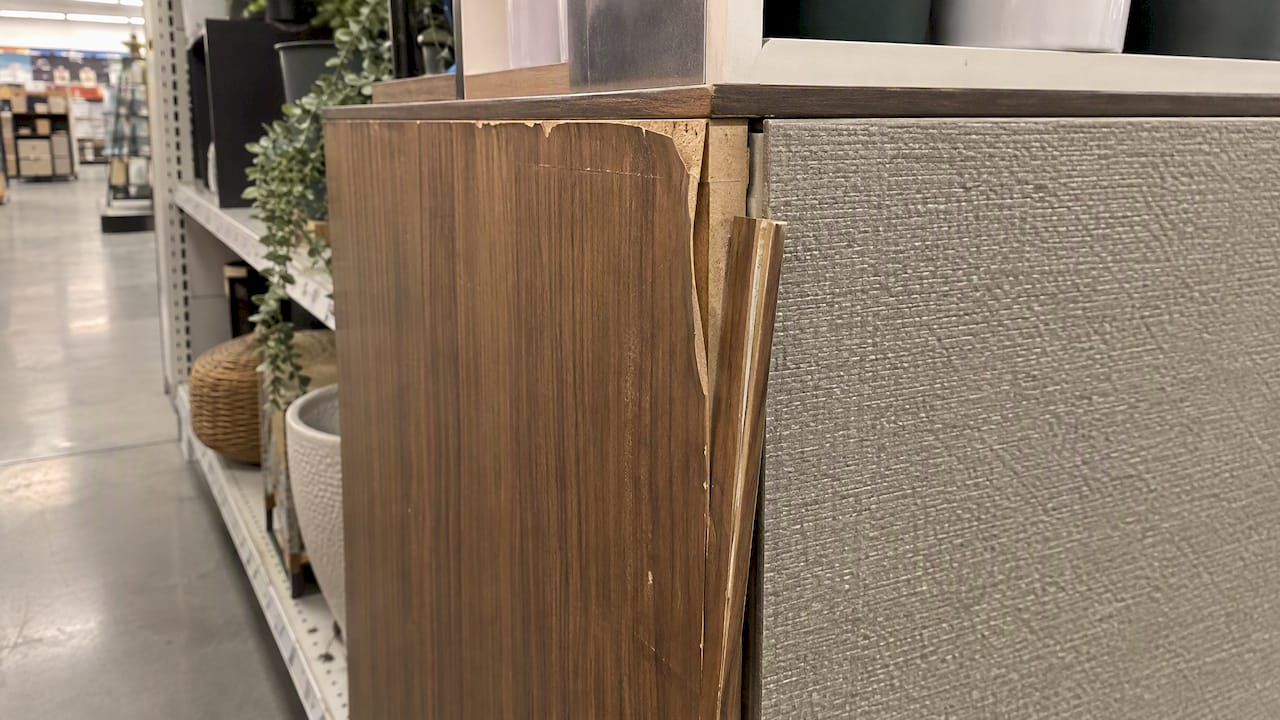
Repair these first: delaminated veneer, loose trim, and heavily textured substrates that telegraph through the film. A wrap sits on top of the surface, so it can only be as flat as what’s under it. Our guide to matching film grade to substrate helps you spec the right product for each material.
What is the step-by-step workflow for wrapping a fixture?
Think of the process as tailoring: measure twice, prep thoroughly, then cut and apply with confidence. Use this sequence to spec the work or brief your installers.
- Measure and document. Record panel sizes, seam locations, radii and pattern direction. Photograph each fixture so layout decisions are visible to everyone.
- Prepare the surface. Clean and degrease, lightly abrade glossy areas, repair delamination or chips, and prime where the substrate calls for it.
- Plan the cuts. Allow extra material on every edge, match grain or pattern across adjacent panels, and place seams where customers will rarely look.
- Apply. Align, tack the film lightly, then work from the center outward with a squeegee. The air-channel adhesive lets trapped air escape, and gentle heat helps the film relax around curves.
- Finish. Trim edges cleanly, seal seams as needed, and inspect under store lighting, since showroom light reveals flaws that shop light hides.
- Hand off. Give the film a gentle-use period before heavy merchandising so the adhesive can settle.
Pro Tip: Wrap one pilot fixture first and review it on the sales floor under real lighting. It catches pattern-direction and gloss surprises before you commit the full rollout.
Our application guide shows how different surfaces typically get handled.
How do you choose finishes and colors for fixtures?
Match the finish to the fixture’s job. Wood warms up hospitality-style displays, stone signals premium counters, metal sharpens accents, and solids create clean brand color blocks. Here is how we’d pair specific finishes from our catalog:
- Stone counters and premium surfaces: Sierra Stone NS122 and Sierra Stone NS123 bring a quarried look to checkout and cosmetics counters.
- Light natural stone: Travertine NS202 suits bright, airy displays.
- Wood fixtures: Smoked Charcoal Oak LW113 gives dark, moody shelving, while Natural Oak LW108 reads warm and approachable.
- Anchor panels: Evening Snow S260, Gentle Creme S257 and Deep Forest S266 cover everything from soft neutrals to a bold brand accent.
Consider pattern scale, gloss level and upkeep before you choose. A large stone pattern needs more careful matching across panels, and a high-gloss solid shows fingerprints faster than a satin one. Browse the full range in our catalog.
What affects timeline and cost?
Scope drives both. A single fixture may take less time than a multi-store rollout, which is scheduled in batches, usually with the same crew moving fixture to fixture. Exact durations depend on your site, so ask your installer for a written estimate. Our overview of a commercial interior refresh shows how timing expectations get set.
- Surface condition: Repairs and priming add labor before any film goes on.
- Shape complexity: Curves, tight radii and many small panels take longer than flat runs.
- Pattern matching: Wood grain and stone veining need extra material and care at seams.
- Labor choice: Choose an installer for complex profiles. An in-house crew can handle simple flat panels once trained.
How should you maintain and clean wrapped fixtures?
Wrapped fixtures clean up like most commercial surfaces: gentle, regular care beats occasional heavy scrubbing. Our look at commercial projects revisited over time is useful for setting durability expectations.
- Cleaning: Use a soft cloth with mild soap and water, and skip abrasive pads and harsh solvents.
- Scratches and abrasions: Small marks on a textured finish tend to disappear into the pattern, and damaged panels can be replaced individually rather than redoing the whole fixture.
- Wear points: Add edge guards where carts and bags make contact.
- Gloss choice: Satin and textured finishes hide wear better than mirror-like surfaces.
Pro Tip: Keep a labeled offcut from each job. A spare patch can help with spot repairs.
How do you get samples, technical data and place an order?
Treat procurement like a short checklist, and you’ll avoid most callbacks.
- Request swatches and documents: Ask for physical samples, technical bulletins, and an installation guide. Our PDF catalog is handy for swatch references.
- Ask for installer proof: When you need warranty-backed work, request certified installer references and comparable project examples.
- Order with margin: Allow extra material for seams and waste, confirm lot matching for pattern continuity, and verify lead times before you lock the schedule.
What does a practitioner take away from the Bloomingdale’s example?
Bloomingdale’s is the proof point I’d show a skeptical client: worn, dated display cases became a polished metallic feature through film, at lower cost and with less waste than replacement. The lesson is that a good substrate plus a confident finish choice beats new fixtures more often than people expect. Brief installers with photos and exact pattern direction, and a one-page layout will save you callbacks. Then specify matching finishes across each fixture family so merchandising reads as one story.
— Bodaq
Which Bodaq options and next steps fit your fixtures?
Our film stretches around curves, installs with air-channeled adhesive, and comes in a range of textures and colors, with technical bulletins available on request. We’d start you here:
- Compare finishes in our wood, metal, stone and solid collections, or start with Smoked Charcoal Oak LW113 for dark wood fixtures.
- Download our technical bulletins and PDF catalog for your spec package.
- Request samples through our US site and ask our team about certified installers for your project.

Tell us your fixture types and finish direction, and we’ll point you to samples and the right installer path.
FAQ
Can you wrap store fixtures with architectural film?
Yes. Architectural film suits structurally sound fixtures made of painted metal, laminate, sealed wood or MDF. It refreshes the surface without replacing the fixture itself.
Does film work on curved fixtures?
It does. Our stretchable film conforms to rounded corners and tight radii when applied with gentle heat. Very deep compound curves are best left to a certified installer.
What should you request before specifying film for a store?
Ask for physical samples, technical bulletins, and an installation guide. Request installer references too if you need warranty-backed work.
How do you clean wrapped store fixtures?
Wipe them with a soft cloth and mild soap and water. Avoid abrasive pads and harsh solvents, which can dull or damage the surface.