An architectural film business sells, installs or specifies self-adhesive interior films that refinish walls, doors, furniture and fixtures in place, without demolition. In the U.S. you can take part as an installer, a dealer or reseller, a contractor adding a service line, or a designer who specifies film on projects. The market is young, the entry cost is modest compared with most trades, and the businesses that do well are the ones that treat installation as a craft and choose a supplier that backs them with training.
This guide walks through how the business works, who buys, what a professional operation needs, and how to judge a supplier before you commit.
TL;DR
- Architectural film is a refinishing business: you replace the look of wood, stone, metal, fabric or solid color on existing surfaces, usually in a fraction of the time of a full replacement.
- The U.S. market is still early. Industry voices describe it as relatively young, with room to grow well beyond its current size.
- There are four main routes in: installer, dealer or reseller, contractor service line, and designer or specifier.
- Most failures trace back to poor understanding of the system, so training and surface preparation matter more than the film catalog.
- Choose a supplier on training, range, stretchability, documentation and support, not on sample photos alone.
Table of Contents
- What the architectural film business actually is
- Why the timing is interesting
- Four ways to earn from architectural film
- Who buys, and what they are really paying for
- What a professional operation needs
- Perspective: why we think the business rewards patience
- Choosing a supplier: criteria that matter
- Where to start with Bodaq
- Common mistakes new film businesses make
- A simple first-90-days plan
- FAQ
- Sources
What the architectural film business actually is
Architectural film, sometimes called interior vinyl film or surface finishing film, is a thin, self-adhesive material printed or textured to imitate natural and designed finishes. Think of it as the design equivalent of a tailored garment: it follows the contours of a door, a column or a reception desk and takes on a new character without touching the structure underneath.
It is easy to confuse with other film businesses, so a quick map helps:
- Window film controls glare, heat, privacy or safety on glass. It is a mature U.S. industry with established dealers and standards.
- Architectural surface film refinishes opaque surfaces such as walls, doors, cabinetry and elevator cabs. This is the business discussed here.
- Film production (the “architecture film” some search results show) is about making movies and walkthrough videos. It has nothing to do with surface materials.
The window film trade press has noted that the two businesses share commonalities but are also different: the window film industry was already mature when architectural surface finishes arrived in the U.S., according to a Window Film magazine feature from 2024. That is useful for anyone coming from glass tinting. Your sales channels, tools and customer relationships may carry over, but the skills at the surface are different.
Why the timing is interesting
The same 2024 feature quotes Brent Williams of Accent Distributing describing the U.S. architectural surface finishing market as being in its relative infancy, with potential to exceed $1 billion once it is fully applied (Window Film, Jan/Feb 2024). Treat that as an informed industry view, not a forecast with a guarantee, but the direction is clear: awareness is still building, and many property owners have never been offered film as an option.
The same source is candid about the downside. Williams points to bad experiences among users, rooted in a fundamental lack of understanding of the system. For a new business, that is both a warning and an opening. Customers who were burned by poorly prepared surfaces or the wrong product for the job are looking for someone who does it properly.
Surfaces matter more than many clients realize. Writing about the interior in 2026, Graeme Brooker describes surfaces and their materials as generators of atmosphere, critical to the character and mood of a space (Architectural Record). Film lets your customers change that atmosphere quickly, and that is the story you sell.
Four ways to earn from architectural film
| Route | What you do | Who it suits | What you need most |
|---|---|---|---|
| Installer | Apply film on customer projects | Painters, wall-covering and sign installers, window film pros, finish carpenters | Hands-on training, tools, a surface-prep routine |
| Dealer or reseller | Stock or sell film, tools and samples to trades | Distributors, supply houses, design showrooms | Range knowledge, sample kits, local relationships |
| Contractor service line | Offer film refinishing inside renovation bids | General contractors, remodelers, property services | A trained crew or certified partner, clear scopes |
| Designer or specifier | Write film into drawings and finish schedules | Interior designers, architects | Samples, performance documentation, a trusted installer |
These routes overlap. A strong installer often becomes a small dealer for repeat clients, and a contractor may begin by subcontracting to a certified installer before training its own crew.
Installer: the craft-led route
Installation is where reputations are made. Film that is stretchable and equipped with air-channeled adhesive, as Bodaq’s is, gives installers more forgiveness on curves, corners and long runs, because trapped air can escape and the material can be repositioned during application. That helps, but it does not replace preparation. Edge lifts, bubbling and telegraphing of surface flaws usually start with the substrate, not the film.
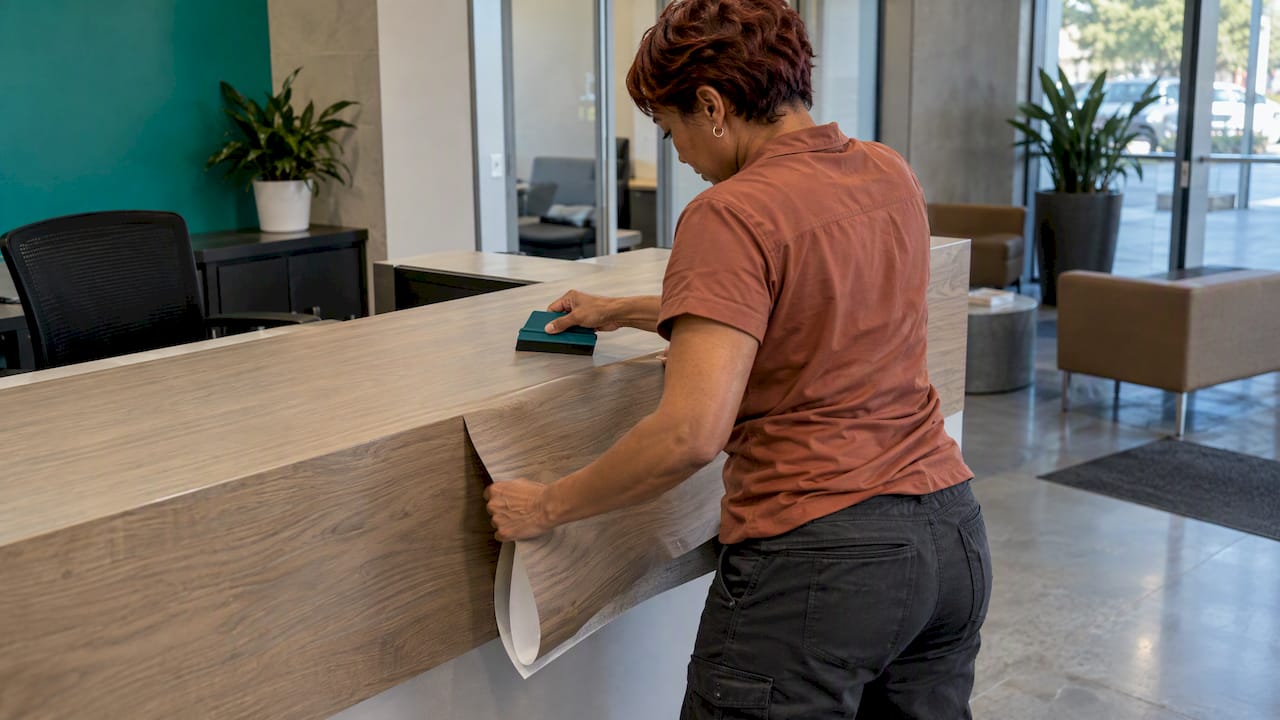
Two guides on our site cover the practical side: a five-step surface prep routine for film installers and a walkthrough of architectural film installation, including post-heating. Read both before you quote your first job.
Dealer or reseller: the supply-led route
If you already serve trades, film is a natural add-on. Your customers will ask for samples, tools and advice on which collection suits which room. Bodaq runs a dealer program for resellers and installers, with dealer kits and sample and test kit requests. Our article on new business opportunities with Bodaq interior film explains how professionals add film to an existing offer.
General contractor: the margin-protecting route
Contractors face the same pressure on every job: schedules, dust, debris and change orders. Film shortens the work because there is no demolition of the old surface. We lay out how that shows up on a job in our guide to architectural film for general contractors. A refinishing line also gives you something to offer when a client’s budget cannot stretch to a full replacement.
Designer and architect: the specification route
Specifiers need breadth and consistency. A catalog of more than 450 textures and colors across Wood, Metal, Stone & Marble, Solid Colors, and Fabric & Leather collections lets one material family carry a brand look across rooms, floors or locations. For offices, see how film renovates workplaces in hours rather than weeks.
Who buys, and what they are really paying for
Customers rarely wake up wanting film. They want a result: a lobby that looks new before a tenant tour, a hotel corridor refreshed without closing rooms, a worn kitchen that does not need a full remodel. Understanding those motives shapes how you sell.
Commercial property managers value speed and predictability. A refinish that happens overnight or over a weekend keeps spaces earning. See how film transforms commercial spaces for typical applications.
Hospitality operators care about downtime above everything. Film means less noise, fewer fumes and no long cure times, so rooms and common areas can return to service quickly. We cover the reasons in five reasons architectural films suit hospitality design.
Homeowners want an affordable refresh: dated cabinet doors, a tired entry door, a feature wall with the grain of oak or the veining of marble. Our piece on reinventing a home with architectural film shows the range of possibilities.
Designers and architects want creative freedom with fewer compromises on schedule and waste. For them, a good film catalog works like a finish palette that can be applied to almost any surface.
What a professional operation needs
You do not need a warehouse to start. You do need a disciplined system.
- Training. Because many failures come from not understanding the system, formal instruction is the best early investment. Bodaq offers certified training for professional installers.
- Tools. Squeegees, heat guns, knives, edge tools, and measuring and cutting gear. Bodaq sells installation tools and dealer kits so you can equip a crew from one source.
- A surface assessment checklist. Check porosity, texture, contamination, previous coatings and condition before you quote. Decide what you can fix and what you should decline.
- Samples and test panels. Show clients real film on their own substrate. Test kits reduce disputes.
- Clear scopes and expectations. State which surfaces are suitable, how seams will be handled, and what care the finished surface needs.
- A portfolio. Photograph before and after. Film is a visual sale.
Perspective: why we think the business rewards patience
We see architectural film as a business of trust. The material is easy to admire and harder to apply well, and the customers who return and refer are the ones who got a clean result on the first try. That is why we built Bodaq around stretchability and air-channeled adhesive: to make a clean installation more achievable, with less wasted material, so new installers can build confidence and experienced ones can work faster.
Our advice to anyone entering the market is simple. Start with one or two collections you know well, learn them on test panels, and take on projects where you can control the surface and the conditions. Grow your catalog as your skills grow. A portfolio of twenty flawless doors will sell more film than a brochure of five hundred patterns.
We also believe the opportunity is wider than most people expect. Film is not only for hotels and offices. It works on walls, furniture, doors and other surfaces in both residential and commercial spaces, and with a range that includes organic woods, sculptural stone looks, bold solids and soft fabric textures, it gives every kind of client something to respond to.
— Bodaq
Choosing a supplier: criteria that matter
Your supplier is your product, your training and your safety net. Compare candidates on these points, and ask for each answer in writing.
- Range and finish quality. Are there enough collections to cover wood, stone, metal, fabric and solid colors, and do the textures look convincing up close?
- Installation behavior. Does the film stretch around curves, release air, and reposition cleanly? Ask for a sample and try it yourself.
- Training and certification. Is there a structured program, and is it open to your team?
- Tools and kits. Can you buy what you need from the same source?
- Documentation. Ask for technical data sheets, durability and fire-performance information appropriate to your project type, and eco certifications. U.S. projects, especially commercial ones, may have code or specification requirements. Confirm them with the supplier and the project’s authority having jurisdiction before you promise anything to a client.
- U.S. presence and support. Local stock, a U.S. entity and responsive support shorten lead times and fix problems faster. Bodaq supports U.S. projects through its American headquarters in Brighton, Colorado.
- Dealer terms. If you plan to resell, ask how the dealer program works and what support you get.
Where to start with Bodaq
If you are ready to see the material, begin with samples. Browse the full set of Bodaq interior film collections and request what you want to test: Wood, Metal, Stone & Marble, Solid Colors, and Fabric & Leather. Our quotation and order process handles film rolls, tools and dealer kits, and our team can point you toward certified training and the dealer program.
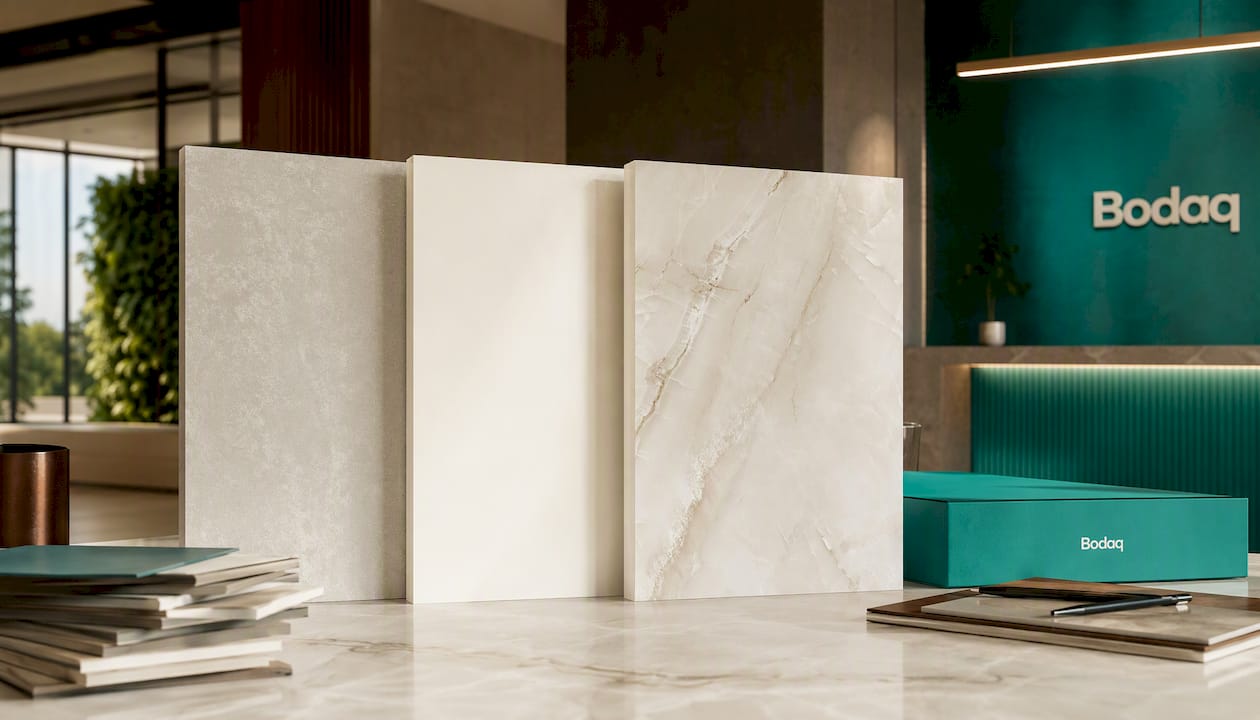
For high-traffic work, look at the High-Performance Collection, such as Rustic Stone EXF52 for a natural mineral look or Easy Clean ECF01 for solid color surfaces that need regular wiping. Pricing is not published online, so request a quote for your project size.
Common mistakes new film businesses make
Skipping surface preparation. This is the most frequent cause of lifted edges. Clean, dry, sound substrates are the basis of every durable install.
Promising film for everything. Some surfaces are poor candidates: crumbling plaster, heavily textured or oily substrates, or areas with persistent moisture. Declining a bad job protects your reputation.
Buying a huge catalog before you have clients. Start with a focused set, then expand to match demand.
Selling on price alone. Film competes with paint, laminate and replacement. Win on speed, minimal disruption, waste reduction and design range, which are the benefits customers feel.
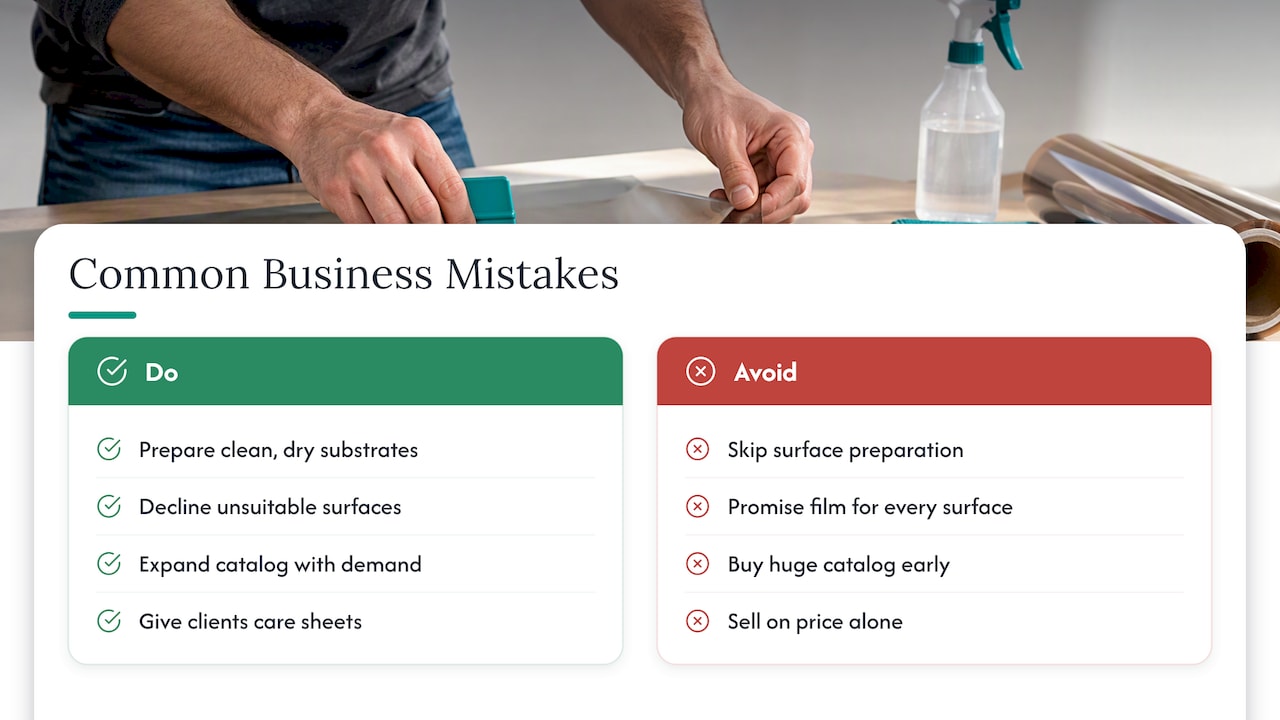
Neglecting aftercare. Tell clients how to clean the finish. A short care sheet prevents misuse and warranty arguments.
A simple first-90-days plan
- Get samples and request training information.
- Practice on test panels: flat, then edges, then curves.
- Finish two or three showcase projects, such as a door set or a reception counter, and photograph them.
- Build a one-page offer: what you refinish, how long it takes, and what clients need to prepare.
- Approach property managers, designers and contractors with the portfolio, not a price list.
FAQ
Is the architectural film business the same as window film?
No. Window film treats glass for heat, glare, privacy or safety. Architectural film refinishes opaque surfaces such as walls, doors and furniture. The trades overlap in tools and customers, but the products and techniques are different.
Can I start an architectural film business without a background in construction?
Yes, many people begin from adjacent trades such as painting, signage or window film. What matters is trained, careful installation. Certified training and practice on test panels get most newcomers job-ready before they take paid projects.
What does it cost to get started?
Your main costs are training, tools, samples and your first material orders. Bodaq does not publish prices online, so request a quote based on the collections and quantities you need. Starting with a focused set of collections keeps early inventory low.
Who are the best customers for a new film business?
Commercial property managers, hospitality operators, general contractors and interior designers tend to offer repeat work because they manage many spaces. Homeowners are a good source of smaller, visible projects like doors and kitchens that build your portfolio.
Do I need to be a dealer to sell Bodaq film?
Not necessarily. Installers can buy film for their own projects, while the dealer program is designed for resellers and installers who want to buy in bulk or resell. Contact our team to discuss which setup fits your plans.
Sources
- Window Film, Jan/Feb 2024: Warm Fusions
- Architectural Record: Graeme Brooker’s book on the DNA of the interior