
Bio-based materials, engineered mass timber, recycled metal and glass, natural insulation, and low-VOC finishes are the five categories that move the needle on any renovation. Before you spec a single one, get a home energy audit and fix the envelope first: air sealing and insulation return more carbon savings per dollar than almost any surface material you can choose. The profiles and checklist below walk through exactly which products to use where.
TL;DR:
- Prioritize sealing and insulating the building envelope through air sealing and insulation before selecting specific surface materials to maximize carbon savings.
- Reclaimed wood and FSC-certified timber offer zero new-harvest impact and can often be sourced at lower costs from salvage yards or demolition sites.
- Natural insulations like sheep’s wool, cellulose, and cork provide superior indoor air quality and thermal performance while offsetting the environmental impact of traditional insulation.
- Use low-VOC paints, formaldehyde-free adhesives, and recycled-content materials to significantly reduce indoor pollutant levels during and after renovation.
- Starting with an energy audit and sequencing upgrades from envelope tightening to material substitution results in lower lifecycle emissions than rebuilding from scratch.
Table of Contents
- What Are the Best Sustainable Renovation Materials?
- How Do You Choose the Right Sustainable Materials for Your Project?
- What’s the Right Order for a Sustainable Renovation Project?
- What Do the Standards Bodies Actually Recommend?
- The Real Tradeoff Nobody Talks About Enough
- Where Interior Film Fits Into a Sustainable Renovation
- Sources
- FAQ
What Are the Best Sustainable Renovation Materials?
Every material on this list earns its place because it solves a specific problem: embodied carbon, indoor air quality, waste diversion, or durability that keeps you from renovating again in ten years. Some are structural. Some are finishes. All of them are available through mainstream suppliers now, not niche eco-boutiques.
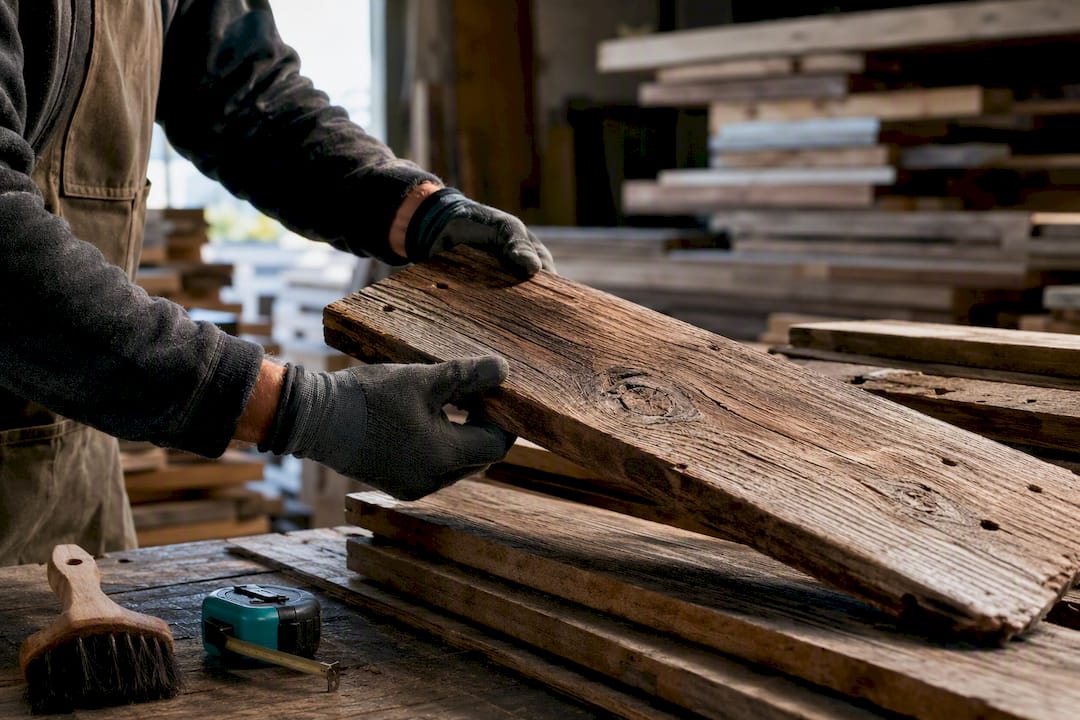
Reclaimed wood and FSC-certified timber carry zero new-harvest impact and often outperform new lumber on character and density, since old-growth boards were milled from slower-grown trees. Use reclaimed wood for flooring, feature walls, beams, and trim. Reach out to demolition contractors directly; salvage yards and active demolition sites are consistently the best source for high-quality reclaimed trim, doors, and masonry at a fraction of retail cost. Check for lead paint and pest treatment history before milling old wood, and ask suppliers for Forest Stewardship Council chain-of-custody documentation on new timber purchases.
Bamboo grows to harvestable maturity in three to five years, versus decades for hardwood, and its tensile strength rivals steel by weight. It works well for flooring, cabinetry, and countertops, though moisture sensitivity means it’s a poor choice for bathrooms unless it carries a marine-grade sealant. Ask suppliers about formaldehyde content in the adhesive layers; cheaper imported bamboo flooring is a common source of off-gassing.
Cork, harvested from tree bark without felling the tree, regenerates every nine years and offers natural fire resistance along with acoustic dampening most people don’t expect from a flooring material. Cork insulation performs well in wall cavities and under-slab applications where thermal bridging is a concern. Its protective qualities are serious enough that NASA uses cork and foam composites to shield rocket components from fire and extreme temperature swings on the Artemis program, which says something about how the material performs under stress far beyond a kitchen floor.
Hempcrete, a mix of hemp hurd, lime, and water, delivers excellent thermal mass and breathability, but it isn’t structural. Treat it as an insulation and wall-infill material inside a timber or steel frame, not a load-bearing replacement for concrete block. Code acceptance varies by jurisdiction, so confirm with your local building department before specifying it on a permitted addition.
Cross-laminated timber (CLT) stacks layers of lumber at perpendicular angles, creating panels strong enough to replace concrete and steel in many mid-rise structural applications. For renovations, CLT shows up most often in additions, structural replacements, and exposed-beam ceiling upgrades where the wood grain becomes part of the design. It arrives prefabricated, which cuts on-site labor and waste dramatically compared with poured concrete.
Statistic: Renovating and retrofitting existing buildings typically produces lower lifecycle emissions than new construction, according to the EPA’s green building guidance, because it avoids the embodied carbon cost of manufacturing new structural materials from scratch.
Recycled steel requires far less energy to produce than virgin steel and holds up under fire, pests, and moisture in ways wood framing can’t match. It’s a strong fit for structural replacements, railings, and exposed industrial-style accents. Recycled glass countertops embed post-consumer glass in a resin or cement binder, giving you a nonporous, heat-resistant surface that diverts bottles and window glass from landfills. Recycled plastic composites show up in decking, trim, and some cladding products, offering rot resistance without the chemical treatments used in pressure-treated lumber.
Natural insulation options deserve their own line item because insulation choice affects both carbon footprint and indoor air quality more than almost any other material decision:
- Sheep’s wool insulation is naturally fire-resistant and moisture-regulating, and it doesn’t itch installers the way fiberglass does.
- Cellulose, made from recycled newspaper treated with borate, offers strong R-value per inch and fills irregular cavities well.
- Denim insulation, made from recycled cotton scraps, performs similarly to fiberglass without the airborne fiber irritation.
- Mineral wool (rock or slag wool) handles fire and sound performance better than most alternatives, making it a smart pick for shared walls in multifamily renovations.
Low-VOC paints and finishes and formaldehyde-free adhesives matter more than most renovation guides admit. Indoor pollutant concentrations can run higher than outdoor levels during and after a renovation, and the finishes and adhesive choices you make directly affect indoor air quality for months after the crew leaves. Specify these on every cabinet, flooring, and paint line item, not just the “green” rooms.
Low-carbon concrete alternatives, including mixes that substitute fly ash, slag, or calcined clay for a portion of Portland cement, cut the embodied carbon of foundation and slab work. Conventional cement production carries well-documented environmental costs that federal regulators have targeted through enforcement initiatives on cement manufacturing, which is part of why lower-carbon mixes are gaining specification traction. Rammed earth and compressed earth block construction, meanwhile, uses on-site soil and minimal processing, making it a strong regional option where the climate and soil composition support it.
Mycelium composites, grown from fungal root structures bound to agricultural waste, are an emerging category showing up in insulation panels, packaging, and some acoustic wall products. They’re not yet mainstream for structural or high-load applications, but watch this category. Many of these bio-based and recycled options now have established supply chains and code acceptance that didn’t exist five years ago, which means sourcing hempcrete, CLT, cork, and recycled steel is far easier today than industry reporting suggested even a short time back.
How Do You Choose the Right Sustainable Materials for Your Project?
Start by ranking your actual priority, because “sustainable” isn’t one goal. Are you chasing lower embodied carbon, better indoor air quality, longer material lifespan, or the lowest total cost? Each answer points to different materials, and trying to maximize all four at once usually means you maximize none of them.
Weigh embodied carbon against operational carbon before you assume the greenest-sounding material wins. A material with high upfront embodied carbon but exceptional insulating performance, like a dense mineral wool wall system, can beat a low-carbon material that performs poorly over a 20-year ownership horizon. Designers should treat the sequence as audit, then envelope, then systems, then materials; materials alone rarely deliver the biggest energy reduction without that groundwork already done.
Here’s a practical evaluation sequence to run before you commit to a supplier:
- Define your primary metric. Pick one of carbon, air quality, durability, or budget as the lead criterion, and let the others act as constraints rather than co-equal goals.
- Compare hard numbers, not marketing copy. Ask for R-value per inch, recycled content percentage, and VOC grams per liter on spec sheets, not brochure language like “eco-conscious.”
- Check for third-party labels. Look for Declare or Cradle to Cradle ingredient disclosure, GREENGUARD Gold for low emissions, ENERGY STAR for systems, WaterSense for plumbing fixtures, and FSC certification for wood.
- Ask about sourcing radius. A material shipped 2,000 miles carries transportation emissions that can offset part of its sustainability advantage; local sourcing and salvage both shrink that footprint.
- Get pricing on both the material and total installed cost. Some sustainable materials, like CLT, cost more per unit but save enough labor and time to come out even or ahead.
Pro Tip: Declare and Cradle to Cradle labels function almost like a nutrition label for building products; a quick scan tells you what’s actually inside a “green” product instead of trusting the marketing claim on the box.
On budget: many bio-based and recycled materials often carry a higher cost than conventional equivalents, though that gap has been narrowing as supply chains mature. Reserve the higher-cost, lowest-carbon options like CLT or rammed earth for structural work or high-visibility surfaces where the investment pays back in durability and design value, and save budget on hidden or low-impact areas like subfloor underlayment.
Watch for a few red flags when vetting suppliers or contractors: vague claims like “eco-friendly” with no certification backing, an unwillingness to provide a spec sheet, recycled-content percentages that can’t be verified, and contractors who have no examples of past sustainable-material installations. Ask directly whether they’ve worked with hempcrete, CLT, or salvage sourcing before, not just whether they’re “open to it.”
What’s the Right Order for a Sustainable Renovation Project?
Sequence matters as much as material choice. Skipping steps or reversing this order wastes both money and carbon savings.
- Get a home energy audit and a blower-door test. This identifies where you’re actually losing energy before you spend a dollar on materials.
- Seal air leaks first. Gaps around windows, doors, and penetrations undercut even the best insulation if left unaddressed.
- Upgrade insulation next. Choose sheep’s wool, cellulose, denim, or mineral wool based on the cavity size and moisture exposure of each area.
- Replace or upgrade HVAC and water heating. Heat pumps for space and water heating pair naturally with a tightened envelope and deliver the next-largest efficiency gain.
- Make structural and material substitutions. Bring in reclaimed timber, CLT, or recycled steel once the envelope and systems are settled.
- Select finishes last. Low-VOC paints, formaldehyde-free adhesives, and surface materials go in after the performance layers are locked.
- Plan waste diversion throughout. Flag reusable trim, fixtures, and masonry for salvage or donation before demolition starts, not after the dumpster arrives.
- Test samples for indoor air quality and compatibility before full installation, especially for adhesives and finishes going into bedrooms or low-ventilation spaces.
What Do the Standards Bodies Actually Recommend?
The guidance across federal and industry sources is remarkably consistent: audit first, tighten the envelope, then choose materials. The National Association of Home Builders frames this as a five-step sequence anchored by air sealing and insulation before material selection, with the National Green Building Standard providing a framework for verifying the upgrades. The EPA’s green building resources echo the same priority order while emphasizing indoor air quality and lower-carbon materials.
Renovating and upgrading an existing structure, done with attention to envelope performance and material sourcing, consistently produces a smaller carbon footprint than tearing down and building new. That single fact should reframe how most homeowners think about “sustainable” renovation, from a materials shopping list into a sequencing decision.
Practitioners in the field back this up with a simple habit: call demolition contractors directly and ask what’s coming out of a job before it hits the dumpster. Trim, doors, and masonry salvaged this way often cost a fraction of retail. For interior surfaces specifically, Bodaq’s architectural film offers a lower-waste finishing path, since refinishing a cabinet or door face with film avoids the demolition debris that a full material swap generates. Full specifications live on each product’s page for anyone speccing a project.
The Real Tradeoff Nobody Talks About Enough
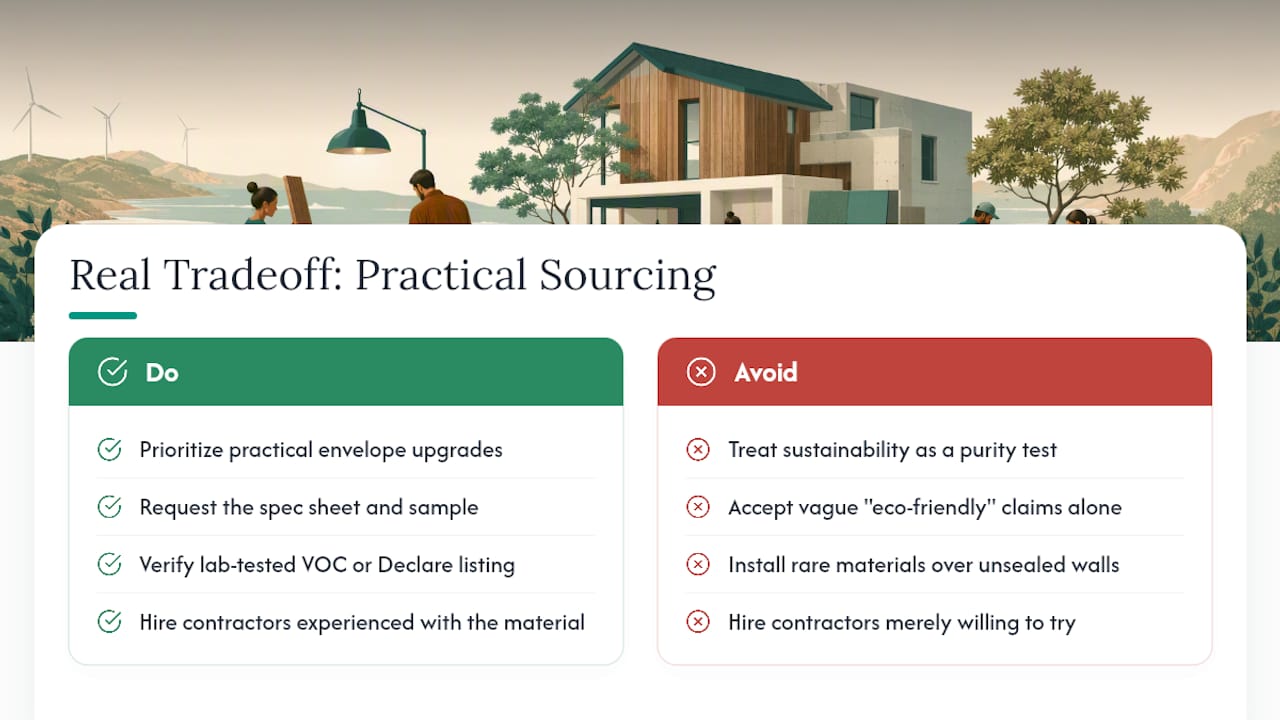
Most green-materials advice treats sustainability as a purity test, and that’s the wrong frame. Progress beats perfection: an envelope upgrade with mainstream insulation delivers more real-world impact than a rare bio-composite installed over an unsealed wall.
Vague marketing language is the biggest trap in this category. “Eco-friendly” on a label means nothing without a Declare listing or a lab-tested VOC number behind it. Demand the spec sheet, request a sample, and verify before you buy. And hire contractors who’ve actually installed hempcrete, CLT, or reclaimed material before, not ones who are simply willing to try. Experience with these materials shows up in the quality of the finished cut, the tightness of the seal, and whether the job gets done right the first time.
— Bodaq
Where Interior Film Fits Into a Sustainable Renovation
Not every sustainable upgrade requires demolition. Swapping a cabinet, door, or wall panel for a new one generates debris, shipping emissions, and labor hours that a refinish can often skip entirely.
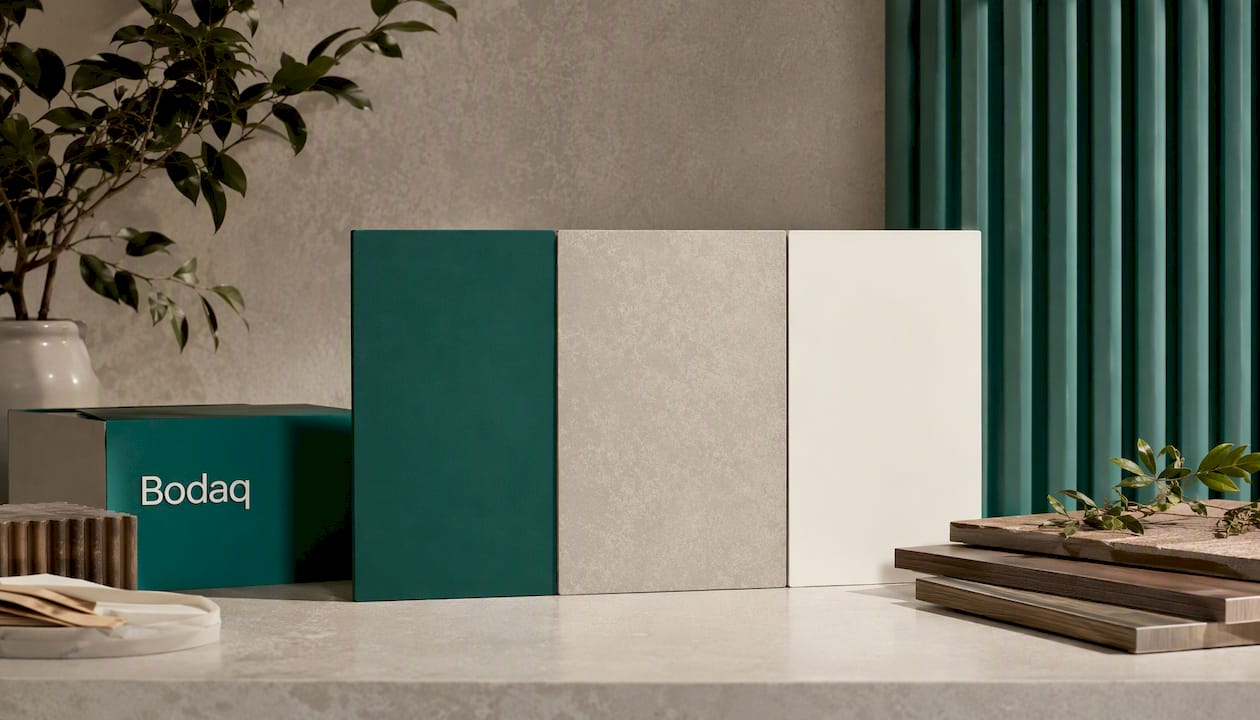
Self-adhesive architectural film can refinish existing surfaces instead of replacing them, which means less material heading to a landfill and a fraction of the installed time a full swap requires. For a deep, saturated accent wall or cabinet run, the Deep Forest solid color film delivers a rich matte finish without ripping out existing panels. Where clients want the look of natural stone without the weight, cost, or quarrying impact of the real material, the Rustic Stone film gives you that texture on cabinetry, countertops, and accent walls. And for high-traffic surfaces like kitchen cabinets or commercial counters that need to resist scuffs and daily wear without constant refinishing, the Easy Clean film holds up to years of use with simple maintenance. If you’re weighing a full material replacement against a refinish, request a sample to see how the texture and color perform on your actual surface before committing either way.
Sources
Verify claims and find compliant products through the EPA’s green building resources, NAHB’s sustainable remodeling guidance, and training programs like the UMass sustainable building certificate.
- Nine Tips for Greening a Home Renovation Project – Earth911
- Five Steps to a More Sustainable Remodel | NAHB
- Green Building — EPA
FAQ
What eco-friendly materials can I use for a renovation?
Reclaimed wood, bamboo, cork, hempcrete, cross-laminated timber, recycled steel, recycled glass, and natural insulations like sheep’s wool and cellulose are the most widely available options with proven performance records.
What are 10 eco-friendly building materials?
Reclaimed wood, FSC-certified timber, bamboo, cork, hempcrete, cross-laminated timber, recycled steel, recycled glass, recycled plastic composites, and natural insulation (sheep’s wool, cellulose, or denim) cover the core categories for most renovations.
What is a good alternative to conventional concrete?
Low-carbon concrete mixes that substitute fly ash, slag, or calcined clay for part of the Portland cement, along with rammed earth and compressed earth block for appropriate structural applications, all reduce embodied carbon compared with standard concrete.
What are examples of sustainable construction materials?
Cross-laminated timber, hempcrete, recycled steel, cork insulation, and natural fiber insulations are commonly specified sustainable construction materials, each suited to different structural or thermal roles in a renovation.
Can interior film replace the need for new sustainable materials?
Interior film isn’t a structural or insulation substitute, but it’s a legitimate low-waste alternative for refinishing cabinets, doors, and wall panels when the underlying surface is sound and only the finish needs updating.