If your elevator runs reliably but looks tired, you need an interior refurbishment, not a modernization. If it breaks down, moves slowly, or fails inspections, you need to modernize the equipment first and refresh the cab as part of that project. Either way, your next move is the same: schedule a site visit with your elevator maintenance company for a scoped quote, and ask about architectural film as a fast, durable finish option.
TL;DR:
- Modernization addresses critical components like controllers and wiring, which typically require several weeks to complete and are necessary for frequent breakdowns or inspections.
- Interior upgrades involve replacing panels, lighting, flooring, and handrails, with quick turnaround times of one to three days per cab, suitable for mechanically sound elevators with aesthetic issues.
- Fire ratings, ADA compliance, and slip-resistance are essential considerations; vendors must provide documentation before material approval to meet code requirements.
- Architectural film offers a fast, cost-effective finishing option with minimal downtime, especially for high-traffic buildings where installation speed and reduced noise matter.
- Proper vendor vetting includes requesting samples, detailed warranties, clear timelines, and coordination with elevator contractors to avoid delays and ensure code compliance.
Table of Contents
- What Modernization Covers Versus an Interior-Only Refurbishment
- Wall Panels, Ceiling, Flooring, Handrails, and Control Panels: What Actually Gets Replaced
- The Vendor Process, Realistic Timelines, and Ballpark Budgets
- Permits, Fire Ratings, and ADA Checks Before You Order Materials
- A Vendor and Material Checklist Before You Sign Anything
- Why Architectural Film Is a Practical Finishing Choice for Elevator Cabs
- Typical Challenges During Refurbishment and How to Mitigate Them
- Warranty and Post-Installation Support Options
- Get Started With Bodaq: Samples, Training, and Next Steps
- Where to Go for Specs, Safety, and Procurement Details
- A Procurement Priority Worth Repeating
- Sources
What Modernization Covers Versus an Interior-Only Refurbishment
Modernization replaces the equipment that makes an elevator run: the controller, the drive, the door operators, sometimes the hoistway wiring. An interior upgrade replaces what riders see and touch: wall panels, ceiling, lighting, flooring, and handrails. Confusing the two is the single most expensive mistake building owners make when they request a quote, because vendors price these projects on entirely different scales and timelines, as Snap Cab explains in its comparison of the two approaches.
Here’s the rule of thumb we recommend to owners planning their next capital project:
- Modernize when you’re seeing frequent callbacks, slow response times, outdated controls, or a failed inspection tied to the drive or controller.
- Upgrade interiors only when the cab is mechanically sound but the finishes look dated, damaged, or worn from decades of daily traffic.
- Bundle both when a modernization is already scheduled. You avoid a second out-of-service window, and the incremental cost of new finishes drops significantly.
A cab that just needs new panels and lighting can look showroom fresh in days. A full modernization is a different animal entirely, one measured in weeks, not days.
Wall Panels, Ceiling, Flooring, Handrails, and Control Panels: What Actually Gets Replaced
Every full interior renovation touches five components, and each one carries its own liability and durability considerations, according to Elevator Refresh’s breakdown of a complete interior renovation.
- Wall panels take the most abuse from carts, luggage, and daily contact, so scratch and abrasion resistance matters more here than almost anywhere else in the building.
- Ceiling and lighting shape how spacious or cramped a cab feels. LED retrofits paired with a lighter ceiling finish make a small cab read larger without touching the equipment.
- Flooring carries the highest liability exposure. Slip resistance is not optional, and it’s the first thing an inspector or a plaintiff’s attorney checks after an incident.
- Handrails need secure remounting whenever wall panels change, since panel thickness shifts affect anchor depth.
- Control panels (COP) are the most code-sensitive element, tied directly to ADA button height and tactile signage rules.
Materials comparison: Architectural film offers the widest color and texture range with the fastest turnaround and no seam-heavy fabrication delay. Laminates are durable but limited in curved or oddly-shaped applications. Stainless steel resists wear indefinitely but shows fingerprints and scratches over time. Stone veneers look premium but add weight and cost, and they’re harder to repair if damaged.
Pro Tip: Ask any finish vendor for their fire-rating documentation before you fall in love with a sample. A beautiful panel that can’t pass code review is a wasted sample request.
The Vendor Process, Realistic Timelines, and Ballpark Budgets
Most reputable vendors follow a consistent six-step workflow, the same process Stanley Elevator outlines for cab renovations:
- Site visit — the vendor measures the cab and documents existing conditions.
- Quote — you receive pricing based on materials, customization, and logistics.
- Measurement confirmation — final dimensions are locked before fabrication starts.
- Vendor collaboration — your elevator contractor coordinates access and any required shutdown.
- Installation — crews install new finishes, often overnight or during low-traffic windows.
- Final walkthrough — you and the vendor confirm fit, finish, and function before sign-off.
Standard interior-only jobs often wrap in one to three days per cab, while a full modernization stretches into weeks or months. Budget-wise, mid-tier interiors commonly land in the tens of thousands per cab, with customization level, logistics, and whether you’re bundling with a modernization driving most of the variance.
Permits, Fire Ratings, and ADA Checks Before You Order Materials
Interior alterations aren’t exempt from elevator code just because you’re not touching the equipment. Most jurisdictions treat panel and flooring changes as alterations requiring a permit, typically pulled by your licensed elevator contractor rather than a general contractor or the film installer.
Before you commit to any material, verify:
- Fire-rating documentation (look for UL listings appropriate to elevator cab interiors).
- Slip-resistance specs for any flooring product, documented in writing.
- ADA compliance for any COP changes, including button height and tactile markings.
- A retained file of every submittal and approval, in case an inspector asks later.
For jurisdiction-specific fire-code interpretation, a resource like Reliable Fire Protection’s guide to high-rise fire safety is worth reviewing before you finalize a materials list.
Pro Tip: Keep a single digital folder with every permit, fire-rating sheet, and inspection sign-off tied to the project. When you sell the building or refinance, that folder saves weeks.
A Vendor and Material Checklist Before You Sign Anything
Run every vendor meeting against the same checklist, and you’ll cut weeks off procurement:
- Request physical sample panels, not just photos or renderings.
- Get written submittals covering material specs, not verbal assurances.
- Confirm timeline in writing, including what happens if fabrication is delayed.
- Ask about warranty terms and what triggers a replacement versus a repair.
- Verify installer certification and insurance coverage.
- Confirm the vendor will coordinate directly with your elevator contractor on permits and access.
Watch for these red flags:
- Reluctance to provide fire-rating or code documentation in writing.
- Vague timelines with no fabrication or install date range.
- No mention of coordinating with your elevator maintenance company.
Organizations like NAEC and BOMA International publish maintenance and procurement guidance worth cross-checking against any vendor’s claims.
Why Architectural Film Is a Practical Finishing Choice for Elevator Cabs

Architectural film can wrap existing panels without the fabrication lead time or waste that full panel replacement requires. That matters most when downtime and noise are constrained, since film installation reduces site disruption compared with tearing out and rebuilding panels. With many texture and color options, matching a lobby’s design language to the cab interior becomes a color-and-texture decision, not a fabrication project.
For high-traffic buildings, some interior films resist scuffing and wipe clean fast. Premium stone-look finishes can offer a convincing appearance without the weight or cost of real stone and reduce install time.
- Explore material comparisons and durability guidance before specifying finishes.
- Review the step-by-step installation guide to understand labor requirements.
- Register for the architectural film webinar if your team needs installer training.
Typical Challenges During Refurbishment and How to Mitigate Them
The most common surprise on any elevator refurbishment isn’t the material choice. It’s the mismatch between what tenants expect and what the schedule actually allows.
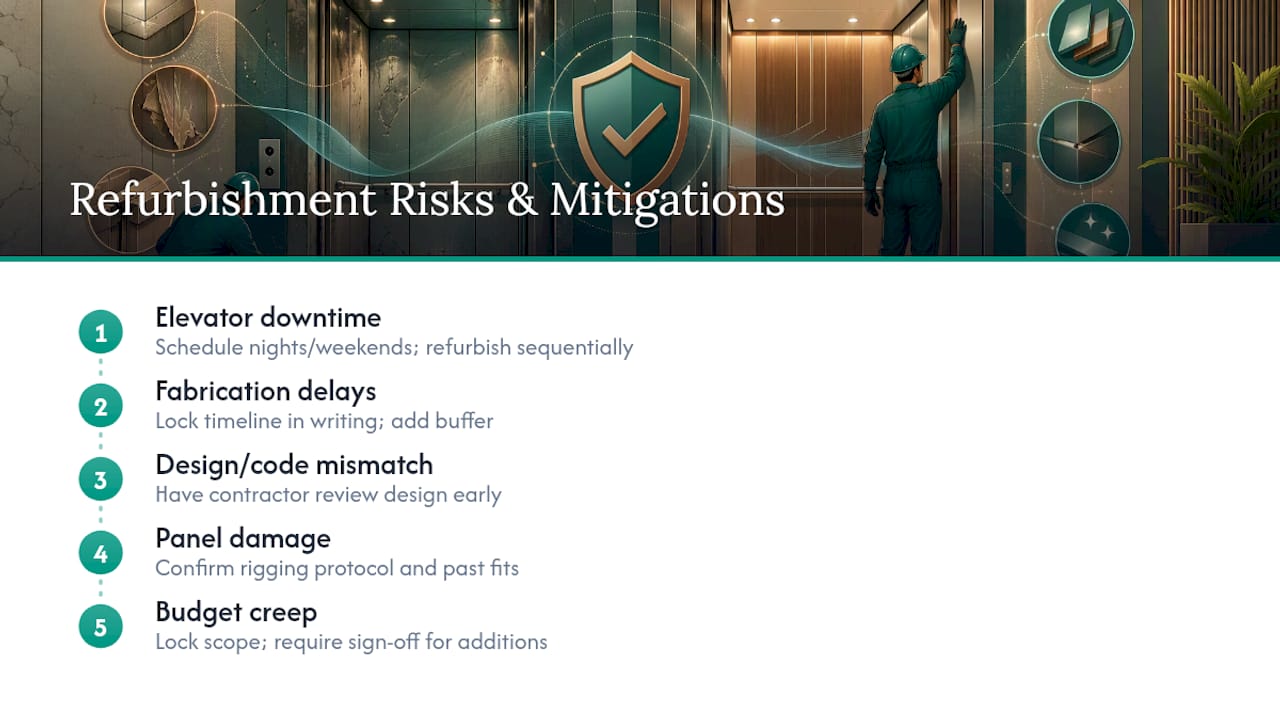
Elevator downtime during a bank of two or three cars. If you’re refurbishing the only working elevator in a low-rise building, tenants notice immediately. Mitigate this by scheduling work overnight or during weekends, and by refurbishing cabs sequentially rather than shutting down an entire bank at once.
Fabrication delays on custom materials. Stone veneers and custom laminates often carry longer lead times than vendors initially quote. Lock your fabrication timeline in writing and build in a buffer before you commit to a tenant-facing completion date.
Mismatched expectations between designers and code requirements. A gorgeous rendering sometimes uses a flooring product that fails slip-resistance standards, or a COP layout that doesn’t meet ADA button spacing. Catch this early by having your elevator contractor review the design before fabrication starts, not after.
Panel damage during installation in tight hoistways. Rigging large panels through a narrow hoistway door risks scuffing or cracking. Ask installers about their rigging protocol and whether they’ve handled your specific cab dimensions before.
Budget creep from change orders. The fastest way to blow a budget is approving “just one more” upgrade mid-project. Lock your scope and materials list before installation begins, and treat any addition as a separate line item with its own sign-off.
Warranty and Post-Installation Support Options
Warranty terms vary widely between vendors, and the fine print matters more than the headline number. Ask specifically whether the warranty covers material defects only, or also workmanship and adhesion failures, since those are two different risk categories with different failure timelines.
Panel-level replaceability changes the economics of long-term maintenance. When a single wall panel gets damaged by a moving cart or a dropped tool, you want to replace that one panel, not the entire cab interior. Specifying finishes with single-panel replaceability built in keeps future repair costs predictable and avoids a full re-installation over minor damage.
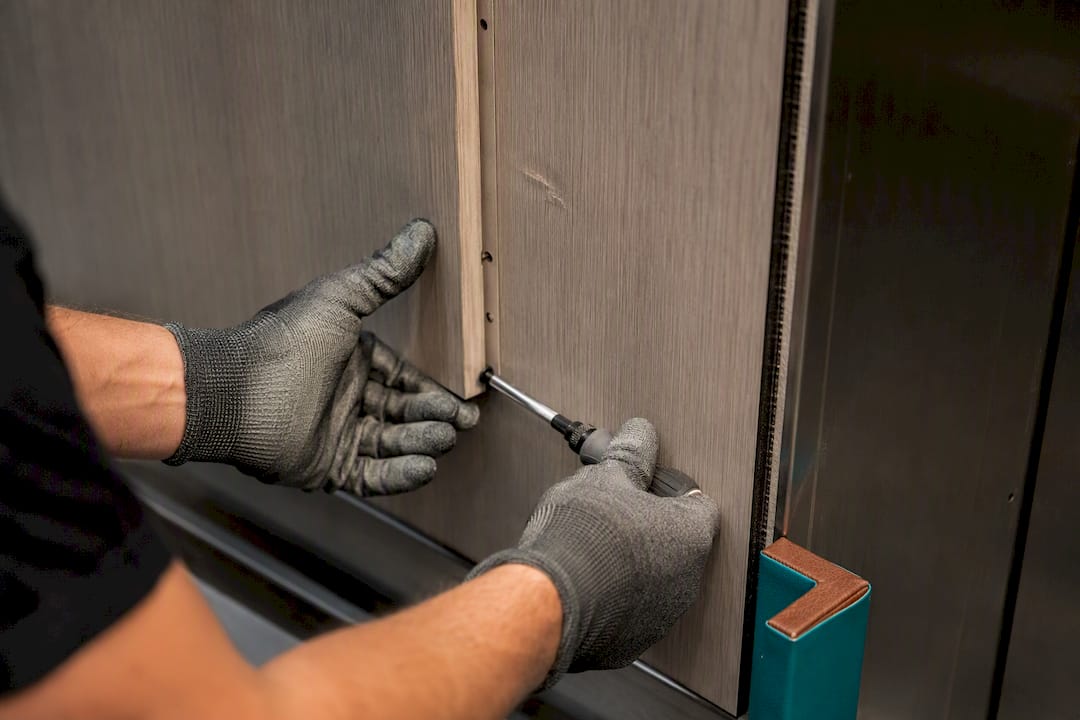
Post-installation support should include a clear point of contact for touch-up work, a documented process for ordering replacement material that matches your original installation, and a timeline commitment for repairs. Ask your vendor how long they retain color and texture records. A film or laminate that was popular five years ago might be discontinued, and matching an aging panel to a new one is far easier when the vendor keeps detailed installation records tied to your building.
Before signing off on any warranty, confirm in writing what voids it. Improper cleaning products, unauthorized modifications, or water damage from unrelated building issues are common exclusions that owners discover only after filing a claim.
Get Started With Bodaq: Samples, Training, and Next Steps
You’ve seen the checklist. Now the fastest way to move from planning to installed cab is to get real material in your hands, not another rendering. Several featured collections cover common refurbishment scenarios, including options for high-traffic cabs requiring durability, premium stone-look finishes without stone’s weight or cost, bold modern solid tones, and neutral, low-maintenance textures suitable for many lobby palettes.
Compared with full panel fabrication, film installation cuts both waste and out-of-service time, which matters most when your building can’t afford a multi-week shutdown. Request physical samples of the collections above, review the installation walkthrough with your maintenance team, or reach out through the general contractor resource page to get a quote scoped to your specific cab dimensions. Start with a sample kit. It’s the fastest way to confirm color and texture before you commit to a full order.
Where to Go for Specs, Safety, and Procurement Details
For code interpretation on fire ratings and permits, Reliable Fire Protection’s high-rise guide covers the compliance basics owners need before finalizing materials. For material specs and installation planning, review Bodaq’s interior upgrade guidance and disruption-minimizing planning resource. Industry groups like NAEC and BOMA round out your reference list for broader facility-management standards.
A Procurement Priority Worth Repeating
Safety and durability should outrank aesthetics in every decision you make on this project, and the fastest path to regret is picking a beautiful finish that fails a slip-resistance test eighteen months in. If a modernization is anywhere on your five-year capital plan, coordinate the interior refurbishment with that outage window rather than scheduling two separate shutdowns. It’s the single easiest way to cut both cost and tenant disruption.
The gap between what a rendering promises and what a cab delivers after two years of daily traffic comes down almost entirely to material choice and installation quality, not design vision. Request samples before you commit. Sit with them under your actual lobby lighting for a few days. That single step prevents more procurement regret than any spec sheet ever will.
— Bodaq