A good architectural film specification names the product type, the substrate it goes on, the performance it must deliver, the test standards that prove it, and the submittals you will review before anything is ordered. Leave any of those out and the contractor fills the gap with whatever is cheapest or most familiar. Below is a practical structure you can adapt for interior film on walls, doors, millwork and furniture, with the U.S. checks that most often cause delays.
TL;DR
- Separate interior decorative film from window film and exterior façade film in your spec. They are different product families with different standards.
- Write performance requirements against reference standards, not brand adjectives, and require submittals that show those test results.
- Specify the substrate and its condition. Adhesion problems usually trace back to the surface, not the film.
- Confirm interior finish fire classification (ASTM E84, IBC Chapter 8) and emissions documentation early, before the finish schedule is locked.
- Ask for care instructions and warranty terms in writing, and tie them to the use of the space.
Table of Contents
- What “architectural film” means in a specification
- How to structure the specification
- Properties your specification should address
- Substrate and installation conditions
- Fire, code and emissions checks for a U.S. project
- Submittals: what to ask for and how to review them
- Durability, care and warranty
- Where film makes sense in the project plan
- Our perspective
- Ready to specify? Start with samples and a mockup
- FAQ
- Sources
What “architectural film” means in a specification
The term covers more than one product. Architectural window film is a retrofit product, typically built from polyester (PET) layers and applied to glass to improve solar heat rejection, glare control, or safety and security. Its data sheets talk about UV rejection, visible light transmission and glass compatibility.
Interior architectural film is a different animal. It is a lightweight, self-adhesive, stretchable decorative surfacing material that goes over walls, doors, columns, counters, cabinetry and furniture, replicating wood, stone, metal, fabric or solid color. Its data sheets talk about thickness, surface texture, adhesive type, fire classification and cleanability. If you want the fundamentals first, we cover them in what architectural film is and how to use it.
This matters because a search for “architectural film” returns window-film guides and manufacturer libraries side by side. Your spec must say which one you mean. A single sentence in Part 1 settles it: “Interior decorative architectural film, self-adhesive, for application to existing interior substrates. Window film and exterior façade film are excluded.” If the project does include glazing or exterior surfaces, give each its own spec section with its own standards.
How to structure the specification
Most U.S. specifiers work in the three-part format: General, Products, Execution. Film fits it cleanly.
Part 1, General
This is where you define scope and demand proof.
- Summary: which rooms, which surfaces, and which finish codes on the finish schedule are film.
- References: the test standards you will hold the product to. Guidance for performance specifications is consistent on the point: write requirements around reference standards such as ASTM and clear performance criteria, then evaluate submittals against those metrics.
- Submittals: product data sheets, samples of each selected finish, fire test reports, emissions documentation, installation instructions, care instructions and warranty text.
- Quality assurance: installer qualifications and a mockup requirement.
- Delivery and storage: rolls stored upright or per manufacturer instruction, in a conditioned space, with batch numbers recorded.
Part 2, Products
This is where the performance language lives. See the next section for the properties to cover.
Part 3, Execution
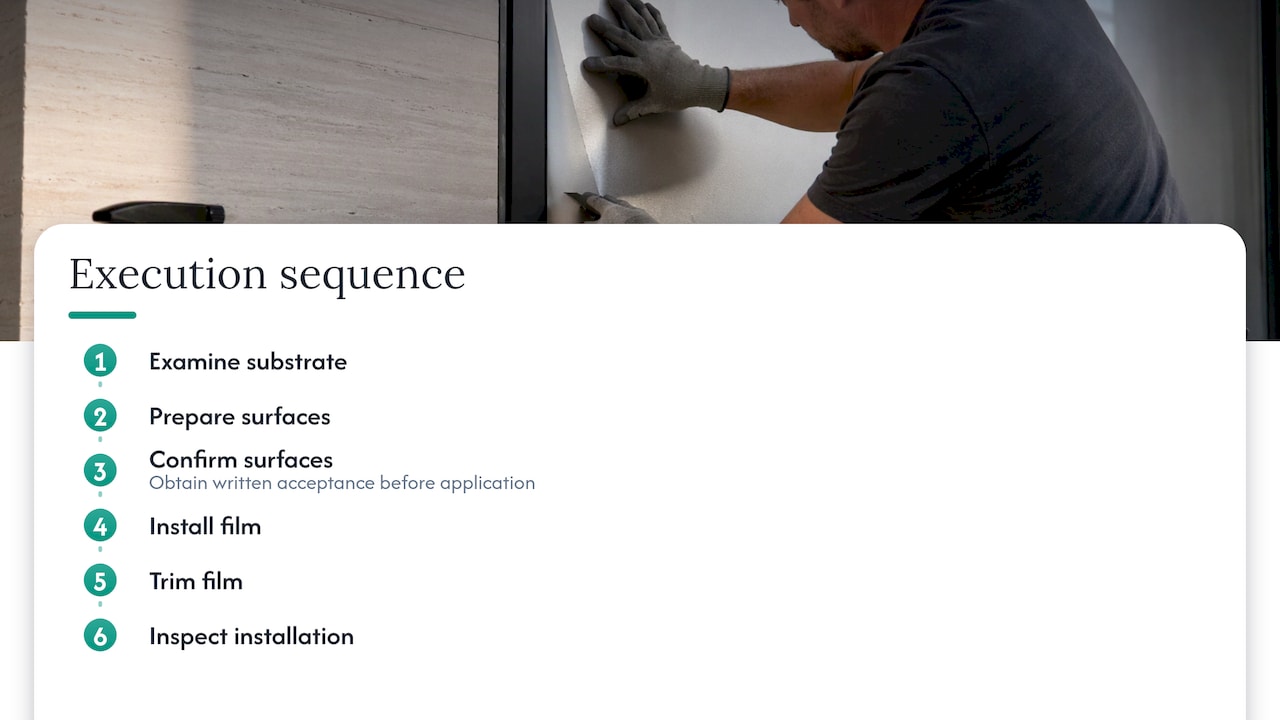
Examine the substrate, prepare it, install, trim and inspect. Make the installer confirm in writing that the surfaces were acceptable before application, so responsibility is clear if something fails later.
One piece of advice that applies to all three parts: keep the language short. Guidance on specification writing from the window industry makes the same point, that specifications should be clear and concise and reference applicable codes, industry standards and minimum performance ratings. A spec nobody can parse in a pre-bid meeting will be “value engineered” by someone who did not read it.
Properties your specification should address
Think of the Products article as a checklist. Each row below is something a manufacturer should be able to document.
| Property | What to specify | What to request |
|---|---|---|
| Film type | Interior decorative, self-adhesive, stretchable | Product data sheet |
| Construction | Facing layer, adhesive, release liner, total thickness | Data sheet with construction details |
| Finish and design | Pattern, texture (smooth, embossed, matte, synchronized), color | Physical samples of each selected finish |
| Fire performance | Surface burning classification required by the code for the occupancy | Test report to the referenced standard |
| Emissions | Documentation required by the project’s green building targets | Manufacturer emissions or certification documents |
| Adhesion | Compatible substrates and required surface condition | Installation guide and substrate chart |
| Durability | Wear, scratch and stain expectations for the space | Test data and a plain description of care limits |
| Cleanability | Approved cleaners and methods | Written care instructions |
| Warranty | Duration, what it covers, what voids it | Complete warranty document |
Finish, texture and color
Design intent is easy to lose in a spec. Do not write “oak look.” Name the manufacturer’s finish code, require a physical sample and require approval of a full-size mockup. Film that replicates wood grain, stone veining or brushed metal can look very different under warm accent lighting than under a showroom’s neutral light, and texture changes how that light is read. If a pattern has a directional grain or repeat, state the direction of installation and who decides seam placement.
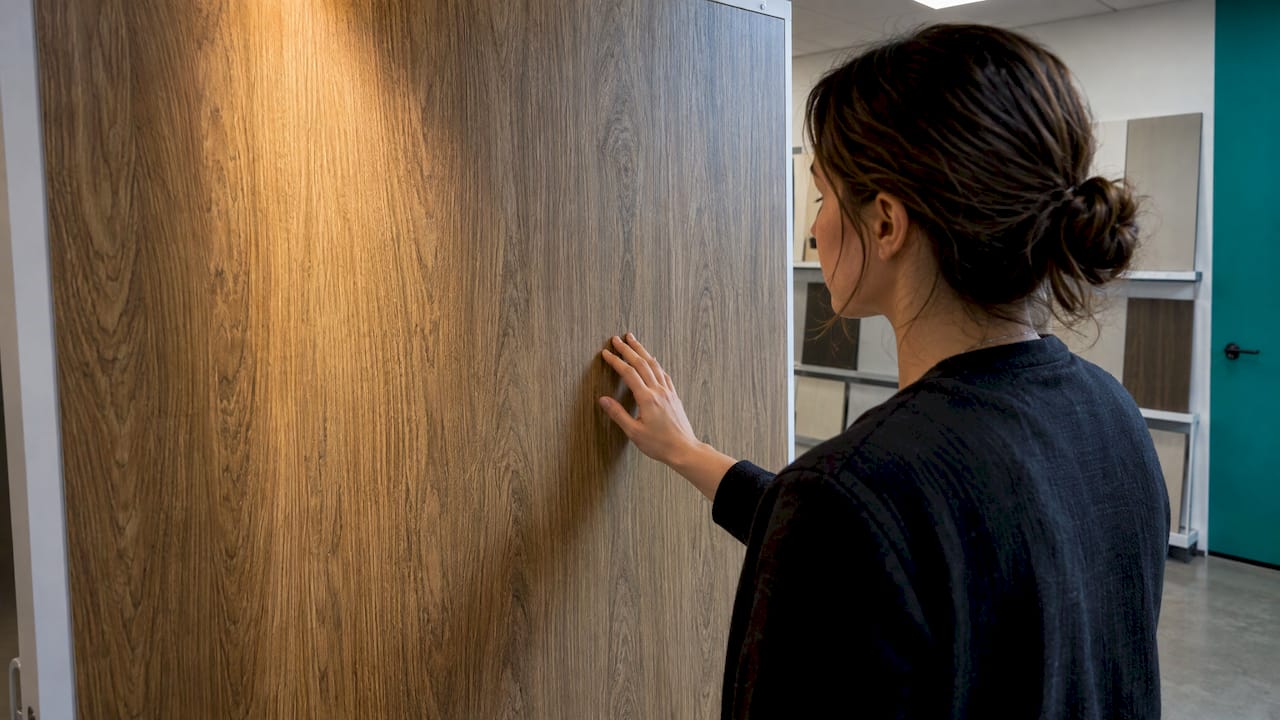
The Bodaq catalog runs to more than 450 textures and colors across wood, metal, stone and marble, solid color, and fabric and leather families, so it is realistic to specify a precise match to a design concept rather than settling for a near miss. Browse the full collection range when you are building the finish schedule.
Performance language
Be careful with absolute words. “Waterproof,” “indestructible” and “permanent” invite disputes. Specify what you can test and observe: abrasion and scratch behavior in the space type, stain response to the substances that will actually be present (coffee, hand sanitizer, marker), and resistance to the cleaning chemicals the facility uses. For high-traffic corridors, elevators, hospitality back-of-house and healthcare rooms, the cleaners are often the harshest test the film will see.
Substrate and installation conditions
Film performs only as well as the surface beneath it. This is the section that saves the most callbacks, so give it real attention in Part 3.
Write requirements for each substrate you expect:
- Painted drywall: fully cured paint, sound and dust-free. Low-quality or flaking paint will pull away with the film. Some wall paints and primers can interfere with adhesion.
- Wood, laminate and MDF millwork: clean, dry, with edges sealed and no peeling edge-banding.
- Metal doors and frames: free of oil, rust and loose coatings.
- Existing film or vinyl wallcovering: generally treated as an unsound base unless the manufacturer says otherwise.
- Textured walls: heavy texture can telegraph through film, so require a skim coat or a mockup that proves the result.
Add conditions for the environment too: ambient and surface temperature range at installation, humidity, and a requirement that the space be conditioned before and after application. In wet or high-humidity locations, require an adhesion test before committing the whole project. Our page on the 48-hour adhesion test for moisture-resistant wall finishes walks through that method for specifiers.
Matching the film grade to the substrate is its own decision, covered in Spec Ready: Match Film Grade to Substrate. And because installation skill drives outcome, consider requiring installers who hold manufacturer training, which is why we run an interior film installation certification.
Fire, code and emissions checks for a U.S. project
This is where specs get rejected by plan reviewers, so verify it before the finish schedule is final.
Interior finish classification
In the U.S., interior wall and ceiling finishes are regulated by the International Building Code’s Chapter 8, which ties allowable finish classes to occupancy type, sprinkler protection and location in the building (exit enclosures and corridors are stricter than rooms). The tool most often used to classify a finish is the ASTM E84 surface burning test. Your specification should state the class required, name the test standard, and require a test report in the submittals. We break down how this plays out for architects in ASTM E84 wall finishes under IBC Chapter 8.
A practical tip: the classification applies to the finish as tested and mounted. Ask the manufacturer what substrate and mounting method the report covers, and make sure that matches your wall.
Code intent around fire performance is not unique to the U.S., and seeing how another market frames it can sharpen your own thinking. For one look at how designers approach façade fire-resistance requirements in a different regulatory setting, that page is a useful comparison. For your project, though, the authority having jurisdiction and the adopted local code edition decide.
Emissions and environmental documentation
If the project targets a green building rating or an owner’s healthy-materials policy, write the requirement into Part 1 and ask for the manufacturer’s documents as a submittal: emissions test results, environmental product declarations or health product declarations where the rating system asks for them. Do not assume that a claim on a brochure meets a rating credit. Ask which document satisfies which credit, and have the reviewer check it.
Bodaq positions its interior film as meeting eco-friendly standards; request the current certification documents for the specific finish codes you select so your submittal package is complete.
Submittals: what to ask for and how to review them
A submittal review is only as strong as the criteria you set in the spec. Use this sequence:
- Product data sheet for each selected finish. Check the film type matches Part 2 and that every property in your table is addressed.
- Test reports for fire classification and any other required standard. Confirm the report is for the product you selected, not a similar one, and that the test method is the one you named.
- Emissions and environmental documents. Match each document to the requirement it is supposed to satisfy.
- Physical samples. Approve color, texture and gloss under the project’s actual lighting, then keep the signed sample as the standard of comparison.
- Installation and care instructions. Read them against your substrate and cleaning requirements. Flag conflicts now.
- Warranty. Compare its term and conditions against the expected service life of the space.
- Mockup. Require a full-size mockup in the real space, approved before production installation begins.
Reject incomplete packages in writing and cite the spec paragraph. It feels fussy, but it is much cheaper than a finish that fails the plan review or the first month of use.
Durability, care and warranty
Durability is a conversation about conditions, not a single number. A film on a hotel corridor wall faces luggage carts and housekeeping chemicals, while a film on a boardroom credenza faces coffee and elbows. Write the spec around the use of the space and ask the manufacturer to say, plainly, what the film handles and where its limits lie. Our overview of what lasts and what doesn’t in architectural film is a good starting point for that conversation.
For care, require written instructions and put them in the closeout documents, so facilities teams do not improvise with abrasive pads or solvent cleaners. Our guide on how to clean and maintain architectural film gives a baseline to compare against any product’s instructions.
For warranty, read three things: the term, the conditions (surface prep, climate, cleaning) and the exclusions. Then ask whether the warranty covers material only or also labor. A warranty that requires conditions your project cannot meet is no protection at all.
Where film makes sense in the project plan
Specifiers often reach for film when schedule or disruption is the constraint. Because it is applied over existing surfaces, it avoids demolition, dust and long cure times, which is why it suits occupied offices, hotels and retail. See how that plays out in office renovation with film in hours, not weeks. General contractors have their own set of reasons to like it, outlined in interior film benefits for general contractors, and safe practice on site is covered in our interior film installation safety page.
Write the sequencing into the spec as well. Film goes on after painting and dust-generating work is done, and before furniture, fixtures and signage are fully installed where that makes trimming cleaner. Note who protects finished film from other trades.
Our perspective
Specifying film well is mostly a matter of treating it like any other finish: define it, test it, mock it up. The teams that get the best results write down the substrate, the fire class and the care routine before they fall in love with a pattern.
That is why we built Bodaq around a stretchable, self-adhesive film with air-channeled adhesive. It is designed to make installation cleaner and faster, to reduce waste, and to let one design language run across walls, doors, millwork and furniture. With more than 450 textures and colors, a designer can hold a single look from reception to guest room without a tear-out.
We would rather you request our documentation, order samples and approve a mockup than take our word for anything. Tell us your occupancy, your substrates and your targets, and we will help you assemble a submittal package your reviewer can sign off.
Bodaq
Ready to specify? Start with samples and a mockup
If you are building a finish schedule now, start with the finishes you are considering and request samples under your actual lighting. For a high-performance, easy-to-clean solid color, look at Easy Clean ECF01; for a mineral look, Rustic Stone EXF52 is a good place to begin. You can also explore the whole range at Bodaq Interior Film.
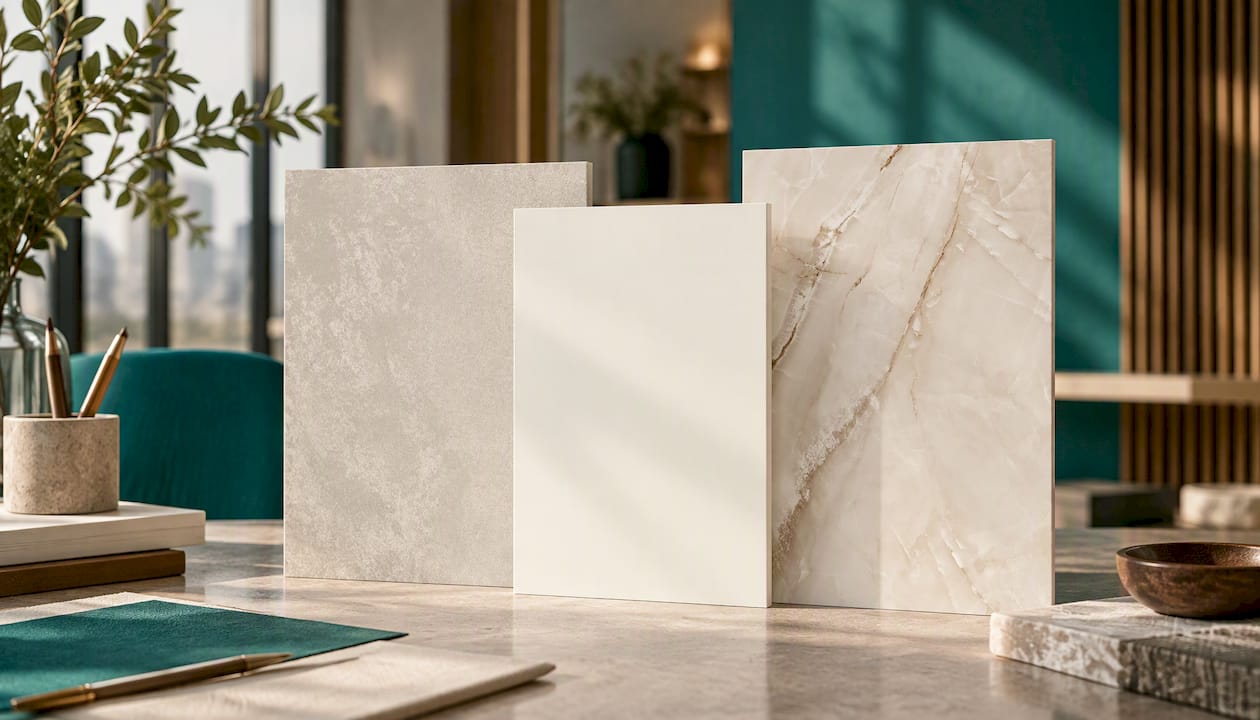
Our team can point you to the right data sheets for each finish code, so your submittal list is complete from the start.
FAQ
What is the difference between architectural film and window film in a specification?
Interior architectural film is a decorative, self-adhesive surfacing for walls, doors and furniture. Window film is a retrofit product usually made of polyester layers for glass, aimed at heat, glare or safety. Specify them in separate sections with their own standards.
Which standards should an architectural film specification reference?
Reference the standards that match the properties you care about, starting with ASTM E84 for interior finish fire classification under IBC Chapter 8. Performance-based writing guidance recommends naming reference standards and measurable criteria so submittals can be judged objectively. Add emissions documentation if the project has a green building target.
Do I need a mockup for film?
Yes, for any finish that is visible, large in area or patterned. A full-size mockup in the actual space shows how the color, texture and seams read under real lighting. It also becomes the approved standard for the installer.
What should I check on the substrate before specifying film?
Check that it is sound, clean, dry and appropriate for the film grade: cured paint on drywall, sealed edges on millwork, no rust or oil on metal. Heavily textured walls may need smoothing. For humid areas, run an adhesion test first.
How do I handle warranty in the spec?
Require the full warranty text as a submittal and compare its term, conditions and exclusions with how the space will be used and cleaned. Make sure the installation and cleaning methods you specify do not void it.
Sources
- Window Film Fundamentals, Whole Building Design Guide
- Performance Specification Reference Standard Specification, ASPE
- Understanding Specifications, AIA CES course