Wall panel refacing means giving existing panels a new surface instead of tearing them out. You keep the wall, fix what is wrong with its face, and apply a fresh finish: paint, a skim coat, new board over the old, or a self-adhesive architectural film. The best route depends on the condition of the panels underneath, so the work starts with an honest inspection. This guide walks you through what can be refaced, how to prepare, which finishes suit which job, and what to check before a commercial project.
TL;DR
- Refacing works when the panels underneath are sound, flat and firmly fixed. If more than half of a wall surface is damaged, full removal is the recommended route.
- Preparation decides the result: remove loose material, shave high spots, fill low spots and test the bond before any adhesive goes on.
- Stretchable, self-adhesive film such as Bodaq suits refacing because it wraps flat panels, trim and profiles in one consistent look, with little waste and less disruption.
- In commercial and hospitality spaces, check interior-finish fire classification and local plan review before you specify anything.
Table of Contents
- What wall panel refacing actually means
- Can your panels be refaced? A quick condition check
- Preparing existing panels for a new face
- Refacing finishes compared
- Why architectural film suits panel refacing
- Time, disruption and cost
- Preventing problems after refacing
- Fire and code checks for commercial projects
- Ready to reface with Bodaq?
- FAQ
- Sources
What wall panel refacing actually means
Refacing sits between a touch-up and a tear-out. A repair fixes a scratch, a gouge or a failed joint. A replacement removes the panels and starts over. Refacing keeps the structure and changes the visible layer, so the wall looks new while the demolition, dust and downtime stay small.
That matters because removal is not always the greenest or simplest choice. UK architect Aron Coates makes the case in his guide to wall panelling that repairing intact original detailing generally produces less waste than removing and replacing it. Refacing follows the same logic: if the panel is fundamentally sound, put your effort into the surface.
Typical candidates include:
- Dated wood-veneer or laminate paneling in basements, dens and rental units
- Wainscot and raised-panel walls with worn or inconsistent finishes
- Hotel corridor, lobby and guest room walls where closures are costly
- Office and healthcare walls that have been scuffed by carts, chairs and daily traffic
- Doors, built-ins and millwork that should match the refaced walls
Can your panels be refaced? A quick condition check
Before you pick a finish, answer three questions: is the substrate firm, is it flat, and is it dry?
Firm and properly fixed
Guidance on applying new gypsum board over existing walls says direct application requires sound, rigid and properly aligned framing. The same principle applies to any refacing: a finish is only as stable as what holds it. Press along the wall and listen for hollow spots, look for loose edges, and re-fasten anything that moves.
Flat and level
The same source notes that thin 1/4-inch and 5/16-inch gypsum panels need flat, level surfaces without voids. Thin films are similar in spirit: they follow the surface below, so they show what is under them. Deep grooves, peeling veneer and swollen edges need to be addressed first.
How much is damaged
The Gypsum Association guidance summarized in that article recommends full removal and reapplication to the original framing when more than 50 percent of an existing wall surface is damaged. If you are past that point, refacing is not the right plan for that wall. Below it, refacing is usually the faster route.
Dry and stable
Any sign of active moisture, such as staining, bubbling or a musty smell, means finding and fixing the source first. A new surface should never be asked to cover a live problem. For older buildings, the UK’s Institute of Historic Building Conservation warns that moisture-trapping modern materials can harm traditional wall fabric. If you are working on a historic or listed property, talk to a conservation specialist before covering original surfaces.
Preparing existing panels for a new face
Preparation is where most refacing jobs are won or lost. The Gypsum Association’s overlay procedure, described in the Walls & Ceilings article on GA-216-04, gives a sensible order that carries over to any refacing job:
- Remove wallpaper, loose plaster and anything that is not bonded.
- Shave high spots flush.
- Fill low spots so the plane is even.
- Shim voids or fur out the area where the wall is out of line.
- Test the bond before applying adhesive to an existing surface.
The last step deserves emphasis. A small test patch tells you far more than any spec sheet about how a particular old finish will behave.
Smoothing sound walls
When the substrate is sound but textured or cracked, a thin skim is an economical fix. Tim Leahy of Fine Homebuilding describes fiberglass mesh and two thin coats of joint compound over sound old plaster or drywall, producing a smooth, crack-resistant surface for roughly 35¢ per square foot. That is a material figure, not a full project price, but it shows how modest the base-layer step can be.
Fasteners, corners and movement
If your refacing includes new wood or board panels, follow the finish-carpentry standard. ANSI/AWI 0620-2018 requires that wall panels installed 108 inches or more above the finished floor are secured with mechanical fasteners. It also calls for minimizing exposed fasteners, radiusing the inside corners of cutouts to prevent splitting, and allowing for movement from humidity changes. Those details prevent the callbacks that show up six months later.
For low-level wainscot on flat, smooth walls, Coates notes that panels can be glued directly. Full-height panels usually need framing to give heavy fixings something to bite into.
Refacing finishes compared
Each finish has a job it does well. Here is how the main routes line up when your panels are sound.
| Approach | Best for | What it changes | Things to plan for |
|---|---|---|---|
| Skim coat with mesh | Cracked or textured walls that will then be painted or wrapped | Surface smoothness | Drying time and sanding dust |
| New gypsum board over existing | Walls with widespread surface damage but a sound frame | The whole wall plane | Fasteners, trim and door-jamb adjustments |
| Paint or stain | Panels in good shape that need a color refresh | Color only | Grooves and grain remain visible |
| Self-adhesive architectural film | Panels, doors, millwork and flat walls that need a new look and texture | Color, grain, texture and sheen | Clean, flat, bonded substrate |
Film stands out when you want a different material look, such as walnut, stone or textured fabric, without the cost and mess of the real thing. It also lets one pattern run across walls, doors and furniture so a room reads as a single design.
Finish choice also affects repairs. Keith Hardisty of the Architectural Woodwork Institute explains that penetrating finishes are easier to repair onsite than film-forming ones. When you compare finishes, think about who will maintain the space and how quickly a damaged section needs to be fixed.
Why architectural film suits panel refacing
Bodaq is a premium architectural interior film made by Hyundai L&C. It is stretchable and self-adhesive, and it comes in over 450 textures and colors, organized into Wood, Metal, Stone & Marble, Solid Colors and Fabric & Leather collections. We designed the product around the reality of renovation work: surfaces that are not perfectly uniform, spaces that cannot close for weeks, and finishes that must hold up to daily wear.
A few reasons it fits refacing:
- Stretch. The film conforms to profiles, edges and gentle curves, so raised-panel details and trim can be wrapped without cutting dozens of seams.
- Air-channeled adhesive. Our adhesive is designed to release trapped air, which makes the installation cleaner and easier to correct.
- Low waste. Because you wrap what is already there, you avoid the debris of demolition.
- Surface versatility. Walls, doors, furniture and millwork can all carry the same finish, which keeps a space visually consistent.
For the installation steps, our guide to clean wall wrap installation with Bodaq primer covers surface prep and technique in detail. If you want to compare options before choosing, we also break down the best interior wall finishing materials.
Choosing a look
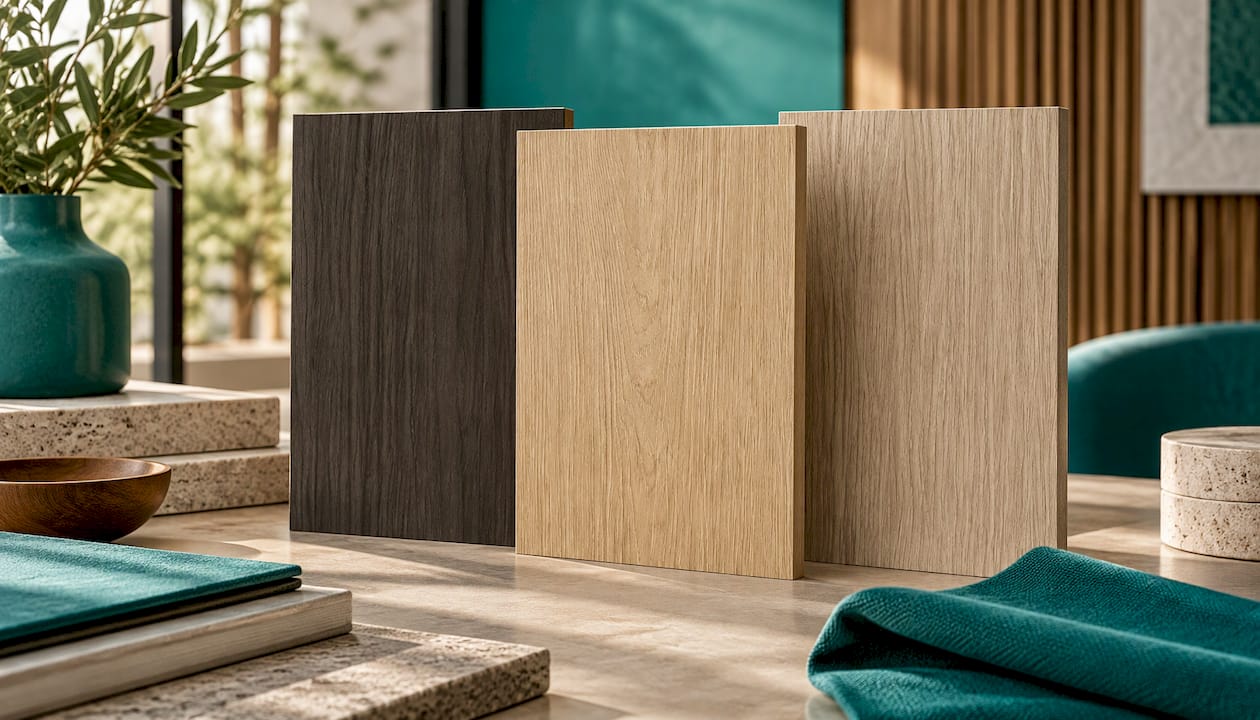
Wood-look film is the natural choice for refacing paneling. A warm oak such as Driftwood Oak W956 refreshes a tired veneer without changing the character of the room. A lighter Eden Oak SPW88 opens up a small den or basement. For a richer, more dramatic wall, Smoked Teak ZX180 gives the sculptural depth of a deep, dark grain. Our wall paneling design ideas show how these tones play out room by room.
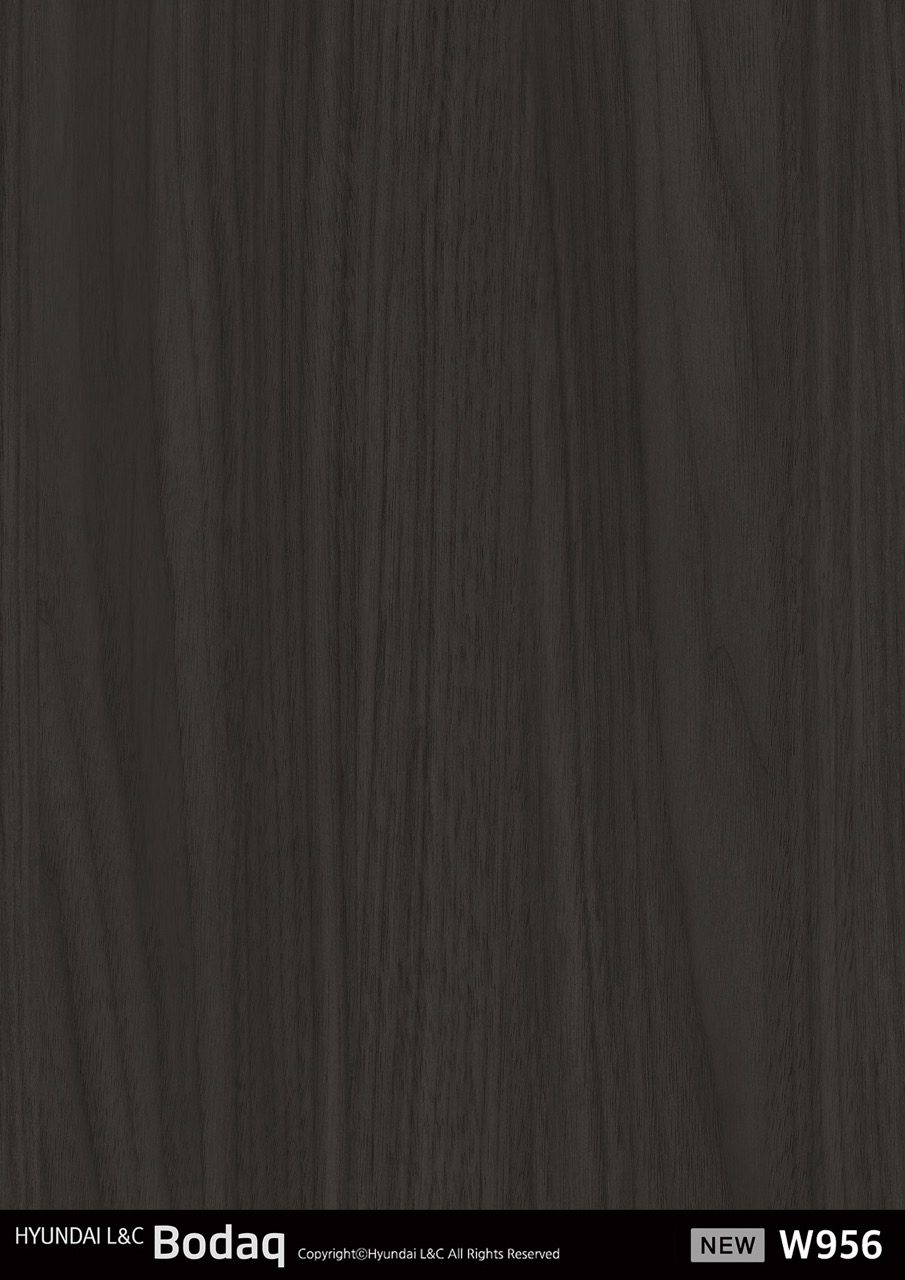
Sheen matters as much as color. Matte hides surface irregularities and reads as soft and organic. Gloss reflects light and shows more of what lies beneath. Our matte versus gloss film comparison explains how each behaves in use and in maintenance.
Once the wall is finished, lighting completes the effect. Warm light brings out wood grain beautifully, and handcrafted walnut LED lighting is one way to echo a wood-look wall from the ceiling. Plan the fixture positions before the wall is finished so nothing has to be cut into a new surface later.
Our perspective
We see refacing as the most practical form of design: you respect what is already built, and you spend your budget on the surface people actually see and touch. Too many renovation plans start with demolition because it feels decisive. In our experience, the more rewarding question is what a sound wall could become with the right finish.
That is why we built Bodaq as a stretchable, self-adhesive film rather than another rigid material that needs a new substrate. A film that conforms to panels, profiles and flat walls lets a designer carry one idea across a whole space, from wall to door to built-in, in a catalog of over 450 textures and colors. It is designed to deliver a durable, design-forward finish while keeping the installation clean and the waste low, which matters to hospitality teams who cannot lose rooms for long and to homeowners who simply do not want a dumpster in the driveway.
Our advice is simple. Respect preparation, test your bond, choose the texture that suits the light in the room, and work with an installer who treats the surface as seriously as the material. Do that, and refacing can feel like a tailored garment for the room: made to fit what is already there.
Bodaq
Time, disruption and cost
What drives the schedule is rarely the finish itself. It is the condition of the substrate, the amount of trim and detail, and how many rooms must stay in service.
The Gypsum Association guidance notes that applying new panels over existing surfaces, with nails or screws and sometimes supplemental adhesive, is often faster and more cost-effective than replacing or repairing large damaged areas. Refacing in general shares that advantage: no demolition, less disposal, and fewer trades in the room.
Factors that move cost and time:
- Substrate condition. Extra filling, shimming or skimming adds labor before the finish goes on.
- Detail density. Raised panels, chair rails and crown details take longer than flat walls.
- Height and access. Tall walls and stairwells need scaffolding or lifts.
- Occupancy. Working in sections or after hours protects revenue in hotels, offices and retail.
- Installer experience. A trained installer works faster and has fewer rework issues.
Bodaq does not publish film prices online, so request a quote with your square footage and surface list. We also offer samples, installation tools and certified training for professional installers.
Preventing problems after refacing
Most post-install failures trace back to the same few causes.
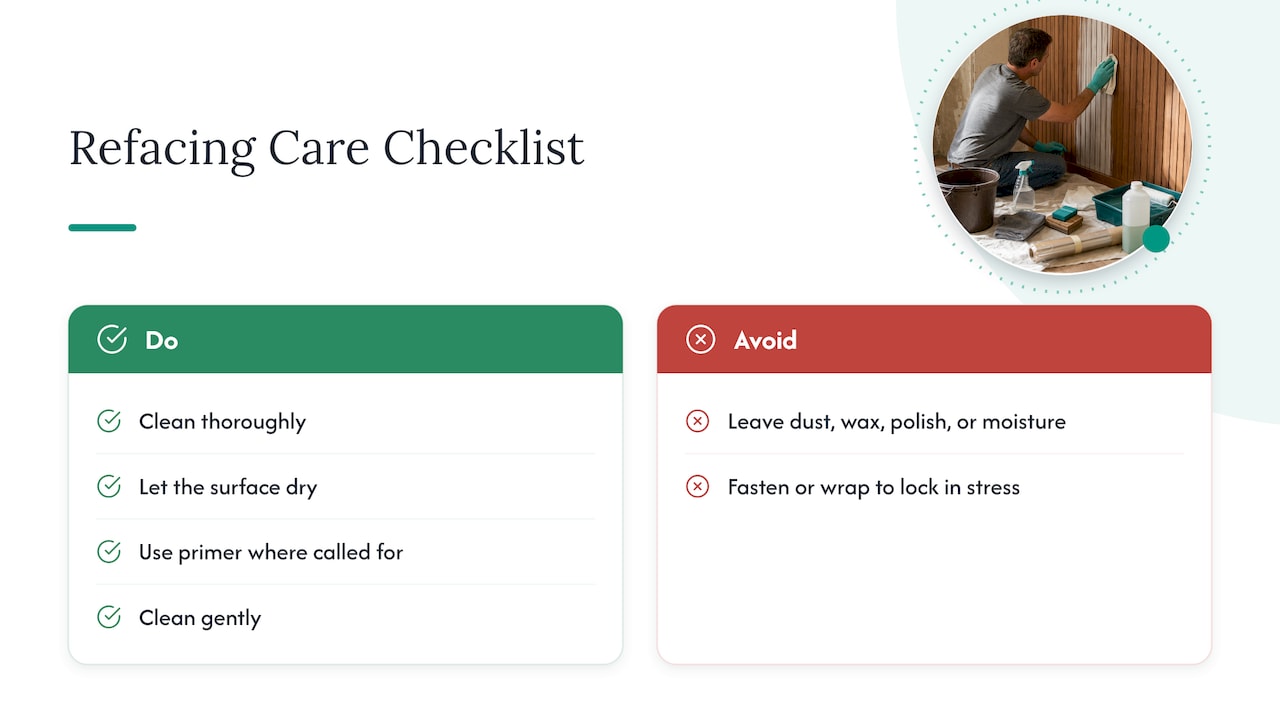
Poor adhesion. Dust, wax, silicone polish or residual moisture can all interfere. Clean thoroughly, let the surface dry, and use primer where the surface calls for it. If you notice lifting, our film adhesion failure guide includes a 10-minute test and fixes. For wet-prone areas, see our 48-hour adhesion test for moisture-resistant wall finishes.
Movement. Wood and board move with humidity. The AWI standard calls for installing panels so that they can move, and a refaced surface benefits from the same respect. Do not fasten or wrap in a way that locks in stress.
Scuffs and wear. High-traffic corridors, elevators and lobbies take a beating. Our write-ups on scratch-resistant wall finishes tested to ASTM D3363 and what makes wall wrap last explain what to look for. For elevator cabs specifically, see our elevator interior upgrade guidance.
Daily care. Gentle cleaning keeps the finish looking new. Our guide to cleaning and maintaining architectural film covers products and routines.
Fire and code checks for commercial projects
Residential refacing is mostly a question of taste and technique. Commercial and hospitality spaces add rules, and you should settle them before you order material.
- Interior finish classification. The 2024 GSA Fire Code, for example, regulates interior wall and ceiling finish by occupancy and location, and allows classification under NFPA 286, ASTM E84 or UL 723. Most private projects follow the locally adopted building and fire code, so confirm which edition applies to you.
- What NFPA 286 measures. The standard evaluates how an interior finish contributes to room fire growth, including heat, smoke and spread beyond the room. It does not evaluate the fire resistance of wall assemblies, so a finish rating and an assembly rating are separate questions.
- Plan review. Jurisdictions vary, but a typical example such as Orange County, Florida’s commercial plan review checklist covers construction type, sprinkler coverage, ratings for components, approved designs for rated walls, penetrations, fire and smoke partitions, egress and occupant loads. A refacing scope that touches rated walls deserves an early conversation with the local building official.
When you specify a finish, ask the manufacturer for current test documentation for your intended application, and keep it with the project file.
Ready to reface with Bodaq?
If your panels pass the condition check, the next step is choosing a collection and testing a sample on your own surface. Our Wood, Metal, Stone & Marble, Solid Colors and Fabric & Leather collections cover most refacing briefs, and our team can help you match a look to your space, quantity and installer.
Browse the full range on the Bodaq Interior Film collections page or start from Bodaq Interior Film to request samples, tools or a quote.
FAQ
What is the difference between wall panel refacing and replacement?
Refacing keeps the existing panels and gives them a new surface, while replacement removes them and installs new ones. Refacing generates less debris and usually needs less time in the room. It works when the panels beneath are firm, flat and dry.
Can you reface old wood paneling with film?
Yes, when the paneling is firmly fixed, clean and reasonably flat. Fill deep grooves, re-fasten loose sections, remove anything flaking, and test the bond on a small area before wrapping the whole wall. Follow the manufacturer’s primer and installation guidance for your surface.
When is refacing the wrong choice?
When the substrate is unsound, wet or heavily damaged. Gypsum Association guidance recommends full removal when more than 50 percent of a wall surface is damaged. Active moisture also has to be solved first, whatever finish you plan.
Do I need to check fire codes before refacing a commercial space?
Yes. Interior finish is regulated by occupancy and location, and many codes accept classification under NFPA 286, ASTM E84 or UL 723. Ask the manufacturer for documentation and confirm requirements with your local building official before ordering.
How do I choose a texture for a refaced wall?
Start with the light in the room and the scale of the space. Warm, soft woods suit small rooms, while deep teak or stone looks create a bold feature wall. Order a sample and view it in morning and evening light before you commit.
Sources
- Wall panelling: an architect’s guide
- All Things Gypsum: Application of Gypsum Panel Products over Existing Interior Walls and Ceilings
- IHBC Guidance Note on Alterations to Listed Buildings
- Make Old Walls Smooth and Sound, Fine Homebuilding
- ANSI/AWI 0620-2018 Finish Carpentry/Installation
- Why Repairability Should Matter in Architectural Millwork
- GSA Fire Code 2024, Chapter 8 Interior Finish
- NFPA 286, 2024 Edition
- Orange County Commercial Plan Approval Guide